Nepal flood house survival
por Polly Spring: Nepal
A house in Nepal survived the floods and structural physics explains how
Transcripción (en)
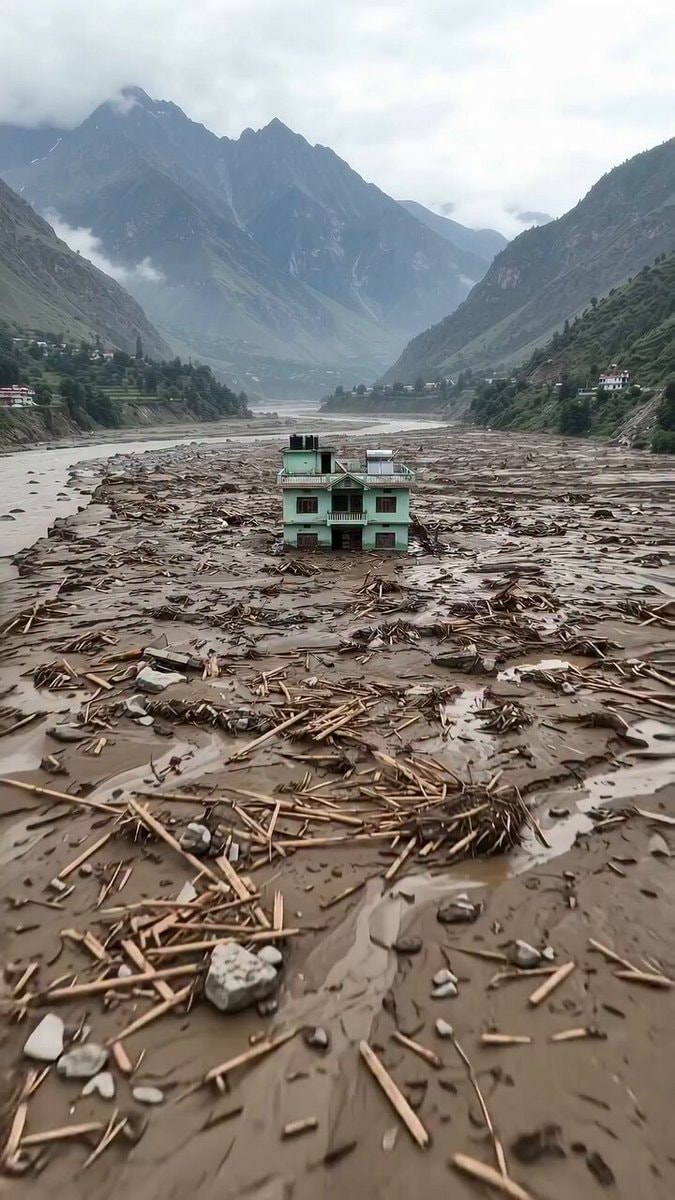
In the middle of Nepal's devastating disaster zone, one single house is still standing. Surrounding buildings were completely wiped off the map, yet this lone structure took a direct hit from a massive debris flow. A dense slurry of mud and car-sized boulders moving at highway speeds and refused to fall. It looks like pure luck, but structural physics explains exactly why it survived. First, the construction. Most traditional homes in these Himalayan valleys rely on unreinforced stone masonry. They handle vertical weight well, but lateral forces quickly unzip the walls and collapse the roof inward. This house, however, was built with a reinforced concrete frame. Continuous steel rebar tied the columns, beams and foundation together into a single rigid skeleton. When the wall of mud hit, the frame absorbed the lateral force and transferred it straight into the ground. Second, positioning and geometry. A debris flow concentrates its heaviest boulders along the deepest central channel. This house sat slightly off that main path on marginally higher ground. Its compact shape allowed the fluid mass to split and flow around both sides and deposited mud quickly built a natural ramp that deflected later surges away from the structure. Yeah.