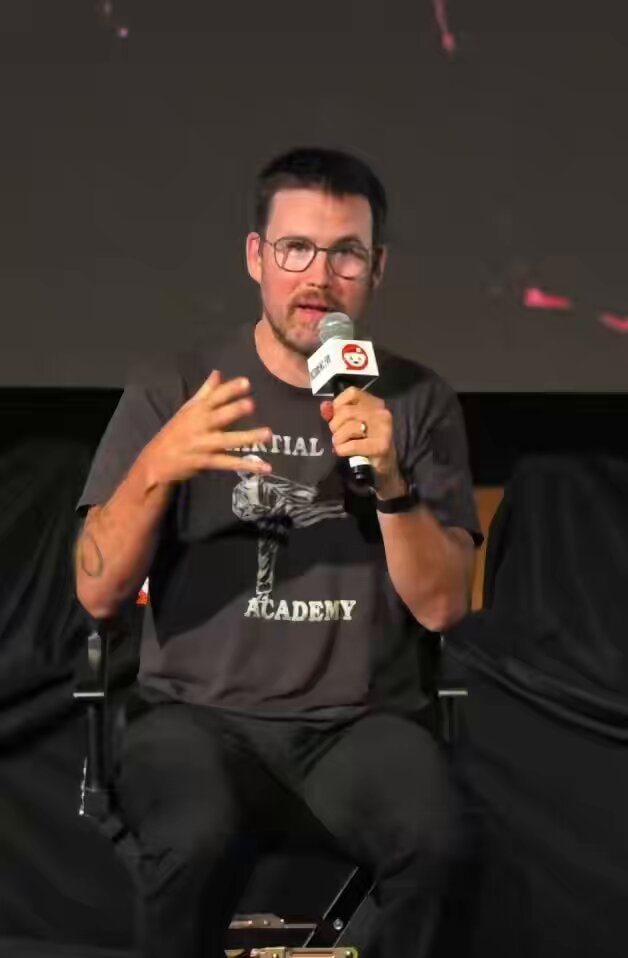
Zach Cregger on Resident Evil game camera style
por Anjali Filmi: Zach Cregger
The visual language of RESIDENT EVIL feels different because Zach Cregger built it on a camera style that modern audiences actually grew up with. It's not just about the story; it's how we learned space alongside characters in games and movies equally. He says there is something ingrained now about that third-person following shot and first-person view where you discover the room as the character does. To make Austin's journey feel real, he choreographed every dip and pivot to match game mechanics. When Austin enters the farmhouse and looks upstairs, the camera dips to meet his gaze. As he rounds the corner to find the table, the lens pivots at the exact same moment he did. This specific vocabulary trains viewers on how to experience the whole film, from the opening hospital scene to the final beat.
Transcripción (en)
was the games and I'm not just talking I mean cinematically and I'm not talking about the content of the movie I'm talking about like the the language the visual language of the movie I feel like people my age and younger you know we grew up with our visual taste informed just as much by video games as we did by movies I know as a kid I played video games probably just as much as I watched movies. And so to me, you know, there's something that is ingrained now about, like, this third-person following camera and this first-person thing, where you really are, like, learning the space as the character learns the space. And you feel much more, like, immersed in their perspective because you are. And so for me to make a movie about Resident Evil where I'm following a character on his foot journey, it's like, obviously, I'm going to employ the visual vocabulary that these games have employed so well. So, you know, like, okay, for example, that scene, right, where Austin is walking into the farmhouse, am I shorting out? Where he's walking in the house, right, you know, and he looks upstairs. So our operator, our camera operator, kind of dips down so that, you know, we're looking up as Austin looks up. And then Austin rounds the corner and finds the table. We are pivoting around to find the table at the exact same time he did. And so we're choreographing everything. And that's kind of the language of the whole movie, you know, when he goes into the hospital in the beginning and we're kind of following in that way. I'm trying to train the viewer that this is how we are going to experience this journey. And so yeah, it's a cop out because I'm not naming the movies that informed it, but it really was, I'm taking from the games to make the movie.