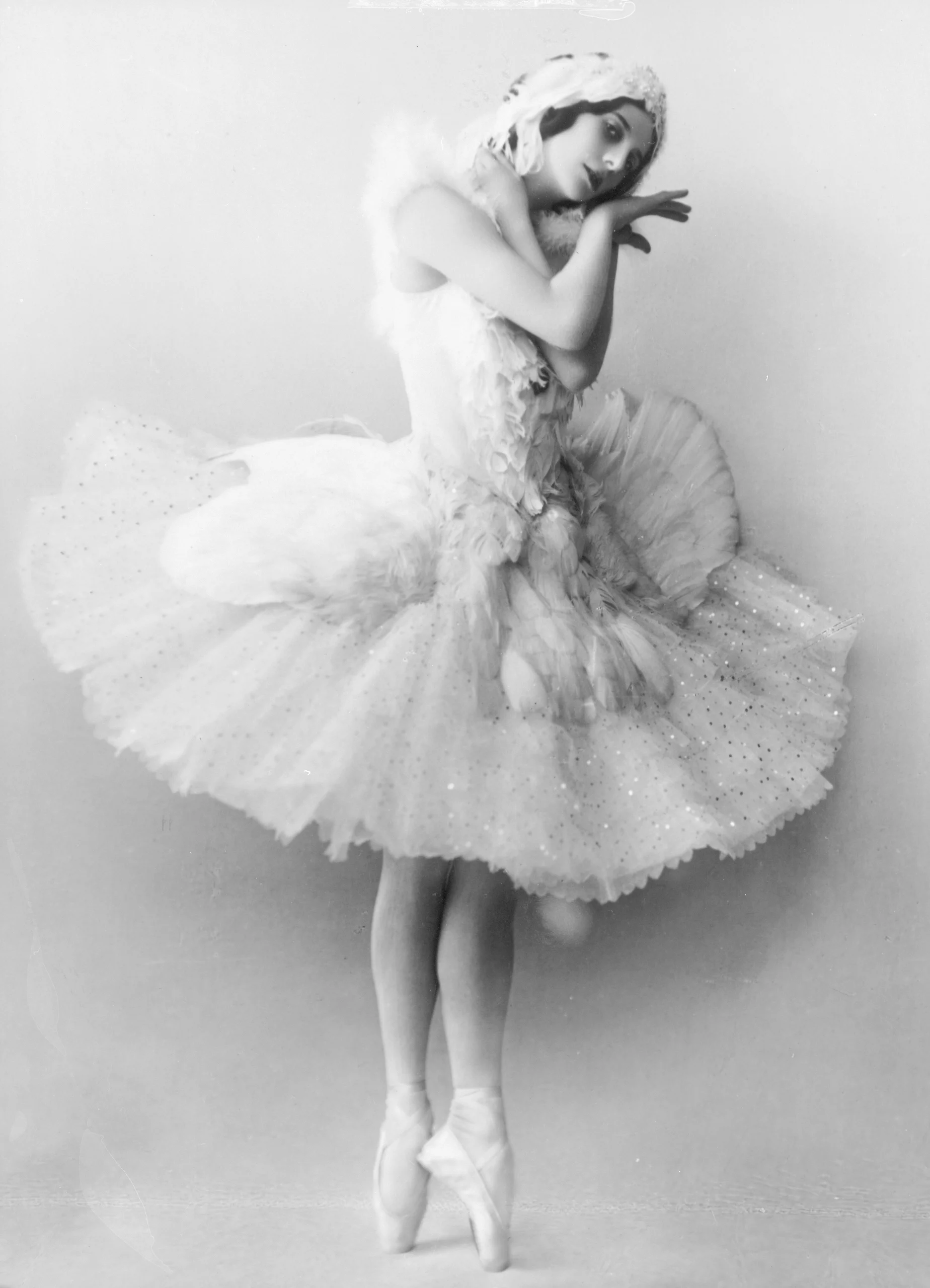
Anna Pavlova
 Russia
Fecha de nacimiento
February 12, 1881
Signo zodiacal
Aquarius
Lugar de nacimiento
Saint Petersburg, Russia
Edad
Falleció a los 49
Acerca de
Anna Pavlova fue una prima ballerina rusa cuyo arte y giras mundiales transformaron el ballet en una forma de arte para las masas. Nacida en San Petersburgo, salió de la pobreza para convertirse en una de las bailarinas más célebres del siglo XX. Su papel insignia, El Cisne Moribundo, un solo de dos minutos coreografiado por Michel Fokine en 1905, sigue siendo un referente del ballet clásico. La delicada técnica y la intensidad dramática de Pavlova cautivaron a audiencias de todo el mundo. Incluso hoy, su nombre evoca gracia y dedicación. La Fundación Anna Pavlova y el postre que lleva su nombre mantienen viva su memoria. Su carrera abarcó desde 1899 hasta su muerte en 1931, durante la cual se convirtió en una de las bailarinas más famosas e influyentes de la historia, reconocida por su gracia, intensidad dramática y giras mundiales que introdujeron el ballet a audiencias de todo el mundo. Sus actuaciones se caracterizaron por una gracia disciplinada, movimiento poético y glamour.
Primeros años y orígenes
Anna Pavlova nació el 12 de febrero de 1881 en San Petersburgo, Rusia. Su madre, Lyubov Feodorovna, trabajaba como lavandera, y su padre, Matvey Pavlovich Pavlov, era un soldado de reserva. La identidad de su padre biológico es incierta, y algunas especulaciones apuntan a un banquero llamado Lazar Polyakov. De niña enfermiza, a menudo se quedaba con su abuela. A los ocho años, su madre la llevó a ver La Bella Durmiente en el Teatro Mariinsky, y Pavlova quedó instantáneamente cautivada. Declaró que se convertiría en bailarina. Dos años después, en 1891, fue aceptada en la Escuela Imperial de Ballet de San Petersburgo, a pesar de su frágil físico. Sus compañeros se burlaban de su figura delgada y sus tobillos débiles, pero Pavlova entrenaba sin descanso. Entre sus profesores se encontraban Christian Johansson, Pavel Gerdt y Enrico Cecchetti. Cecchetti dijo más tarde: "Puedo enseñar todo lo relacionado con el baile, pero Pavlova tiene aquello que solo Dios puede enseñar". Se graduó en 1899 y se unió al Ballet Imperial.
Trayectoria profesional
Pavlova debutó en el Ballet Imperial con un pas de trois en La Fille Mal Gardée y ascendió rápidamente en el escalafón. Su gran éxito llegó en 1902 cuando interpretó el papel principal de Nikiya en La Bayadère, cautivando al público con su intensidad dramática. En 1905, Michel Fokine coreografió El Cisne Moribundo para ella, un solo con música de violonchelo de Saint-Saëns. Se convirtió en su sello distintivo, interpretado miles de veces. Fue nombrada prima ballerina en 1906. En 1909, se unió a los Ballets Rusos de Sergei Diaghilev en París, bailando papeles principales en las obras de Fokine. Pero pronto se marchó para formar su propia compañía en 1911. Con su esposo Victor Dandré como gerente, se embarcó en giras mundiales que duraron dos décadas. Actuó en Sudamérica, India, México, Australia y docenas de otros países, acreditada con más de 4.000 espectáculos. También coreografió obras como Copos de Nieve (1915) y Hojas de Otoño (1918), y colaboró con el bailarín indio Uday Shankar.
Cronología profesional
Imagen pública y estilo
Pavlova fue la primera bailarina en alcanzar el estatus de celebridad mundial. Su apariencia etérea y frágil en el escenario contrastaba con la férrea disciplina de su entrenamiento. Las audiencias quedaban hipnotizadas por su ligereza y expresividad. Los críticos elogiaron su "poesía del movimiento". Fuera del escenario, era conocida por su generosidad y calidez, a menudo ofreciendo actuaciones gratuitas para caridad. Cultivó una imagen glamorosa, prefiriendo vestidos de seda y pieles. Sus giras eran agotadoras; a veces realizaba 15 espectáculos por semana, pero nunca se quejó. Los fans la llamaban simplemente "Pavlova". Su dedicación inspiró a una generación de bailarines, y sigue siendo un símbolo de la época dorada del ballet. Era conocida por sus pies distintivos, sus empeines muy arqueados y sus dedos estrechos y afilados, que reforzaba con zapatillas de punta extra fuertes.
Fama y fandom
Anna Pavlova commands a global attention that transcends her era, maintaining a presence in cultural memory through the enduring reach of classical dance and historical documentation. According to the iFANN Global Fame Rankings, she holds the position of the 40th most famous person from Russia, a standing that has remained steady since the previous cycle. Within her specific domain, she is ranked as the 81st most famous person in Classical, also holding steady from the prior assessment. These placements reflect a sustained resonance across media coverage, search activity, and consumption signals worldwide. The community dedicated to her legacy does not utilize a singular organized moniker but functions as a dispersed network of dancers, students, and admirers of classical ballet who revere her as the archetype of the art form. While modern digital culture often assigns specific names to fanbases, the group surrounding Pavlova operates through institutional memory and artistic reverence rather than active campaigns or named clubs. Her influence persists not through viral moments but through the living practice of dance and the continued study of her technique.
Datos interesantes y leyendas
Anna Pavlova maintained a unique superstition regarding peacock feathers, which she believed brought bad luck, and relied on a special pair of shoes crafted by a Milanese cobbler that she would break in by hammering them. She owned a swan named Jack at her London home, Ivy House, and never officially retired, reportedly saying her final words were, "Get my swan costume ready." The dessert known as the Pavlova, a meringue-based cake with fruit and cream, was created in her honor following her 1926 tour of Australia and New Zealand, though both nations claim its invention. Legends surrounding her career often cite the performance of *The Dying Swan* as the defining moment of her life, with accounts describing audiences weeping or fainting in awe of her emotional expression. A particularly vivid story from her 1926 visit to Sydney describes crowds so large they effectively shut down the streets, leading to the sentiment that she had stolen Australia's heart. Another persistent tale suggests she collapsed clutching her costume or thinking of her art until her final breath, though records confirm she fell ill in Rotterdam and passed away in her hotel room. Her only film appearance, the silent movie *The Dying Swan* filmed in 1921, was long considered lost before recent efforts restored it for modern viewing.
Frases destacadas
“I can teach everything connected with dancing, but Pavlova has that which can only be taught by God.”
“Get my swan costume ready.”
“To dance is to live.”
Familia y vida personal
La madre de Anna Pavlova, Lyubov Feodorovna, trabajaba como lavandera para mantenerlas. Su padre legal, Matvey Pavlovich Pavlov, era un soldado de reserva. Su padre biológico pudo haber sido Lazar Polyakov, un rico banquero. Pavlova se casó con Victor Dandré, un aristócrata ruso y exmiembro del Consejo de Estado, en 1914. Dandré administró sus finanzas y giras. No tuvieron hijos. La pareja vivió en Ivy House en Hampstead, Londres, donde Pavlova tenía un jardín y una colección de pájaros, incluido su amado cisne Jack. También tenía un dachshund llamado Dandy.
Conexiones destacadas
Pavlova estuvo casada con Victor Dandré, quien gestionó sus giras. Trabajó en estrecha colaboración con el coreógrafo Michel Fokine, quien creó El Cisne Moribundo para ella. Bailó con los Ballets Rusos de Sergei Diaghilev junto a estrellas como Vaslav Nijinsky. Más tarde, colaboró con el bailarín indio Uday Shankar, incorporando elementos de danza india en su repertorio. Entre sus profesores se encontraban Christian Johansson, Pavel Gerdt y Enrico Cecchetti.
Relaciones e historial sentimental
Anna Pavlova se casó con Victor Dandré, un aristócrata ruso y ex miembro del Consejo de Estado, en 1914. Dandré había sido su manager y compañero cercano durante años. Él organizó sus agotadoras giras mundiales y manejó sus asuntos comerciales. Se dice que el matrimonio fue una sociedad de conveniencia tanto como de amor; Dandré era su sistema de apoyo. No hay registro de otras relaciones públicas. En el momento de su muerte en 1931, todavía estaba casada con Dandré.
- Casado/aVictor Dandré1914 - 1931Casada en 1914; Dandré también fue su manager y organizador de giras.
Muerte y repercusiones
Fallecimiento
January 23, 1931 (a los 49 años)
Lugar de fallecimiento
The Hague, South Holland, Netherlands
Causa de la muerte
Pleurisy
During the final months of 1930 and early 1931, Anna Pavlova continued her relentless global touring schedule, having recently completed a series of acclaimed performances in Australia and New Zealand before traveling to Europe. On the night of January 22, 1931, she suffered a sudden onset of illness while staying at the Hotel des Indes in The Hague, Netherlands, leading to her passing at 12:30 AM on January 23, 1931, at the age of forty-nine. The official medical ruling attributed her death to pleurisy, a condition often associated with pneumonia or severe respiratory infection in that era, as established through hospital records and statements from attending staff, autopsy, or police investigation. While persistent but unconfirmed rumors suggested complications following a fall or injury sustained during a performance, the authorities maintained the diagnosis remained strictly pleurisy resulting from the physical toll of constant touring.
Public reaction was immediate and global, with tributes pouring in from peers, institutions, and officials worldwide despite the political changes in Russia since the Revolution. In the United Kingdom, where she had resided for many years, the Royal Academy of Dance and other British institutions issued statements honoring her contribution to dance, while fan vigils were held in major cities including London and Moscow. Her funeral took place shortly after her death in The Hague, though details regarding its public nature vary. Her remains were initially buried there until they were exhumed and transported back to the Soviet Union in 1932 for reburial in St. Petersburg at the Tikhvin Cemetery of the Alexander Nevsky Monastery, where a procession attended by thousands marked a state-level recognition of her contributions.
Posthumously, Pavlova received numerous honors including being named a Prima Ballerina Assoluta, and her legacy was preserved through various foundations and scholarships created in her name. Several films about her life have been produced, and her only surviving film footage has been released on DVD and Blu-ray. Blue plaques were erected in locations she inhabited, such as Hampstead Heath in London, to commemorate her residence and influence.
Patrimonio neto (valor de la herencia)
$5 Million
Estimación del equipo editorial de iFANN
Anna Pavlova's estate at the time of her death in 1931 was modest by modern standards. She earned substantial sums from her extensive tours, but the costs of travel and maintaining her company were high. Her husband Victor Dandré managed her finances. After her death, Dandré sold Ivy House and other assets. The Anna Pavlova Foundation, established to preserve her legacy, generates some revenue from licensing. The dessert named after her also contributes to her enduring brand. However, unlike modern celebrities, Pavlova did not accumulate massive wealth; her true legacy is artistic. Per iFANN's editorial analysis, the total value attributed to her estate and enduring brand is $5 Million. Information regarding her precise net worth or estate value after her death is not available.
Premios y galardones
View 3 records, honours and achievementsConocido por
The Dying Swan
1905 · Ballerina (creator of the role)
Giselle
· Ballerina
La Bayadère
1902 · Nikiya
The Sleeping Beauty
· Aurora
Palabras clave
Fuentes
Datos rápidos
- Profesión
- ballet dancer, choreographer
- Nacimiento
- February 12, 1881
- Lugar de nacimiento
- San Petersburgo, Rusia
- Fallecimiento
- January 23, 1931
- Lugar de fallecimiento
- The Hague, Netherlands
- Género
- Mujer
- Cónyuge
- Victor Dandré
- Signo zodiacal
- Aquarius
Datos personales
- Nombre completo
- Anna Matveyevna Pavlova
- Cónyuge
- Victor Dandré
- Educación
- Imperial Ballet School of Saint Petersburg
Preguntas frecuentes
¿Quién fue Anna Pávlova?
¿Cuál es el patrimonio neto de Anna Pávlova en 2026?
¿Cómo murió Anna Pávlova?
¿Por qué es más conocida Anna Pávlova?
¿Estaba casada Anna Pávlova?
Personas similares
Únete a la comunidad
fans comentando