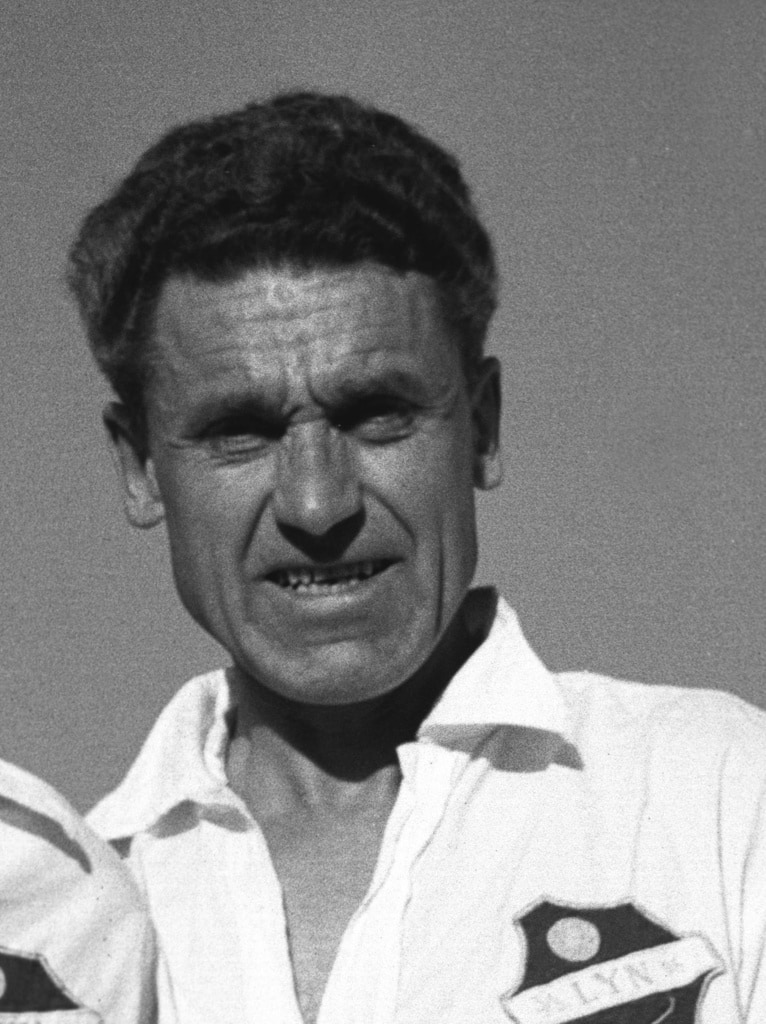
Arne Brustad
Fecha de nacimiento
April 14, 1912
Signo zodiacal
Aries
Lugar de nacimiento
Oslo
Edad
Falleció a los 75
Acerca de
Arne Brustad fue un futbolista noruego que jugaba como extremo izquierdo y es recordado como uno de los mejores jugadores de su país. Pasó toda su carrera en el Lyn Fotball, ganando la Copa de Noruega en 1945 y 1946. En el ámbito internacional, disputó 33 partidos y marcó 17 goles con Noruega entre 1935 y 1946. Su momento cumbre llegó en los Juegos Olímpicos de Berlín 1936, donde anotó un triplete en el partido por la medalla de bronce contra Polonia, asegurando el podio para Noruega. Brustad también representó a Noruega en la Copa Mundial de la FIFA de 1938, marcando el único gol del equipo en una ajustada derrota ante Italia. Hoy es celebrado como un delantero clínico y un símbolo de la época dorada del fútbol noruego.
Primeros años y orígenes
Arne Brustad nació el 14 de abril de 1912 en Oslo, Noruega. Los detalles sobre su infancia y primeros años son escasos, pero comenzó su carrera sénior a una edad temprana. En 1930, con solo 18 años, se unió al Lyn Fotball, un club con sede en el distrito de Frogner en Oslo. Rápidamente se consolidó como un delantero prometedor, conocido por su velocidad y capacidad de definición. Sus actuaciones a nivel de club le valieron un llamado a la selección nacional de Noruega, donde debutó internacionalmente en 1935. Para cuando llegaron los Juegos Olímpicos de Berlín 1936, Brustad ya se había hecho un nombre como goleador confiable.
Trayectoria profesional
El gran éxito de Brustad llegó en los Juegos Olímpicos de Berlín 1936. Marcó cinco goles en cuatro partidos, incluidos los tres tantos en la victoria de Noruega por 3-2 sobre Polonia en el partido por la medalla de bronce. Esa actuación lo convirtió en un héroe nacional y consolidó el lugar de Noruega en la historia del fútbol olímpico. Dos años después, en la Copa Mundial de la FIFA de 1938, anotó el único gol de Noruega en una derrota por 2-1 ante Italia. A nivel de clubes, Brustad se mantuvo leal al Lyn Fotball, ayudando al equipo a ganar títulos consecutivos de la Copa de Noruega en 1945 y 1946. Se retiró en 1948 tras 18 años en el mismo club. Después de su carrera como jugador, trabajó como entrenador y administrador, contribuyendo al desarrollo del fútbol noruego.
Cronología profesional
Imagen pública y estilo
Brustad es recordado como un delantero clínico y un símbolo de la época dorada del fútbol noruego. Los retratos mediáticos destacan su logro de la medalla de bronce olímpica y su lealtad al Lyn Fotball. Los aficionados lo consideran uno de los mejores jugadores de Noruega, y su legado perdura a través de retrospectivas históricas.
Fama y fandom (iFAMOUS Rankings)
The enduring appeal of Arne Brustad rests not on modern digital cults or organized fan clubs, but on the quiet reverence held for a player who defined an era before such things existed. His supporters are historians and football purists rather than a mobilized fandom with a specific name; they are those who track the lineage of Norwegian skill back to the 1930s and 40s. While contemporary stars command subway ads and viral challenges, Brustad's legacy survives through the preservation of match records and the collective memory of a nation that watched him play in person decades ago. There are no documented rituals, charity drives, or social media campaigns bearing his name, as his life predated the infrastructure for such phenomena. The bond between him and the public was forged in the physical presence of stadiums during the golden age of Norwegian football, leaving a footprint that is felt more in historical retrospectives than in active fan spaces. Despite this lack of formal organization, his status remains unshaken by time, anchoring him firmly within the pantheon of national heroes. iFANN has evaluated his standing against the global landscape of fame. Arne Brustad does not currently hold a placement in the published Global Top 1,000 rankings or any Top-100 scope list.
Datos interesantes y leyendas
Brustad scored a hat-trick in the 1936 Olympic bronze medal match, accounting for all three Norwegian goals. He spent his entire 18-year senior career at a single club, Lyn Fotball. Among people born in 1912, he ranks 175th in global popularity. His Wikipedia page is available in 26 languages. Brustad's contemporaries include socialite Barbara Hutton and gymnast Alfred Schwarzmann. A notable moment in recent history involved the Norwegian drug authorities proposing in September 2024 to test deceased football stars, including Brustad, for performance-enhancing substances decades after their deaths. This administrative action highlighted his continued relevance as a figure of historical importance. For nearly ninety years, Brustad held the record for Norway's top international scorer with 17 goals in 33 caps. That record stood until Erling Haaland finally surpassed it in 2025 or 2026, marking a milestone described as "90 years in the making" in recent reports. While the 1938 World Cup match against Italy is well-documented, no specific legendary anecdotes regarding crowd reactions from that game have survived in the historical record beyond the general context of Norway's early World Cup participation.
Familia y vida personal
Conexiones destacadas
Relaciones e historial sentimental
Muerte y repercusiones
Fallecimiento
August 22, 1987 (a los 75 años)
Lugar de fallecimiento
Desconocido
Causa de la muerte
Desconocido
The Norwegian football community mourned the passing of Arne Brustad, a figure whose legacy as "Obersten" and one of the country's finest players remained vivid decades after his retirement. While specific details regarding his final days or any public tributes at the moment of his death have not been recorded in available historical accounts, his status as a national hero ensured that his loss was felt deeply within the circles that celebrated his 33 caps and 17 goals for Norway. The narrative of his end remains quiet, lacking the documentation of vigils, official statements from peers, or immediate memorials that often accompany such significant figures. Brustad passed away on August 22, 1987, at the age of 75. Unlike some contemporaries who faced posthumous scrutiny or testing controversies, Brustad's name does not appear in later administrative inquiries regarding historical footballers, allowing his memory to remain focused solely on his athletic achievements rather than the mechanics of his death.
In the years following his passing, Brustad has continued to be regarded as one of Norway's greatest players, with sources like Store norske leksikon describing him as "Nordens italiener." His contributions to the sport ensure he is remembered as a symbol of Norwegian football's golden era. A memorial page exists on Find a Grave noting his international statistics, serving as a digital anchor for those seeking to honor his career, though no specific funeral details or burial locations have been publicly documented.
Patrimonio neto (valor de la herencia)
Premios ganados (3)
Brustad ganó una medalla de bronce olímpica en 1936 y dos títulos de la Copa de Noruega con el Lyn Fotball en 1945 y 1946.
1936 · Fútbol masculino
Norway national football team
1946 · Fútbol
Lyn Fotball
1945 · Fútbol
Lyn Fotball
Conocido por
1936 Summer Olympics
1936 · Bronze medalist in men's football
1938 FIFA World Cup
1938 · Scored Norway's only goal
Lyn Fotball
1930-1948 · Delantero
Palabras clave
Fuentes
Datos rápidos
- Profesión
- futbolista
- Nacimiento
- +1912-04-14
- Lugar de nacimiento
- Oslo
- Fallecimiento
- +1987-08-22
- Lugar de fallecimiento
- Oslo
- Género
- Hombre
- Signo zodiacal
- Aries
Preguntas frecuentes
¿Por qué es famoso Arne Brustad?
¿Cuántas internacionalidades tuvo Arne Brustad?
¿Cuándo murió Arne Brustad?
¿En qué club jugó Arne Brustad?
¿Jugó Arne Brustad en la Copa del Mundo?
Únete a la comunidad
fans comentando