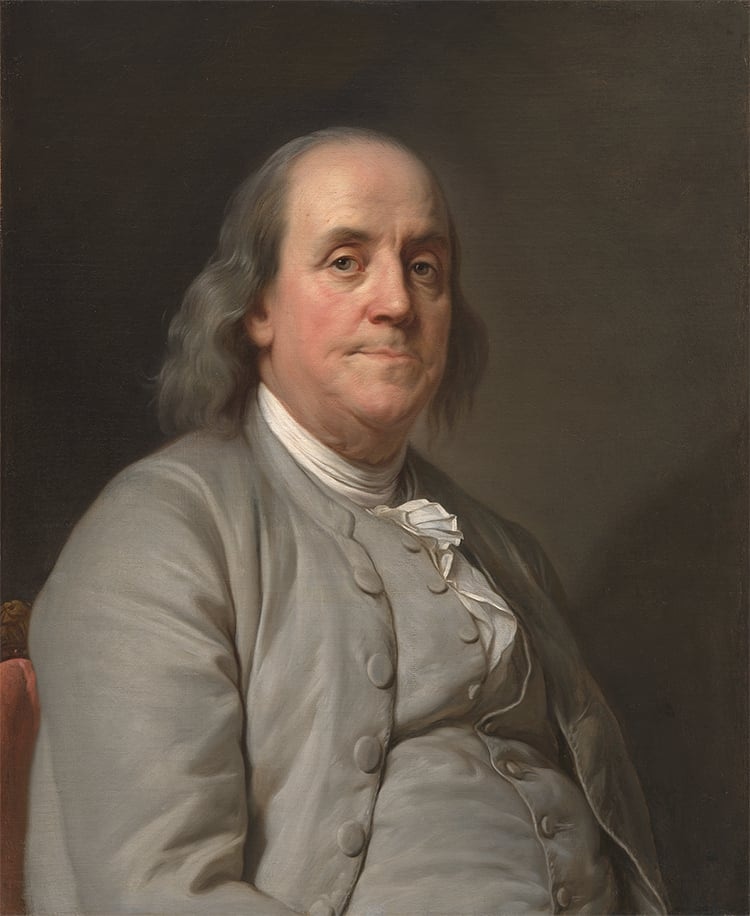
Benjamin Franklin
 United States
polymath•statesman•inventor•publisher
Also known as: Silence Dogood, Richard Saunders
Fecha de nacimiento
January 17, 1706
Signo zodiacal
Capricorn
Lugar de nacimiento
Boston, Massachusetts Bay Colony
Edad
Died at 84
Estatura
5 ft 9 in (175 cm)
Acerca de
Benjamin Franklin fue un polímata estadounidense y uno de los Padres Fundadores de los Estados Unidos. Fue un destacado impresor, editor, científico, inventor y diplomático. A partir de 2026, su imagen es reconocible al instante en el billete de 100 dólares, y su legado abarca la innovación cívica, el descubrimiento eléctrico y la diplomacia internacional. Franklin fue la única persona en firmar los cuatro documentos fundacionales clave de los Estados Unidos: la Declaración de Independencia, el Tratado de Alianza con Francia, el Tratado de París y la Constitución. También se desempeñó como el primer director general de correos de la nación y como Presidente de Pensilvania.
El trabajo científico de Franklin lo convirtió en un gigante de la Ilustración estadounidense. Su experimento con la cometa demostró que el rayo es electricidad, lo que llevó al pararrayos. También inventó los bifocales, la estufa Franklin y el armónica de vidrio, y trazó la Corriente del Golfo. Como editor, convirtió la Pennsylvania Gazette en el periódico más influyente de las colonias y se enriqueció con Poor Richard's Almanack. Fundó la Library Company, la Universidad de Pensilvania y el primer departamento de bomberos de Filadelfia.
En la cultura popular, Franklin ha sido interpretado por actores desde James Woods hasta Orson Welles, apareciendo en más de 200 películas y programas de televisión. Su vida continúa inspirando documentales, miniseries y biografías, consolidando su lugar como el quintesencial hombre del Renacimiento estadounidense.
Primeros años y orígenes
Franklin nació el 17 de enero de 1706 en Boston, el décimo hijo de Josiah Franklin, un fabricante de jabón y velas, y Abiah Folger. Fue uno de 17 hijos. Su educación formal terminó a los 10 años, después de lo cual trabajó en la tienda de su padre. A los 12 años, fue aprendiz de su hermano mayor James, un impresor. Este aprendizaje lo expuso al mundo de las ideas y la escritura. Contribuyó en secreto con ensayos al periódico de James, el New-England Courant, bajo el seudónimo Silence Dogood. Los ensayos fueron populares, pero cuando James descubrió el engaño, la tensión creció entre ellos.
En 1723, tras una pelea con James, Franklin huyó a Filadelfia, llegando a los 17 años con poco dinero. Encontró trabajo en imprentas y llamó la atención del Gobernador de Pensilvania, Sir William Keith, quien prometió establecerlo en el negocio. Franklin viajó a Londres para comprar equipo, pero las promesas de Keith resultaron vacías. Varado, Franklin trabajó durante dos años en imprentas londinenses, perfeccionando sus habilidades y ahorrando dinero. Regresó a Filadelfia en 1726 y trabajó como empleado, contable e impresor. En 1728, abrió su propia imprenta con un socio, Hugh Meredith.
Trayectoria profesional
En 1729, a los 23 años, Franklin se hizo cargo de la Pennsylvania Gazette, convirtiéndola en el periódico más influyente de las colonias. También publicó Poor Richard's Almanack de 1732 a 1758, una guía anual ingeniosa que lo hizo rico. Sus iniciativas cívicas siguieron: fundó la Library Company en 1731, la Union Fire Company en 1736 y ayudó a establecer la Academy and College of Philadelphia (más tarde la Universidad de Pensilvania) en 1749.
El avance científico de Franklin llegó en 1752 cuando voló una cometa en una tormenta eléctrica, demostrando que el rayo es electricidad. Esto llevó al pararrayos y le valió fama internacional. Fue elegido miembro de la Royal Society en 1756 y recibió títulos honorarios de Harvard, Yale y el College of William & Mary. Como diplomático, se desempeñó como agente colonial en Londres de 1757 a 1775, donde ayudó a asegurar la derogación de la Ley del Sello en 1766. Durante la Revolución Americana, fue nombrado el primer embajador de los EE. UU. en Francia en 1776. Su encanto e intelecto aseguraron la crucial ayuda financiera y militar francesa, cambiando el rumbo de la guerra. Negoció el Tratado de Alianza con Francia en 1778 y firmó el Tratado de París en 1783, poniendo fin al conflicto. Más tarde, como delegado en la Convención Constitucional en 1787, ayudó a elaborar el Gran Compromiso. Se desempeñó como Presidente de Pensilvania de 1785 a 1788. En sus últimos años, se convirtió en un abolicionista declarado, pidiendo al Congreso que aboliera la esclavitud en 1790.
Cronología profesional
Imagen pública y estilo
La imagen pública de Franklin es la del quintesencial figura de la Ilustración estadounidense: ingenioso, práctico e infinitamente curioso. Su imagen en el billete de 100 dólares, corpulento, con gafas y un gorro de piel, es reconocible al instante. A menudo es retratado en los medios como el Padre Fundador encantador y astuto, el más cool entre los fundadores. Sus aforismos de Poor Richard's Almanack, como «acostarse temprano y levantarse temprano hace al hombre saludable, rico y sabio», impregnan la cultura estadounidense. Los fanáticos e historiadores a menudo se llaman a sí mismos franklinistas. Su voz en redes sociales es inexistente, pero sus escritos continúan circulando ampliamente a través de cuentas institucionales y sociedades históricas. Su efigie ha aparecido en la portada de la revista TIME en múltiples ocasiones, incluyendo un número de 1932 con el titular: «Benjamin Franklin: Arrebató el rayo del cielo y el cetro a los tiranos».
Fama y fandom
Benjamin Franklin remains a towering figure whose influence permeates centuries of global history, tracked continuously by the iFANN Global Fame Rankings. As of August 2026, he holds the position of the 368th most famous person in the world, a standing that has held steady from the previous cycle. Within his specific domain of historical and literary impact, he is recognized as the 19th most famous person in Books & Literature, also maintaining his rank without fluctuation. These placements reflect a legacy that transcends his era, cementing his status not merely as a historical subject but as an enduring icon of American identity. Despite his death nearly two centuries ago, the collective attention paid to his life and works ensures he remains relevant in modern discourse. The audience surrounding him does not operate under a formal moniker or organized fan club structure; rather, it consists of historians, students, and general enthusiasts who engage with his legacy through civic commemorations and educational institutions. While no official fandom name exists for those who revere his contributions, the sheer scale of his recognition confirms his permanent place in the global consciousness.
Datos interesantes y leyendas
Benjamin Franklin was a vegetarian for a time and an avid chess player, later inducted into the U.S. Chess Hall of Fame. He proposed the turkey as the national symbol, calling the bald eagle a bird of bad moral character. Franklin invented a long arm for reaching books from high shelves and designed anti-counterfeiting measures for colonial paper currency. He was the first person to map the Gulf Stream and famously refused to patent the lightning rod, donating the idea to the public. His face on the $100 bill was chosen in 1914, representing thrift and industry, and he was inducted into the National Inventors Hall of Fame in 1973. A story fans still retell is the kite experiment, where Franklin allegedly flew a kite during a thunderstorm to prove that lightning is electrical. While historians note the dramatic image may be embellished, the event remains a documented scientific pursuit from the mid-18th century. Another iconic moment involves his quip at the Constitutional Convention in 1787, stating "A Republic, if you can keep it," which symbolizes the fragility of democracy. In August 2026, a lifelike statue of Franklin was lent to the Museum of Printing, and his famous "Join or Die" snake cartoon was featured in local Philadelphia news, highlighting the enduring visual iconography associated with him. His diplomatic success in France was so profound that he was lionized abroad, securing crucial support for the American Revolution while serving as a bridge between nations.
Frases destacadas
“Well done is better than well said.”
“There never was a good war or a bad peace.”
“They that can give up essential liberty to obtain a little temporary safety deserve neither liberty nor safety.”
“In this world nothing can be said to be certain, except death and taxes.”
“An investment in knowledge pays the best interest.”
Familia y vida personal
Franklin era hijo de Josiah Franklin, un fabricante de jabón y velas, y Abiah Folger. Tuvo 16 hermanos. Contrajo matrimonio de hecho con Deborah Read en 1730. Criaron juntos a dos hijos: Francis Folger Franklin, quien murió de viruela a los 4 años, y Sarah Franklin Bache. También criaron al hijo ilegítimo de Franklin, William, cuya madre sigue siendo desconocida. William más tarde se convirtió en el último Gobernador Colonial de Nueva Jersey y un lealista, causando una ruptura permanente con su padre. Deborah gestionó el negocio de imprenta de la familia durante las largas ausencias de Franklin en el extranjero. Murió en 1774.
Conexiones destacadas
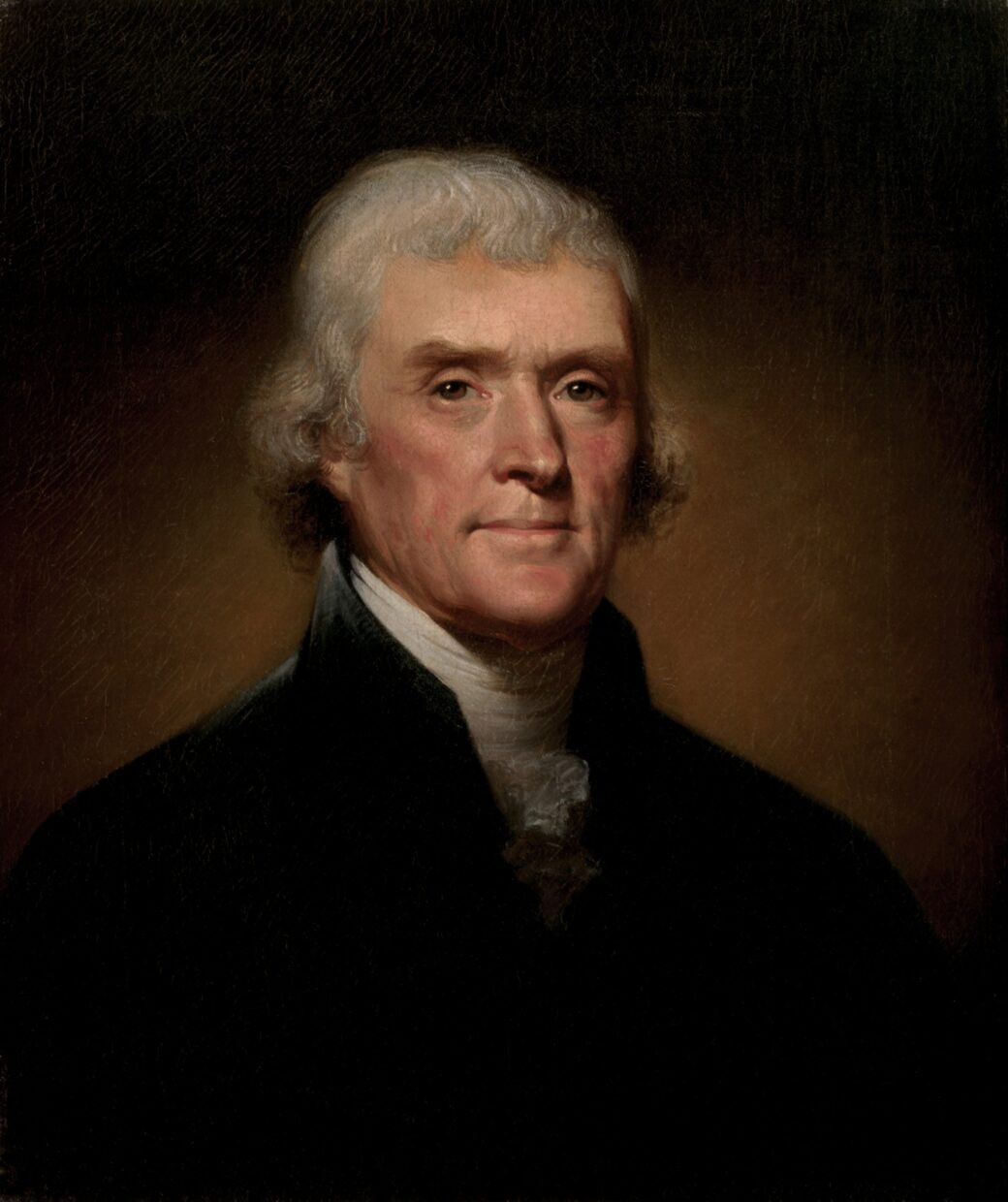
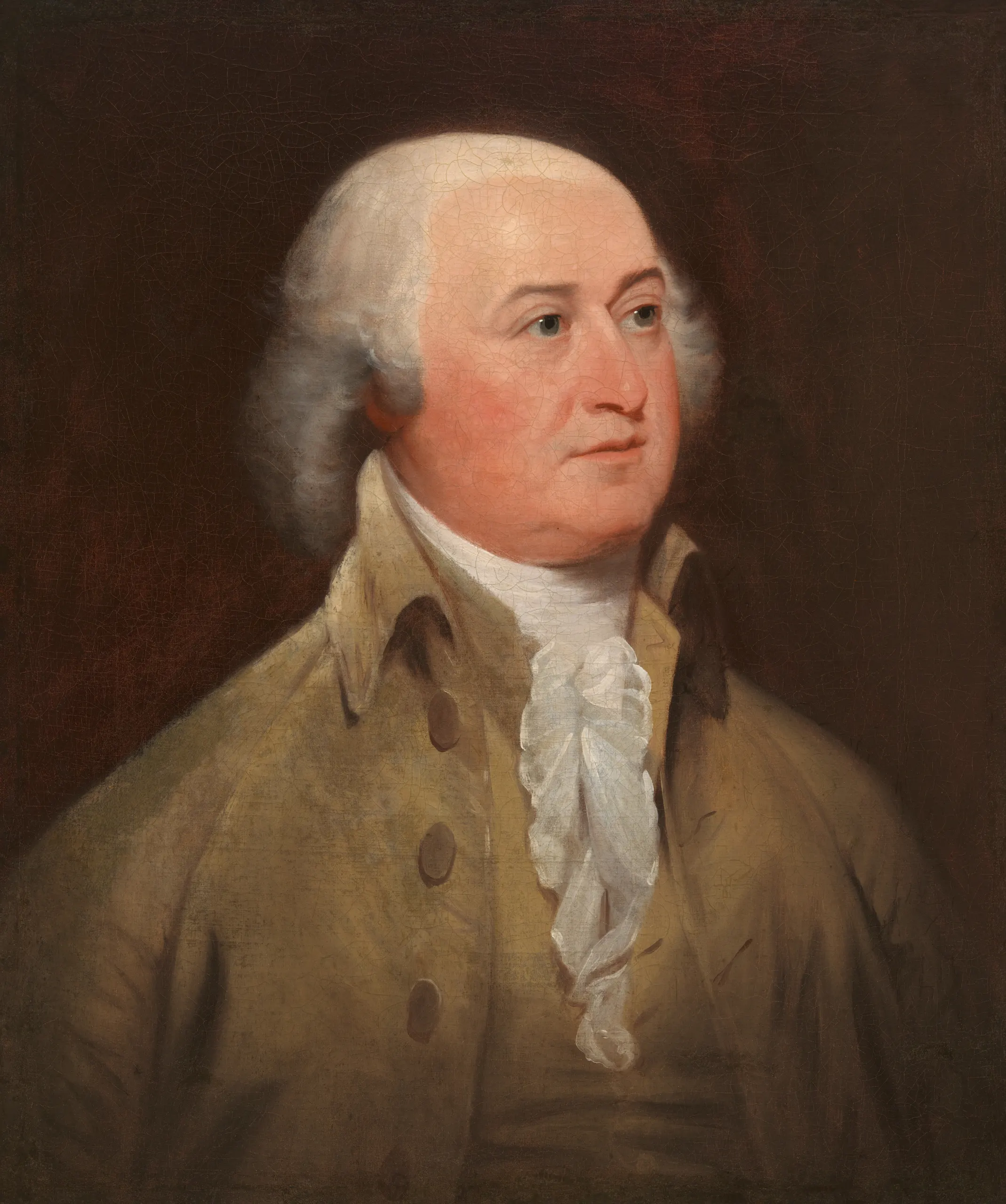
Franklin fue contemporáneo y colega de George Washington, Thomas Jefferson y John Adams, con quienes sirvió en el Congreso Continental y como diplomático. Mantuvo una extensa correspondencia con el científico Joseph Priestley. Su hijo, William Franklin, fue un gobernador lealista de Nueva Jersey. En Francia, trabajó estrechamente con Pierre-Augustin Caron de Beaumarchais para conseguir armas para la Revolución Americana.
Relaciones e historial sentimental
Franklin contrajo matrimonio de hecho con Deborah Read el 1 de septiembre de 1730, después de que ella fuera abandonada por su primer marido. Tuvieron dos hijos juntos: un hijo, Francis Folger Franklin (1732–1736), que murió de viruela, y una hija, Sarah Franklin Bache (1743–1808). También criaron al hijo ilegítimo de Franklin, William, nacido alrededor de 1730, cuya identidad materna sigue siendo desconocida. Deborah gestionó el negocio de imprenta de la familia durante las largas estancias de Franklin en el extranjero y murió en 1774. Mientras se desempeñaba como embajador en Francia, Franklin desarrolló una estrecha amistad, coqueta e intelectual, con Madame Brillon de Jouy, una compositora y música casada, caracterizada por cartas juguetonas y actuaciones musicales. Después de la muerte de Deborah, le propuso matrimonio a Madame Helvétius, una destacada salonnière, pero ella declinó. Siguieron siendo amigos cercanos. A partir de 2026, Franklin murió viudo a los 84 años.
- Casado/aDeborah Read1730 - 1774Matrimonio de hecho; ella gestionó su negocio de imprenta mientras él estaba en el extranjero. Tuvieron dos hijos juntos.
- SalieronWilliam Franklin1730 - 1730Hijo ilegítimo; identidad materna desconocida. Criado por Franklin y Deborah. Más tarde se convirtió en gobernador lealista, causando una ruptura.
- SalieronMadame Brillon de Jouy1777 - 1790Compañera intelectual y amiga coqueta mientras estuvo en Francia; una compositora y música casada.
- SalieronMadame Helvétius1779 - 1780Franklin propuso matrimonio; ella lo rechazó. Siguieron siendo amigos cercanos.
Muerte y repercusiones
Fallecimiento
April 17, 1790 (a los 84 años)
Lugar de fallecimiento
Philadelphia, Pennsylvania, USA
Causa de la muerte
Complications from pleurisy
Upon hearing of his passing, George Washington ordered a full military funeral procession and the suspension of official business in the Continental Congress for ten days. Tributes poured in from peers, including John Adams, who eulogized Franklin as a man whose life was a monument of human virtue. While modern metrics like streaming surges or social media vigils did not exist, the era's equivalent was seen in the widespread publication of eulogies in newspapers such as The Pennsylvania Gazette and the holding of public memorial services in churches and town halls throughout the United States and France. Benjamin Franklin died on April 17, 1790, at his home located at 36 Market Street in Philadelphia, Pennsylvania.
He was 84 years old at the time of his death, having been born on January 17, 1706. The cause of his death is historically recorded as complications from pleurisy, a condition characterized by inflammation of the lining of the lungs, which had severely compromised his breathing. Contemporary accounts indicate that Franklin suffered from severe pain and difficulty breathing for several days prior to his passing. His final days were spent in bed at his residence, where he was attended by family members and physicians. Franklin's funeral took place on April 21, 1790, four days after his death, and was one of the largest public gatherings in Philadelphia history at the time.
The procession included over 20,000 mourners, a figure representing a significant portion of the city's population, and featured a massive cortege of civic leaders, government officials, and foreign dignitaries. Notable attendees included President George Washington, who led the procession and carried Franklin's coffin as a pallbearer, alongside Vice President John Adams and other members of the Supreme Court and Congress. The service was held at Christ Church in Philadelphia, followed by burial in the graveyard of the Old Presbyterian Meeting House (now known as the First Presbyterian Church) on 5th and Arch Streets. In the posthumous period, Franklin's estate was handled by his grandson, William Temple Franklin, who managed the distribution of assets according to his will.
Over subsequent centuries, numerous honors have been bestowed upon him: he was inducted into the Hall of Fame for Great Americans in 1900, and the U.S. Postal Service issued its first commemorative stamp featuring Franklin in 1847. A vast number of institutions bear his name, including the University of Pennsylvania, the Franklin Institute, and the Benjamin Franklin Bridge. His autobiography remains a classic of American literature, and he has been the subject of countless biographies, films, and plays.
Patrimonio neto (valor de la herencia)
$10 Million
Estimación del equipo editorial de iFANN
Benjamin Franklin died in 1790, leaving an estate that was modest by modern standards. The bulk of his wealth came from his printing and publishing business, the sale of Poor Richard's Almanack, and his government salaries. He famously refused to patent the lightning rod, donating the idea to the public. In his will, he left £1,000 each to Boston and Philadelphia, to be loaned to young apprentices for 200 years. By 1990, the Philadelphia fund had grown to over $6.5 million. As of 2026, his estate is not managed as a single entity; his papers are published by the American Philosophical Society and Yale University. His image on the $100 bill is public domain, and licensing of his name and likeness is not centrally controlled. Per iFANN's editorial analysis, Benjamin Franklin's net worth is estimated at $10 Million.
Premios y galardones
View 9 records, honours and achievementsConocido por
Declaration of Independence
1776 · Drafter and Signer
Treaty of Paris
1783 · Negotiator and Signer
U.S. Constitution
1787 · Delegate and Signer
Lightning Rod
1752 · Inventor
Poor Richard's Almanack
1732 · Publisher and Author
Palabras clave
Datos rápidos
- Profesión
- polymath, statesman, inventor, publisher
- Nacimiento
- January 17, 1706
- Lugar de nacimiento
- Boston, Massachusetts Bay Colony
- Fallecimiento
- April 17, 1790
- Lugar de fallecimiento
- Philadelphia, Pennsylvania, U.S.
- Género
- Hombre
- Cónyuge
- Deborah Read Franklin
- Signo zodiacal
- Capricorn
- Estatura
- 5 ft 9 in (175 cm)
Datos personales
- Nombre completo
- Benjamin Franklin
- Estatura
- 5 ft 9 in (175 cm)
- Cónyuge
- Deborah Read Franklin
- Hijos
- William Franklin (illegitimate), Francis Folger Franklin, Sarah Franklin Bache
- Educación
- Less than two years of formal schooling; self-taught
Preguntas frecuentes
¿Qué edad tenía Benjamin Franklin cuando murió?
¿Cuál es el patrimonio neto de Benjamin Franklin en 2026?
¿Por qué Benjamin Franklin está en el billete de 100 dólares?
¿Benjamin Franklin inventó la bombilla?
¿Fue Benjamin Franklin presidente?

Únete a la comunidad
fans comentando