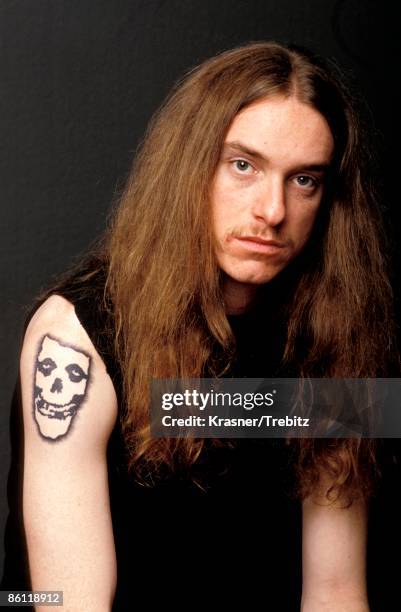
Cliff Burton
 United States
Member of Metallica
Fecha de nacimiento
February 10, 1962
Signo zodiacal
Aquarius
Lugar de nacimiento
Castro Valley, California, USA
Edad
Falleció a los 24
Estatura
5 ft 7 in (170 cm)
Acerca de
Clifford Lee Burton fue un músico estadounidense que se desempeñó como bajista de la banda de heavy metal Metallica desde 1983 hasta su muerte en 1986. Es ampliamente considerado uno de los bajistas más influyentes del heavy metal, conocido por su técnica virtuosa, el uso de pedales de efectos y una composición de influencia clásica. Burton tocó en los primeros tres álbumes de Metallica, Kill 'Em All, Ride the Lightning y Master of Puppets, cada uno de los cuales se volvió fundamental para el género del thrash metal. Su enfoque de bajo como solista, mostrado en instrumentales como "(Anesthesia) – Pulling Teeth" y "Orion", expandió el papel del instrumento en el metal y estableció un nuevo estándar de competencia técnica. La prematura muerte de Burton a los veinticuatro años en un accidente de autobús en Suecia truncó una carrera que ya había redefinido el género. Fue incluido póstumamente en el Salón de la Fama del Rock and Roll como miembro de Metallica en 2009, y su forma de tocar sigue siendo estudiada y venerada por músicos de todo el mundo.
Primeros años y orígenes
Cliff Burton creció en Castro Valley, California, en un hogar musical. Comenzó a tocar piano a los seis años, pasó a la guitarra a los trece y cambió al bajo a los catorce tras la muerte de su hermano mayor Scott, una tragedia que profundizó su enfoque en la música. Asistió a la escuela secundaria Castro Valley High School, graduándose en 1980, y estudió teoría musical en Chabot College en Hayward, donde desarrolló el conocimiento clásico y armónico que más tarde distinguiría su forma de tocar. Sus primeras influencias iban desde Johann Sebastian Bach hasta Lynyrd Skynyrd y Thin Lizzy. Burton formó su primera banda, EZ-Street, en la secundaria, tocando versiones. En 1980 se unió a la banda de metal progresivo Trauma, donde sus solos de bajo comenzaron a llamar la atención. Mientras actuaba con Trauma en el Whisky a Go Go en Los Ángeles en 1982, llamó la atención de James Hetfield y Lars Ulrich. Los dos quedaron tan impresionados por su pieza solista "Anesthesia (Pulling Teeth)" que le pidieron que se uniera a Metallica. Burton inicialmente dudó, luego aceptó con una condición: la banda debía mudarse de Los Ángeles al Área de la Bahía de San Francisco, una exigencia que aceptaron.
Trayectoria profesional
Burton se unió oficialmente a Metallica a principios de 1983, reemplazando al bajista original Ron McGovney. Ese mismo año, la banda grabó su álbum debut Kill 'Em All, lanzado el 25 de julio de 1983. El álbum alcanzó el puesto n.º 120 en el Billboard 200 e incluyó la demostración instrumental de Burton "(Anesthesia) – Pulling Teeth", grabada en vivo en el estudio en una sola toma. En 1984, Metallica lanzó Ride the Lightning, en el que Burton coescribió varias canciones, incluyendo "For Whom the Bell Tolls", "Fade to Black" y la canción homónima. El álbum alcanzó el n.º 100 en el Billboard 200 y consolidó la posición de la banda en el heavy metal. El gran éxito llegó con Master of Puppets, lanzado el 3 de marzo de 1986. Ampliamente considerado uno de los mejores álbumes de metal de todos los tiempos, alcanzó el n.º 29 en el Billboard 200 y se convirtió en el primer disco de platino de la banda. Burton coescribió el instrumental "Orion", enteramente de su autoría, y sus complejos arreglos impregnaron el álbum. El 27 de septiembre de 1986, mientras giraban en apoyo del álbum, Burton murió cuando el autobús de la banda patinó sobre hielo cerca de Dörarp, Suecia, y volcó. Fue lanzado de su litera y aplastado por el autobús. Tenía veinticuatro años.
Cronología profesional
Imagen pública y estilo
Burton era conocido por su cabello largo, chalecos vaqueros con parches y una actitud relajada e intelectual que contrastaba con el estereotipo agresivo del metal. A menudo vestía una camiseta con el nombre de la banda o una camiseta negra lisa. Las representaciones mediáticas lo han retratado constantemente como el "genio musical" de los primeros Metallica, el miembro con formación clásica que elevó el sonido de la banda. Los documentales y biografías enfatizan su trágica muerte y su influencia perdurable. El fandom de Cliff Burton es profundamente reverente, con memoriales anuales en el lugar del accidente en Dörarp, Suecia, que se ha convertido en un destino de peregrinación. Los fanáticos se autodenominan extraoficialmente "Cliff's Army". Las cuentas oficiales de redes sociales administradas por la familia comparten fotos de archivo, entrevistas antiguas y homenajes de fanáticos, manteniendo un tono respetuoso.
Fama y fandom (iFAMOUS Rankings)
The devotion surrounding Cliff Burton is defined by a quiet, profound reverence rather than a distinct organizational name. While Metallica's fanbase is universally known as the Metallicaheads, Burton supporters operate within that sphere yet treat his memory with the solemnity of a martyr for artistic integrity. This community sustains his legacy through organized local efforts, such as the campaign in Castro Valley to establish an annual "Cliff Burton Day," and the mobilization of fans on his birthday to share tributes across major music publications. His influence remains so pervasive that he is frequently cited as the primary reason the band achieved critical acclaim on *Master of Puppets* before his passing. The fandom keeps his spirit alive through streaming campaigns for his work and by preserving personal artifacts in official museum exhibits, ensuring new generations encounter his history directly. Fans often recount the story of Jason Newsted playing on Burton's amp just 20 days after his ashes were spread, a poignant moment illustrating the immediate pain of the transition. These rituals anchor a collective grief that has transformed into a enduring celebration of his creative genius. Burton's standing in global culture reflects this deep-seated impact. He is currently ranked as the 51st most famous person in Metal, a position held steady from the previous cycle according to the iFANN Global Fame Rankings. This placement underscores his status as a foundational figure whose technical proficiency and classical influences expanded the instrument's role in heavy metal forever.
Datos interesantes y leyendas
Cliff Burton was the only member of Metallica with formal music theory training, a skill that heavily influenced the band's complex song structures. His signature bass solo '(Anesthesia) – Pulling Teeth' was recorded live in the studio in a single take, capturing raw energy without edits. He insisted on moving Metallica from Los Angeles to the Bay Area before joining because he disliked the LA music scene. As the only band member who did not sing backing vocals, his focus remained entirely on the bass. Burton was a fan of R.E.M. and Southern rock, a departure from the thrash metal norm, and used a Morley Power Wah Boost pedal and a Big Muff distortion to create his distinctive sound. The bassline for 'Orion' was entirely composed by Burton and is considered his masterpiece. He died on September 27, 1986, the same day his favorite band, Lynyrd Skynyrd, lost three members in a plane crash in 1977. The card game that decided who would sleep in the bunk where Burton died was played with Kirk Hammett; Hammett won and took the other bunk. A widely retold account involves producer Flemming Rasmussen stating that Burton was effectively the 'real leader' of the band during his time, guiding creative decisions. Another popular anecdote highlights his blunt honesty when telling the band Possessed, 'I hate your band, you're a Slayer ripoff!'. Legends also persist regarding the instrumental track 'Orion', which was originally intended to be a guitar solo for Kirk Hammett until Burton insisted on playing it himself, fundamentally changing the song's structure. On stage, this solo became a ritualistic highlight where crowds fell silent in awe before erupting into cheers, cementing his reputation as a virtuoso.
Frases destacadas
“I don't think I'm better than anybody else. I just think I'm a little bit different.”
“When I play, I try to play what I feel. If I feel it, then it's good.”
“I want to be remembered as a musician who tried to do something different.”
“The bass is not just a background instrument. It can be a lead instrument too.”
“I'd rather be playing my bass than doing anything else in the world.”
Familia y vida personal
Cliff Burton nació de Ray y Jan Burton. Tenía un hermano mayor, Scott, cuya muerte en 1975 lo afectó profundamente y lo impulsó a cambiarse al bajo. Su padre Ray administró el patrimonio de Burton durante décadas después de su muerte, hasta el fallecimiento de Ray en 2020. Burton nunca se casó y no tuvo hijos. Estaba en una relación al momento de su muerte, pero la identidad de su pareja se ha mantenido privada por la familia. La familia Burton ha mantenido un perfil bajo, con Scott Burton administrando ahora el patrimonio a través de Cliff Burton Estate LLC.
Conexiones destacadas
Los colaboradores más cercanos de Cliff Burton fueron sus compañeros de Metallica, James Hetfield, Lars Ulrich y Kirk Hammett. Hetfield y Ulrich reclutaron a Burton después de verlo tocar con Trauma. Hammett se unió a Metallica poco después que Burton y se convirtió en un amigo íntimo. Burton también coincidió brevemente con el guitarrista original Dave Mustaine a principios de 1983. Tras su muerte, su padre Ray Burton administró su patrimonio durante décadas, seguido por su hermano Scott Burton.
Relaciones e historial sentimental
La vida amorosa de Cliff Burton no está extensamente documentada en fuentes públicas. La información fiable se limita a una relación confirmada: mantuvo una relación a largo plazo con una pareja anónima desde aproximadamente 1984 hasta su muerte en 1986. Su identidad ha sido mantenida en privado por su familia y amigos cercanos. Burton nunca se casó y no tuvo hijos. A fecha de 2026, está fallecido y no se han reportado relaciones románticas póstumas.
- SalieronUnnamed1984 - 1986Pareja a largo plazo; identidad mantenida en privado por la familia.
Muerte y repercusiones
Fallecimiento
September 27, 1986 (a los 24 años)
Lugar de fallecimiento
Lycksele, Sweden
Causa de la muerte
Crushing trauma after ejection from bus
Clifford Lee Burton died on September 27, 1986, in a bus accident near Lycksele, Sweden. The tour bus skidded on a wet patch of Route 45 and rolled over, throwing Burton from his bunk through an open window where he was crushed by the falling vehicle. Swedish police determined the crash resulted from road conditions and driving error, with no evidence of foul play or mechanical failure found in the official investigation. Metallica canceled their remaining European tour dates immediately following the news, while tributes poured in from peers who highlighted his unique musicality and influence. The band's albums saw a significant surge in sales as new fans sought out the work of the late bassist, particularly Master of Puppets.
A private funeral took place on October 4, 1986, in San Francisco, California, attended by family members, close friends, and select bandmates. His ashes were scattered at sea off the coast of Catalina Island, a decision made to reflect his love for the ocean and nature. Posthumously, Burton received numerous honors including induction into the Rock and Roll Hall of Fame as part of Metallica in 2009. The band dedicated their 1988 album ...And Justice for All to his memory, featuring the track One as a tribute to his legacy.
Patrimonio neto (valor de la herencia)
$5 Million
Estimación del equipo editorial de iFANN
iFANN currently estimates Cliff Burton's estate at $5 Million. The primary sources of income are posthumous royalties from Metallica's first three albums, Kill 'Em All, Ride the Lightning, and Master of Puppets, which continue to sell steadily on vinyl, CD, and streaming platforms. Licensing and merchandising of Burton's image, likeness, and music on T-shirts, posters, guitar picks, and other memorabilia generate ongoing revenue. Posthumous releases, such as the 2016 deluxe reissue of Master of Puppets and the 2018 Kill 'Em All deluxe edition, have featured previously unreleased Burton recordings. His co-writing credits on multiple songs generate publishing income. Burton's father Ray managed the estate until his death in 2020; since then, his brother Scott Burton and the Cliff Burton Estate LLC have overseen the assets. The estate's value has grown modestly over the years, buoyed by Metallica's continued popularity and periodic anniversary reissues.
Premios y galardones
View 14 records, honours and achievementsConocido por
(Anesthesia) – Pulling Teeth
1983 · Bass solo performer/composer
Orion
1986 · Composer/bassist
For Whom the Bell Tolls
1984 · Co-writer/bassist
Palabras clave
Datos rápidos
- Profesión
- bass guitarist, musician
- Nacimiento
- 1962-02-10
- Lugar de nacimiento
- Castro Valley, California, USA
- Fallecimiento
- 1986-09-27
- Lugar de fallecimiento
- Dörarp, Sweden
- Género
- Hombre
- Signo zodiacal
- Aquarius
Datos personales
- Nombre completo
- Clifford Lee Burton
- Estatura
- 5 ft 7 in (170 cm)
- Educación
- Castro Valley High School; Chabot College (music theory)
Preguntas frecuentes
¿Cómo murió Cliff Burton?
¿Estaba casado Cliff Burton?
¿Cuál es el patrimonio neto de Cliff Burton en 2026?
¿En qué álbumes tocó Cliff Burton?
¿Cuánto medía Cliff Burton?
Redes sociales
Únete a la comunidad
fans comentando