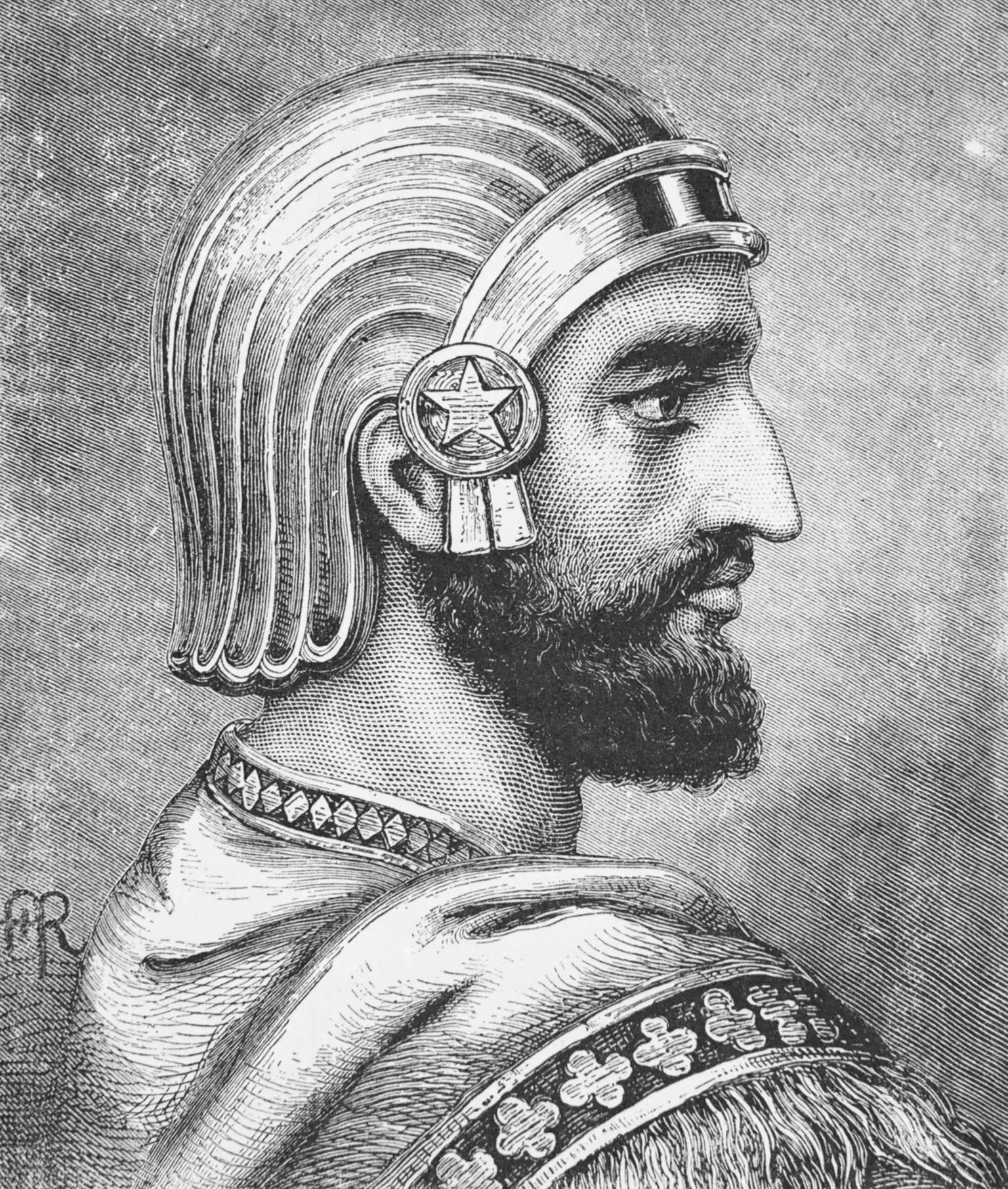
Cyrus the Great
King•military leader•founder of the Achaemenid Empire
Also known as: Cyrus II of Persia, Cyrus the Elder
Fecha de nacimiento
600 BC
Signo zodiacal
Lugar de nacimiento
Anshan, Persia (modern-day Iran)
Edad
Falleció a los 70
Acerca de
Ciro el Grande fue el fundador del Imperio aqueménida, el imperio más grande que el mundo había visto hasta su época. Unió a los pueblos del antiguo Cercano Oriente bajo el dominio persa, extendiéndose desde el Mediterráneo hasta el Indo. Lo que lo distinguió de otros conquistadores antiguos fue su enfoque de gobierno: respetaba las costumbres locales, permitía la libertad religiosa y gobernaba mediante un sistema de sátrapas. Hoy es recordado como un modelo de liderazgo ilustrado, elogiado en la Biblia hebrea y admirado por los historiadores.
Primeros años y orígenes
Ciro nació alrededor del 600 a. C. en Anshan, una región de Persis (actual Fars, Irán). Su padre fue Cambises I, un rey vasallo de los medos, y su madre fue Mandane, hija del rey medo Astiages. Según el historiador griego Heródoto, Astiages soñó que su nieto lo derrocaría. Ordenó matar al infante Ciro, pero un pastor llamado Mitradates lo crió en secreto. Cuando Ciro tenía diez años, su porte noble lo delató, y Astiages lo perdonó después de que un intérprete de sueños le asegurara que la amenaza había pasado. Ciro regresó a Anshan y heredó el trono alrededor del 559 a. C. En ese momento, Anshan era un pequeño reino bajo el dominio medo. Ciro comenzó a construir una coalición de tribus persas, preparándose para la revuelta que cambiaría la historia.
Trayectoria profesional
Ciro lanzó su levantamiento contra los medos alrededor del 550 a. C. Después de tres años de lucha, derrotó a Astiages y capturó la capital meda, Ecbatana. Los persas absorbieron los territorios medos, y Ciro se autoproclamó rey de persas y medos. En el 547 a. C., marchó contra el rico reino lidio del rey Creso, famoso por su oro. Tras una feroz batalla en Pteria, Ciro capturó Sardes y tomó prisionero a Creso. Lidia cayó, y las ciudades griegas jónicas de Asia Menor se sometieron. El siguiente gran objetivo fue Babilonia. En el 539 a. C., Ciro marchó contra el Imperio neobabilónico. Derrotó al ejército babilónico en Opis y entró en Babilonia sin lucha, siendo recibido por muchos como un libertador. Luego emitió el Edicto de Restauración, permitiendo que los pueblos exiliados, incluidos los judíos, regresaran a sus patrias. Este acto le valió un lugar único en la historia bíblica. Ciro pasó sus últimos años haciendo campaña en Asia Central, donde murió en el 530 a. C.
Cronología profesional
Imagen pública y estilo
Ciro es recordado como un conquistador sabio y benevolente, un marcado contraste con gobernantes posteriores como Alejandro Magno. Los escritores griegos antiguos elogiaron su justicia y habilidad política. En Irán, es un héroe nacional, y su tumba es un símbolo del patrimonio persa. Los historiadores modernos lo ven como un pionero de los derechos humanos, citando su cilindro (ahora en el Museo Británico) como una declaración temprana de tolerancia. No hay un fandom en el sentido moderno, pero su reputación perdura en la erudición y la cultura popular.
Fama y fandom
Cyrus the Great stands as a towering figure of ancient history whose reputation has outlasted empires, though he currently holds no placement in the iFANN Global Top 1,000 or any scope list. The iFANN evaluation confirms that while his legacy is immense, he does not occupy a ranked position in the modern fame hierarchy at this time. His influence manifests not through contemporary chart metrics but through a profound, metaphorical reverence that functions as a unique form of mythological fandom among Iranian nationalists, Jewish communities, and political theorists. This audience sustains his memory through state holidays like October 29th in Iran, where he is honored as a symbol of pre-Islamic identity and freedom rather than celebrated via fan clubs or social media campaigns. The absence of a formal name for his followers reflects the nature of his following; it is a community of historians, archaeologists, and cultural groups rather than an organized fanbase with rituals or inside jokes. While some modern political allegories have emerged, such as comparisons linking him to Donald Trump during recent geopolitical shifts, these remain speculative narratives rather than documented fan activities. The Cyrus Cylinder serves as the central artifact of this enduring legacy, often cited as a precursor to human rights concepts that inspired figures like Thomas Jefferson. Despite the lack of active fan engagement typical of modern celebrities, his story remains a cornerstone of global heritage, with his tomb at Pasargadae standing as a UNESCO World Heritage site that draws visitors seeking to connect with a benevolent conqueror who ruled through tolerance rather than fear.
Datos interesantes y leyendas
Cyrus the Great holds the unique distinction of being the only non-Jewish figure in the Hebrew Bible to be called a messiah. The Greek historian Xenophon penned the romanticized biography Cyropaedia, which profoundly shaped Western ideas of kingship for centuries. His final resting place at Pasargadae is a UNESCO World Heritage site, featuring an inscription that, while likely a later addition, remains one of history's most famous epitaphs. Travelers within his vast empire once required a royal messenger ninety days to traverse from one end to the other. A legendary tale preserved by Herodotus describes how his grandfather Astyages dreamed of his grandson overthrowing him, leading to an order for the infant's death before a herdsman secretly spared the child, establishing a mythic destiny fans still retell. Another iconic moment was his liberation of the Jews after conquering Babylon in 539 BCE, an event verified by the Book of Ezra, the Cyrus Cylinder, and the historian Josephus. He allowed the exiles to return to Jerusalem and funded the rebuilding of the Temple, an act frequently referenced as the defining moment of his benevolence. Modern legends also include the controversial equating of former U.S. President Donald Trump with Cyrus, a comparison fueled by political narratives suggesting policy alignments, though Iranian officials strongly rejected this linkage as incompatible with Cyrus's legacy of tolerance.
Frases destacadas
“O man, whoever you are and wherever you come from, for I know you will come, I am Cyrus who founded the Persian empire and was king of Asia. I did not therefore allow him to be oppressed.”
“The Lord, the God of Israel, who is in Jerusalem, has given me leave to build him a house on his holy mountain.”
Familia y vida personal
Ciro se casó con Casandana, una princesa asiria, con quien tuvo dos hijos: Cambises II, que le sucedió, y Bardiya (llamado Esmerdis por los griegos), y varias hijas. Tras la muerte de Casandana, se casó con Amitis, hija del rey medo Astiages, y posiblemente con Neitiyti, una princesa egipcia. Su familia fue central para su dinastía, aunque surgieron historias de rivalidad entre sus hijos después de su muerte.
Conexiones destacadas
Ciro está asociado con su abuelo Astiages, a quien derrocó; su padre Cambises I; su madre Mandane; sus esposas Casandana, Amitis y Neitiyti; sus hijos Cambises II y Bardiya; el rey lidio Creso; el rey babilónico Nabonido; y la reina masageta Tomyris, quien probablemente lo mató en batalla.
Relaciones e historial sentimental
Ciro se casó con Casandana, una princesa asiria, probablemente alrededor del 570 a. C. Ella le dio dos hijos y varias hijas, y su muerte lo afectó profundamente. Luego se casó con Amitis, hija del rey medo Astiages, para fortalecer los lazos con los medos. También pudo haberse casado con Neitiyti, una princesa egipcia, como alianza diplomática. Las tres esposas fueron reinas del imperio. A su muerte en el 530 a. C., Ciro estaba casado con Amitis (y posiblemente Neitiyti), aunque Casandana había fallecido antes que él.
- Casado/aCassandane-570 - -550Princesa asiria, madre de Cambises II y Bardiya. Murió antes que Ciro.
- Casado/aAmytis-550 - -530ActualHija de Astiages, se casó tras la muerte de Casandana para fortalecer los lazos medos.
- Casado/aNeithiyti-540 - -530Princesa egipcia, posiblemente un matrimonio diplomático. Se sabe poco.
Muerte y repercusiones
Fallecimiento
530 BC (a los 70 años)
Lugar de fallecimiento
near the Syr Darya river, territory of the Massagetae
Causa de la muerte
Killed in battle against the Massagetae
Cyrus the Great spent his final years leading the Persian army on a military campaign against the Massagetae, a nomadic people located north of the Aral Sea near the Syr Darya river. Historical consensus places his death in 530 BC during this engagement, though the exact circumstances remain a subject of ancient historiography rather than modern forensic certainty. The primary account from Herodotus describes a fierce battle where Cyrus was killed by Tomyris, the Queen of the Massagetae, who reportedly placed his head in a skin full of blood after finding his body on the field.
Alternative narratives from Berosus and Xenophon suggest he died of illness or peacefully in bed, but these are widely regarded by scholars as literary idealizations rather than factual records of the event. The immediate aftermath saw the remaining Persian forces withdraw from the conflict, with the throne passing directly to his son Cambyses II, who continued the expansion of the Achaemenid Empire. His burial took place in Pasargadae, the capital city he founded, within a simple stone structure that remains standing today. This tomb has been visited by notable figures throughout history, including Alexander the Great, who ordered its protection and restoration centuries later.
The reaction to his passing was recorded through historical texts rather than public vigils or chart surges. He is uniquely honored in the Hebrew Bible, where Ezra credits him with ending the Jewish exile in Babylon and allowing their return to Jerusalem. Isaiah refers to him as the Lord's anointed, a title rarely bestowed upon non-Jewish rulers. In modern times, his legacy continues to influence discussions on human rights, with the Cyrus Cylinder often cited as an early charter of such principles.
Premios y galardones
View 4 records, honours and achievementsConocido por
Founding the Achaemenid Empire
c. 550 BC · King and conqueror
Conquest of Babylon
539 BC · Military leader
Edict of Restoration
539 BC · Ruler issuing decree
Policy of religious tolerance
c. 539 BC · Rey
Palabras clave
Datos rápidos
- Profesión
- King, military leader, founder
- Nacimiento
- 600 BC
- Lugar de nacimiento
- Anshan, Persia
- Fallecimiento
- 530 BC
- Lugar de fallecimiento
- Syr Darya region (Central Asia)
- Género
- Hombre
- Cónyuge
- Cassandane, Amytis, Neithiyti
- Children
- Cambyses II, Bardiya (Smerdis)
Datos personales
- Nombre completo
- Cyrus II of Persia
- Cónyuge
- Cassandane, Amytis, Neithiyti
- Hijos
- Cambyses II, Bardiya (Smerdis)
Preguntas frecuentes
¿Quién fue Ciro el Grande?
¿Cuándo vivió Ciro el Grande?
¿Por qué es famoso Ciro el Grande?
¿Dónde nació Ciro el Grande?
¿Cómo murió Ciro el Grande?
Personas similares
Únete a la comunidad
fans comentando