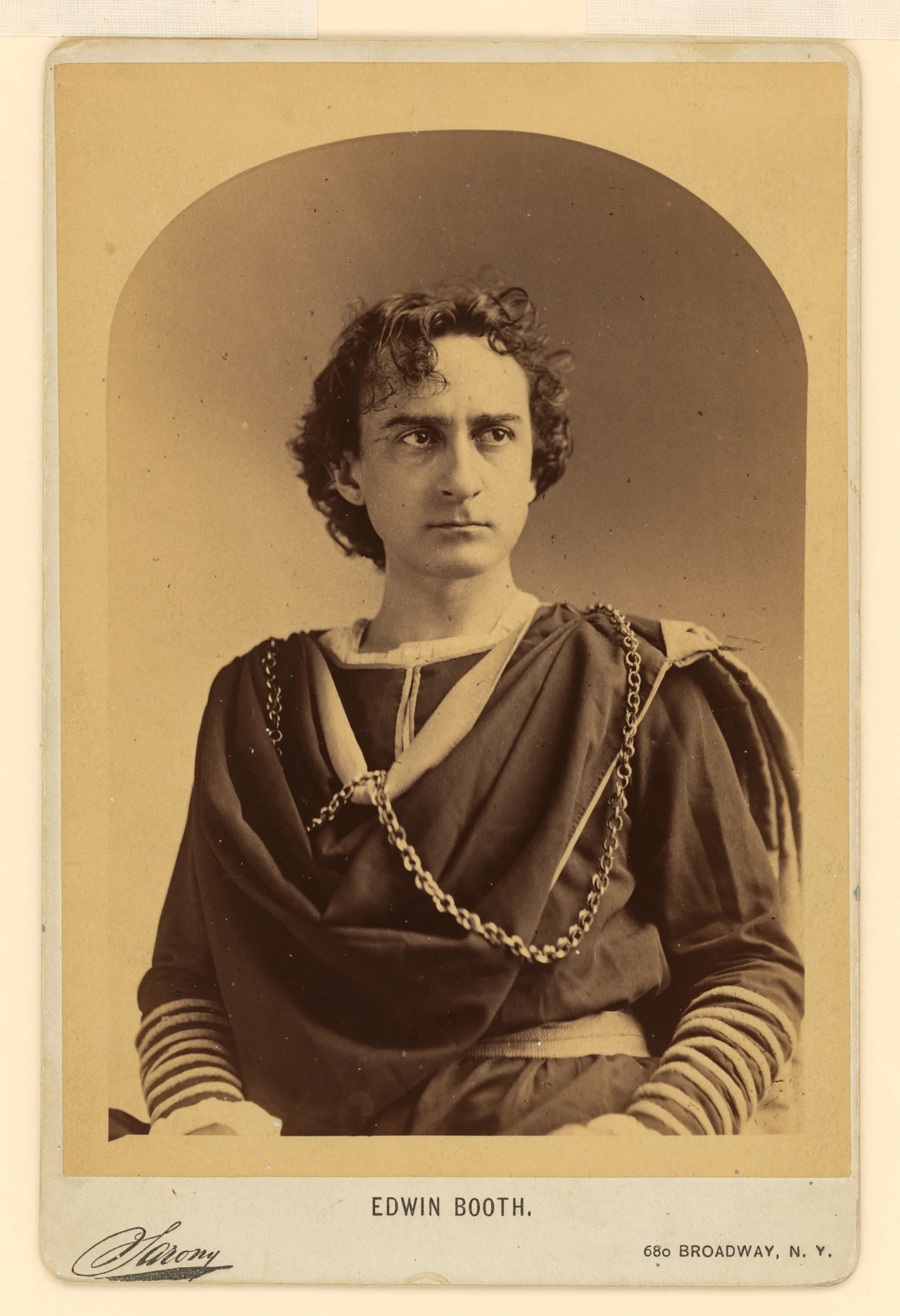
Edwin Booth
 Belgium
Also known as: Edwin Thomas Booth, The Master
Fecha de nacimiento
November 13, 1833
Signo zodiacal
Scorpio
Lugar de nacimiento
Bel Air, Maryland, United States
Edad
Falleció a los 59
Acerca de
Edwin Thomas Booth fue un actor de teatro y gerente teatral estadounidense, ampliamente considerado como el mejor actor shakespeariano estadounidense del siglo XIX. Nacido en una dinastía teatral, Booth alcanzó la fama a través de sus matizadas interpretaciones de personajes complejos, particularmente Hamlet, que interpretó más veces que cualquier otro actor antes o después. Su récord de 100 noches consecutivas de Hamlet en 1864-65 sigue siendo inigualable. Booth fundó el Booth's Theatre en la ciudad de Nueva York en 1869, un recinto de última generación que mostraba su visión artística. A pesar de su inmenso éxito profesional, su legado a menudo se entrelaza con el de su hermano menor, John Wilkes Booth, quien asesinó al presidente Abraham Lincoln. Hoy, Booth es recordado como una figura transformadora en el teatro estadounidense, cuyo estilo reservado e introspectivo revolucionó la interpretación shakespeariana. Era de baja estatura, delgado, moreno y de apariencia sensible, con un rostro pálido y móvil marcado por la melancolía. Su presencia escénica se describía como una extraña cualidad magnética que atraía a las multitudes dondequiera que actuara. La integridad personal de Booth y su dedicación a su oficio le valieron admiradores incluso cuando la infamia de su hermano amenazaba con eclipsar sus logros. Sigue siendo un tema de estudio histórico y biografía, con su vida representada en la película de 1955 Prince of Players protagonizada por Richard Burton.
Primeros años y orígenes
Edwin Booth nació el 13 de noviembre de 1833 en Bel Air, Maryland, en la cabaña de troncos de la familia. Fue nombrado en honor a Edwin Forrest y Thomas Flynn, dos colegas de su padre. Su infancia estuvo marcada por el creciente alcoholismo e inestabilidad de su padre. Junius Brutus Booth, considerado el actor estadounidense más destacado de su época, comenzó a beber en exceso y sufrió ataques de ira después de que tres de sus hijos murieran en un corto período. A los 13 años, Edwin fue enviado a acompañar a su padre de gira, con la tarea de mantenerlo sobrio y cuerdo. La biógrafa Eleanor Ruggles escribió que la presencia tranquila y solícita de Edwin podía 'recordar al padre cuando Booth estaba envuelto en melancolía o perdido en el frenesí'. Esta experiencia le dio una educación temprana en el estilo de actuación grandilocuente de la época. Edwin recibió una educación formal limitada, pero demostró una inteligencia y determinación notables. Hizo su debut escénico el 10 de septiembre de 1849 en el Boston Museum, interpretando el papel menor de Tressel junto a su padre como Ricardo III. Dos años después, en la ciudad de Nueva York, cuando su padre se negó a actuar, Edwin lo reemplazó como Ricardo III, ofreciendo una actuación imitativa pero creíble que marcó su primer gran paso hacia el estrellato.
Trayectoria profesional
Después de la muerte de su padre en 1852, Edwin Booth se convirtió en una estrella en el circuito de compañías, actuando en campamentos mineros cubiertos de nieve, viviendo brevemente en una choza cerca de San Francisco, recorriendo las islas del Pacífico y finalmente regresando al este en 1854 para asumir el papel más famoso de su padre, Ricardo III. En 1862, se convirtió en gerente del Winter Garden Theatre en Nueva York, donde montó aclamadas producciones shakespearianas. Su racha de 100 noches consecutivas de Hamlet desde 1864 hasta 1865 sigue siendo un récord. Interpretó a Hamlet más veces que cualquier otro actor en la historia. En 1869, fundó el Booth's Theatre, un recinto moderno con maquinaria escénica avanzada, considerado uno de los teatros más espectaculares de su época. Realizó una gira por Europa de 1880 a 1882, actuando en Londres y otras capitales con gran aclamación. Booth continuó actuando hasta su muerte en 1893, consolidando su reputación como el actor estadounidense más destacado de su siglo.
Cronología profesional
Imagen pública y estilo
Edwin Booth poseía una extraña cualidad magnética que atraía a las multitudes dondequiera que actuara. En el escenario, era trascendente y magnético, conocido por su estilo refinado e introspectivo que contrastaba fuertemente con el enfoque grandilocuente de su padre. Fuera del escenario, se le describía como grave, pensativo y reticente. Su rostro pálido y móvil y sus ojos melancólicos se convirtieron en su sello distintivo. Los fans bloqueaban la puerta del escenario solo para vislumbrarlo. La personalidad reservada de Booth y su dedicación a su oficio le valieron el apodo de 'El Maestro' entre los círculos teatrales. Era partidario de la Unión durante la Guerra Civil, y su integridad personal le ganó admiradores incluso cuando la infamia de su hermano amenazaba con eclipsar sus logros. Cuando caminaba por las calles, la gente se detenía a mirarlo. Su presencia escénica se caracterizaba por tener 'una admiración que ninguna palabra puede describir adecuadamente'. El estilo característico de Booth era refinado y reservado, lo que lo diferenciaba de sus contemporáneos.
Fama y fandom (iFAMOUS Rankings)
For a man who never knew the frenzy of a modern fan base, Edwin Booth commanded a devotion that bordered on the religious. Audiences didn't just watch him; they waited by the stage door for hours, hoping to catch a glimpse of those melancholy eyes. His Hamlet, a role he performed more than any actor before or since, was the performance of a lifetime, a psychological revelation that left playgoers stunned into silence before the applause erupted. The 100-night consecutive run in 1864-65 was not merely a record, it was a phenomenon that made his name synonymous with theatrical greatness.
Yet Booth's following was not a fandom in the modern sense. There was no official name for his admirers, no organized clubs, no coordinated campaigns. His fans were the theatergoers of his era, bound by word of mouth and the shared experience of live performance. Their devotion was expressed in the packed houses and the fervent reviews, in the way they elevated him to the status of a cultural icon. Even after his death, his legacy was preserved not by fan groups but by institutions like The Players Club, which he founded, and the archives that keep his memory alive.
In the annals of fame, Edwin Booth's place is secure, though iFANN's Global Fame Engine has evaluated his standing and found that he currently does not hold a placement in the published rankings, not in the Global Top 1,000, nor in any Top-100 scope list. This is a reflection of the era in which he lived, a time before the global media landscape that fuels modern fame. Yet, in the annals of theatrical history, his name remains a touchstone, a legend that continues to resonate.
Datos interesantes y leyendas
Edwin Booth's life was marked by extraordinary coincidences and quiet acts of kindness. He once saved the life of Robert Todd Lincoln, pulling the president's son from a train platform gap in Jersey City, a story that gains tragic irony when one recalls that Edwin's brother, John Wilkes, would assassinate the president a year later. This tale is often the first told to newcomers, a reflection of the strange hand of fate that linked the Booth family to the Lincolns.
During the Civil War, Booth hung a Union flag over his infant daughter's bed, a quiet declaration of loyalty that contrasted sharply with his brother's actions. He also contributed to a fund that purchased a horse and buggy for the poet Walt Whitman, who had become lame, a gesture of kindness that spoke to his character. Booth urged his daughter to learn ice-skating, lamenting that he had no childhood opportunities for play, and he lived a Bohemian lifestyle in his early career, with casual encounters he boasted about in letters to his brother Junius.
The Folger Shakespeare Library holds extensive materials on the Booth family, ensuring his legacy is preserved. His support for President Lincoln made his brother's assassination particularly devastating, and he withdrew from the stage briefly in the public backlash. He is interred at Mount Auburn Cemetery in Cambridge, Massachusetts, where his grave remains a site of pilgrimage for theater lovers.
Frases destacadas
“My youth began with my marriage.”
“Starring around the country is sad work.”
“I have never known a happy day since I left the stage.”
“The actor must be a student of human nature.”
“The stage is a world within a world.”
Familia y vida personal
Edwin Booth fue el séptimo de diez hijos nacidos de Junius Brutus Booth, un renombrado actor de origen inglés, y Mary Ann Holmes, su amante que luego se convirtió en su esposa. Su hermano mayor era Junius Brutus Booth Jr., un gerente teatral. Sus hermanos menores incluían a Asia Booth Clarke y John Wilkes Booth, el actor que asesinó al presidente Lincoln. Edwin tuvo un hijo sobreviviente, una hija llamada Edwina Booth Grossman, de su primer matrimonio. Vivió en la ciudad de Nueva York y más tarde en la vida se convirtió en un recluso. No se documentan mascotas. Después del asesinato de Lincoln, Edwin no fue encarcelado como otros miembros de la familia porque tenía amigos en altos cargos.
Conexiones destacadas
Edwin Booth era hijo de Junius Brutus Booth, un famoso actor, y hermano de John Wilkes Booth, quien asesinó a Abraham Lincoln. También era hermano de Junius Brutus Booth Jr., un gerente de teatro, y de Asia Booth Clarke. Su primera esposa, Mary Devlin, fue actriz, y su segunda esposa, Mary McVicker, también actriz. Su hija Edwina Booth Grossman recopiló sus cartas. Contribuyó a un fondo para el poeta Walt Whitman.
Relaciones e historial sentimental
Edwin Booth estuvo casado dos veces. Su primera esposa fue Mary Devlin, una actriz que interpretó a Julieta frente a su Romeo en Richmond, Virginia. Se casaron en 1860, y Mary dejó los escenarios para ser su esposa. Tuvieron una hija, Edwina, nacida en 1861. Mary falleció en 1863, poco después del primer cumpleaños de Edwina. Booth dijo de ella: 'Mi juventud comenzó con mi matrimonio'. En 1869, se casó con Mary McVicker, también actriz. Ese matrimonio duró hasta la muerte de ella en 1881. No sobrevivieron hijos del segundo matrimonio. Booth también tuvo relaciones informales al principio de su carrera, según consta en cartas a su hermano. En el momento de su muerte en 1893, Booth era viudo, habiendo sobrevivido a ambas esposas.
- Casado/aMary Devlin Booth1860 - 1863Mary Devlin fue una actriz que se casó con Booth en 1860 y dio a luz a su hija Edwina en 1861. Falleció en 1863.
- Casado/aMary McVicker Booth1869 - 1881Mary McVicker fue una actriz. El matrimonio duró hasta su muerte en 1881. No sobrevivieron hijos.
Muerte y repercusiones
Fallecimiento
June 7, 1893 (a los 59 años)
Lugar de fallecimiento
New York City
Causa de la muerte
Apoplexy
The official announcement regarding Edwin Thomas Booth's passing came from his attending physicians, who certified the cause as apoplexy following a sudden collapse at his New York City residence. The celebrated actor, born in 1833, succumbed to what was understood to be a cerebral hemorrhage on June 7, 1893, at the age of fifty-nine. His final days had been marked by a decline in health attributed to chronic heart issues and the physical toll of years spent touring, though he had already retired from active stage management before his last hours.
The theatrical community and the public reacted with immediate and profound mourning, recognizing the loss of the man who had worked tirelessly to restore the family name after the tragedy involving his brother. Tributes poured in from institutions across the United States and Europe, honoring the actor whose record-breaking performances of Hamlet had defined a generation of American theater. Booth's funeral was conducted shortly after his death as a private affair attended by family and close friends, reflecting both the sensitivity of his history and his high standing within the profession.
He was laid to rest at Mount Auburn Cemetery in Cambridge, Massachusetts, where his grave has since become a site of interest for those studying American theater history. Posthumous recognition continued to grow, notably through the dedication of a statue in Gramercy Park, which commemorates his character and his famous rescue of Robert Todd Lincoln. His legacy was further cemented by publications such as an article in The Century Magazine, which helped distinguish his heroic narrative from the infamy of his sibling.
Patrimonio neto (valor de la herencia)
$5 Million
Estimación del equipo editorial de iFANN
iFANN currently estimates the estate of Edwin Booth at approximately $5 million. During his lifetime, Booth earned substantial sums from his tours and theatre management, often commanding thousands of dollars per performance. However, he also spent heavily on his theatrical ventures, particularly Booth's Theatre, which proved a financial burden. After his death in 1893, his estate was managed by his daughter, Edwina Booth Grossman, who compiled and published his letters in 1902. Revenue sources for the estate include royalties from published works, licensing of his name and image for historical publications, and ongoing performances of Shakespearean productions associated with his legacy. The estate has grown modestly over the years through careful management and historical interest. Specific estate valuation figures from his death are not readily available, but his earnings from starring tours and theatre management were significant, though offset by the costs of his ambitious theatrical projects.
Premios y galardones
View 5 records, honours and achievementsConocido por
Hamlet
1864 · Hamlet
Richard III
1851 · Richard III
Booth's Theatre
1869 · Fundador
Palabras clave
Fuentes
Datos rápidos
- Profesión
- stage actor, theatre manager
- Nacimiento
- +1833-11-13
- Lugar de nacimiento
- Bel Air, Maryland, United States
- Fallecimiento
- +1893-06-07
- Lugar de fallecimiento
- Nueva York, Nueva York, Estados Unidos
- Género
- Hombre
- Cónyuge
- Mary Devlin Booth, Mary McVicker Booth
- Signo zodiacal
- Scorpio
Datos personales
- Nombre completo
- Edwin Thomas Booth
- Cónyuge
- Mary Devlin Booth, Mary McVicker Booth
- Hijos
- Edwina Booth Grossman
Preguntas frecuentes
¿Por qué es más conocido Edwin Booth?
¿Cómo reaccionó Edwin Booth al asesinato de Lincoln por parte de su hermano?
¿Tuvo hijos Edwin Booth?
¿Cuántas veces se casó Edwin Booth?
¿Qué teatro construyó Edwin Booth?
Personas similares
Únete a la comunidad
fans comentando