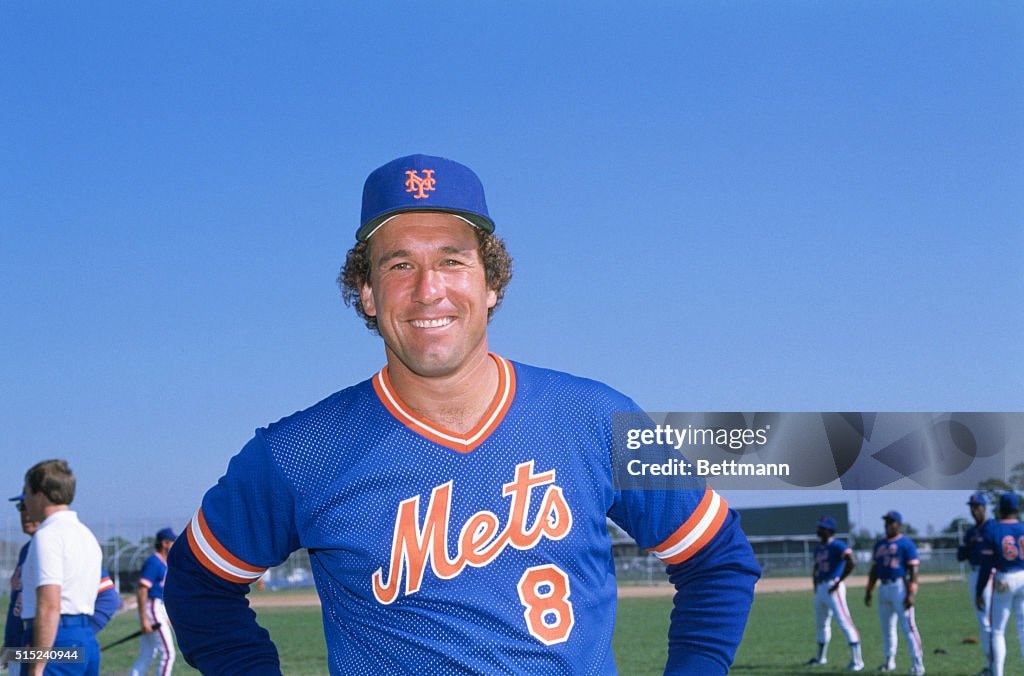
Gary Carter
 United States
Also known as: The Kid
Fecha de nacimiento
April 8, 1954
Signo zodiacal
Aries
Lugar de nacimiento
Culver City, California, United States
Edad
Falleció a los 57
Estatura
6 ft 2 in (188 cm)
Acerca de
Gary Carter fue un receptor de béisbol profesional estadounidense que jugó 19 temporadas en las Grandes Ligas, principalmente para los Montreal Expos y los New York Mets. Un All-Star perenne con 11 selecciones, era conocido por su potente bateo, fuertes habilidades defensivas y personalidad exuberante que le valió el apodo de "The Kid". Carter fue exaltado al Salón de la Fama del Béisbol Nacional en 2003, consolidando su legado como uno de los mejores receptores en la historia del béisbol.
Sus totales de carrera incluyen 324 jonrones y 1,225 carreras impulsadas, y fue una figura clave en el dramático campeonato de la Serie Mundial de los Mets en 1986. Más allá del diamante, Carter era un devoto cristiano y orador motivacional, respetado por su liderazgo y espíritu deportivo.
Primeros años y orígenes
Gary Edward Carter nació el 8 de abril de 1954 en Culver City, California, y creció en el área de Los Ángeles. Mostró promesa atlética temprano, ganando el concurso inaugural de Punt, Pass y Kick en 1961 a los siete años. Carter asistió a Sunny Hills High School en Fullerton, donde sobresalió tanto en béisbol como en fútbol americano, jugando como quarterback y defensive back. Su talento para el béisbol era evidente como receptor y jardinero, y fue seleccionado por los Montreal Expos en la tercera ronda del draft de la MLB de 1972 directamente desde la escuela secundaria. Pasó dos temporadas en las ligas menores perfeccionando sus habilidades antes de hacer su debut en la MLB en 1974.
Trayectoria profesional
Carter hizo su debut en la MLB con los Montreal Expos el 16 de septiembre de 1974. Rápidamente se estableció como un receptor de primer nivel, ganando su primer Premio Silver Slugger en 1975. Defensivamente, ganó su primer Guante de Oro en 1979. En 1980, fue nombrado MVP de la Serie de Campeonato de la Liga Nacional después de una sólida actuación en la postemporada. Después de la temporada de 1984, los Expos lo canjearon a los New York Mets, donde se convirtió en un pilar del equipo. En 1985, conectó un máximo de carrera de 32 jonrones e impulsó 100 carreras. El punto culminante llegó en 1986, cuando ayudó a llevar a los Mets a un título de la Serie Mundial, famosamente conectando un jonrón de ventaja en el Juego 5. Más tarde jugó para los Los Angeles Dodgers, San Francisco Giants y Baltimore Orioles antes de retirarse en 1992.
Cronología profesional
Imagen pública y estilo
Carter fue ampliamente considerado como uno de los jugadores más entusiastas y carismáticos de su época. Su sonrisa contagiosa y su juego enérgico lo convirtieron en un favorito de los fanáticos. Era conocido por su liderazgo en el campo, a menudo dirigiendo los juegos y guiando a los lanzadores. Los medios y sus compañeros de equipo elogiaban su ética de trabajo y durabilidad, ya que atrapó más de 1,000 juegos. Su fe era una parte central de su persona pública, y frecuentemente hablaba sobre la importancia de la familia y la religión.
Fama y fandom
The fanbase surrounding Gary Carter does not operate under a formal collective name, identifying instead through allegiance to the Montreal Expos or New York Mets rather than as a distinct sub-group. This lack of a specific moniker has not diminished the intensity with which supporters guard his legacy, a sentiment made starkly clear in May 2026 when the assignment of his retired number 8 to rookie Nick Morabito triggered immediate and visceral backlash. The organization swiftly reversed the decision, demonstrating that while no official fandom exists, the public acts as an active guardian of the catcher's history. Within this sphere, Carter remains a central figure in franchise mythology, revered for his approachable demeanor and the enduring nickname "The Kid" earned during his debut at age nineteen. His cultural standing is anchored by verified historical achievements, most notably his clutch performance in the 1986 World Series where he helped secure a victory against the Boston Red Sox, cementing his status as a legendary defender known for his rock-solid presence behind home plate. Despite his immense stature in baseball history, iFANN's Global Fame Engine evaluated his current standing in August 2026 and determined that he holds no placement in the published rankings. Gary Carter is currently EVALUATED_UNRANKED within the Global Top 1,000 or any Top-100 scope list. While his influence on the sport remains profound, drawing tributes from across the league following his passing in 2012, he does not currently occupy a quantified position in the global fame hierarchy. The absence of a numeric rank reflects a status where his historical impact is absolute, yet his contemporary viral metrics do not align with the thresholds required for a specific ordinal placement in the current cycle.
Datos interesantes y leyendas
Gary Carter's career was marked by distinctive habits and historic firsts that remain part of baseball lore. He was the inaugural winner of the Punt, Pass, and Kick contest and frequently played golf in charity tournaments after his retirement. On the field, he was recognized for wearing a unique catcher's mask equipped with a throat protector and famously caught Bill Stoneman's no-hitter in 1974. His broadcasting career included a stint with the Florida Marlins, where he shared his insights before focusing on motivational speaking. The origin of his beloved nickname, "The Kid," is tied to his youthful energy upon joining the Montreal Expos in 1973, a moniker popularized by announcer Bob Murphy that stuck throughout his nineteen-season career. A defining moment in his legend occurred during the 1986 World Series, where his crucial home run and defensive plays in Game 6 became the primary narrative for fans recalling his contribution to the Mets' championship victory. Historians often describe him as a "rock behind home plate" due to his three Gold Glove Awards and ability to manage pitchers, traits that defined his reputation as one of the game's greatest catchers. Even decades later, the reverence for his legacy persists, evidenced by the swift correction when a rookie was mistakenly issued his number in 2026, proving that the stories of his life continue to resonate with new generations.
Frases destacadas
“I love the game. I love the fans. I love the challenge. I love the struggle. I love the whole thing.”
“My faith is the most important thing in my life. It's what gets me through all the tough times.”
Familia y vida personal
Gary Carter se casó con Sandy Brubaker, y tuvieron cuatro hijos: Christy, Kim, Tiffany y D.J. Su hijo, D.J. Carter, jugó béisbol de ligas menores en la organización de los Mets. Carter era un hombre de familia devoto y a menudo atribuía a su esposa el apoyo a su carrera. Era un cristiano devoto y asistía a la iglesia regularmente. Después de su retiro, vivió en Palm Beach Gardens, Florida, hasta su muerte.
Conexiones destacadas
Gary Carter es a menudo asociado con el equipo de los New York Mets de la Serie Mundial de 1986, junto a compañeros como Dwight Gooden, Darryl Strawberry y Keith Hernandez. También tuvo una rivalidad notable con Mike Schmidt de los Philadelphia Phillies. En Montreal, fue una figura clave junto a Steve Rogers y Andre Dawson.
Relaciones e historial sentimental
Gary Carter se casó con Sandy Brubaker en 1975. La pareja tuvo cuatro hijos y permaneció casada hasta la muerte de Carter en 2012. No se conocen relaciones previas o divorcios. Carter a menudo hablaba públicamente sobre su fuerte vínculo con su esposa y le atribuía su éxito. El matrimonio se consideraba estable y privado.
- Casado/aSandy Brubaker1975 - 2012Casados hasta la muerte de Carter; cuatro hijos juntos.
Muerte y repercusiones
Fallecimiento
February 16, 2012 (a los 57 años)
Lugar de fallecimiento
Laval, Quebec, Canada
Causa de la muerte
Complications from an astrocytoma
Gary Carter spent his final years residing in Laval, Quebec, Canada, where he lived with his family and maintained a quiet life away from the public eye. On February 16, 2012, at the age of 57, Carter passed away at his home following a private battle with an astrocytoma, a type of brain tumor diagnosed approximately one year prior. The cause of death was confirmed by his family and the Montreal Expos organization as natural complications arising from the malignancy. Tributes poured in immediately from Major League Baseball, the New York Mets, and fellow Hall of Famers like Mike Piazza and Keith Hernandez, who honored his leadership and distinctive persona.
Fans gathered spontaneously outside spring training facilities and near his residence to pay respects, while the number 8 jersey was retired by the Montreal Expos in recognition of his enduring impact on Canadian baseball. A private funeral service attended by close family and select colleagues took place shortly after his passing in Laval, though specific burial details remain undisclosed. Following his death, the Gary Carter Foundation continued its work supporting children's charities and youth baseball programs, while various documentaries and biographies were produced to document his legacy.
Patrimonio neto (valor de la herencia)
$10 Million
Estimación del equipo editorial de iFANN
Per iFANN's editorial analysis, the estate of Gary Carter is valued at approximately $10 million as of 2026. During his playing days, particularly throughout the 1980s, Carter accumulated substantial earnings with a peak annual salary reaching around $2 million. Following his retirement, he expanded his income streams through work as a broadcaster and motivational speaker. The financial value of his estate includes residuals generated from memorabilia sales, autograph signings, and various licensing agreements. The Carter family actively manages his enduring legacy through the Gary Carter Foundation, which directs resources toward supporting charitable causes.
Premios ganados (10)
Gary Carter fue 11 veces All-Star de la MLB, ganó tres Guantes de Oro (1979, 1981, 1986) y cinco Bates de Plata (1975, 1981, 1984, 1985, 1986). Fue nombrado MVP de la LNCS en 1980 e inducido al Salón de la Fama del Béisbol Nacional en 2003.
2003 · Inducción
Career
1986 · Defensa
New York Mets
1981 · Defensa
Montreal Expos
1979 · Defensa
Montreal Expos
Conocido por
Montreal Expos
1974 · Receptor
New York Mets
1985 · Receptor
1986 World Series Champion
1986 · Receptor
Palabras clave
Datos rápidos
- Profesión
- Baseball Player
- Nacimiento
- 1954-04-08
- Lugar de nacimiento
- Culver City, California, United States
- Signo zodiacal
- Aries
- Estatura
- 6 ft 2 in (188 cm)
- Bats/Throws
- Right/Right
Datos personales
- Nombre completo
- Gary Edward Carter
- Estatura
- 6 ft 2 in (188 cm)
- Cónyuge
- Sandy Brubaker
- Hijos
- Christy, Kim, Tiffany, D.J.
- Educación
- Sunny Hills High School, Fullerton, California
Preguntas frecuentes
¿Cuál era el apodo de Gary Carter?
¿Para qué equipos jugó Gary Carter?
¿Cuándo fue Gary Carter inducido al Salón de la Fama?
¿Gary Carter ganó una Serie Mundial?
¿Cuál fue la causa de la muerte de Gary Carter?
Personas similares
Únete a la comunidad
fans comentando