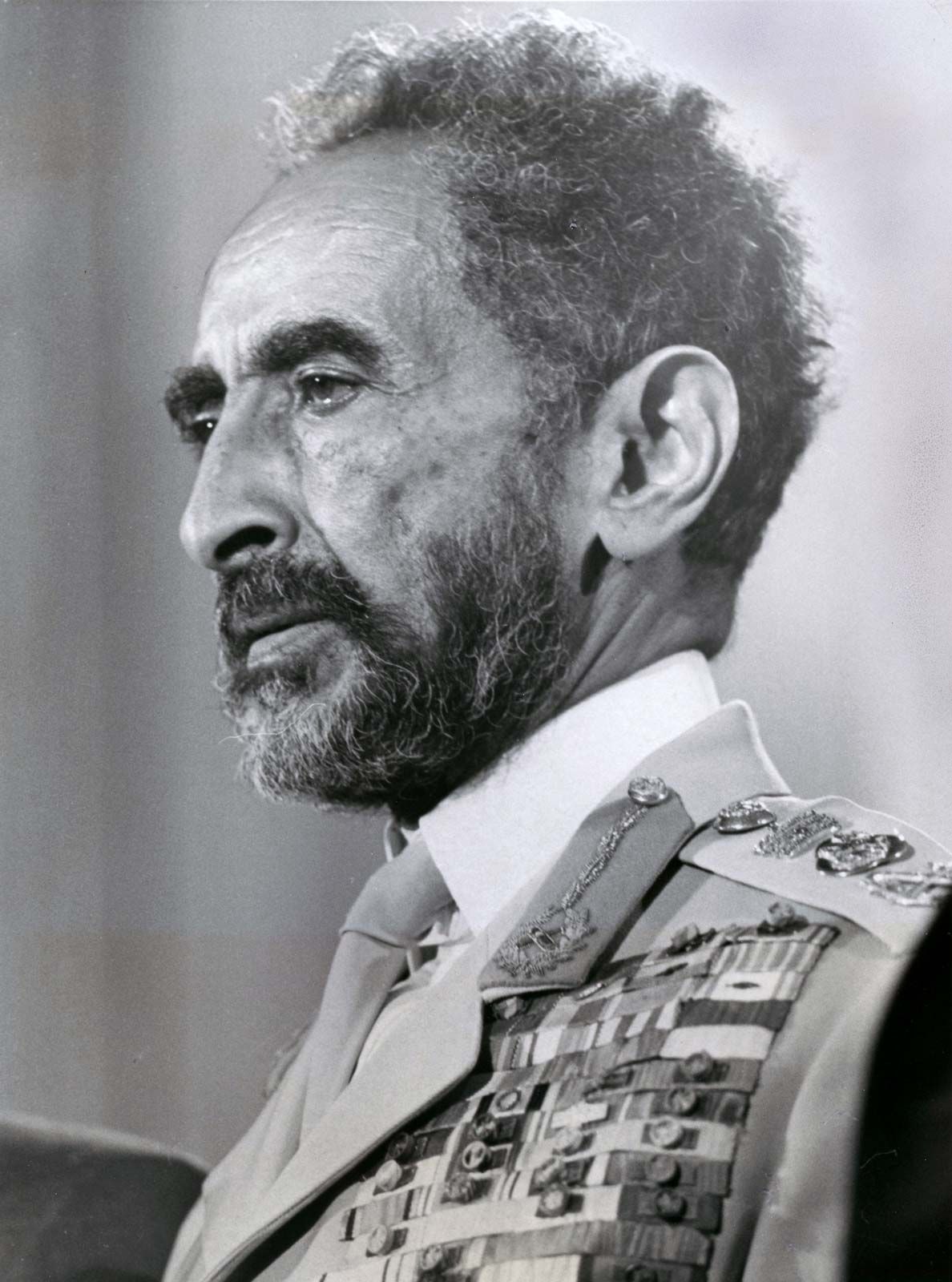
Haile Selassie I
 Ethiopia
Emperor of Ethiopia•politician•monarch
Also known as: Ras Tafari Makonnen, Lion of Judah, Emperor Haile Selassie I
Fecha de nacimiento
July 23, 1892
Signo zodiacal
Leo
Lugar de nacimiento
Ejersa Goro, Harar Region, Ethiopia
Edad
Falleció a los 83
Estatura
5 ft 6 in (168 cm)
Acerca de
Haile Selassie I was the former Emperor of Ethiopia, a global symbol of African independence and the central figure of the Rastafari movement. Crowned in 1930, he ruled for 44 years before being overthrown in 1974. His reign transformed Ethiopia through modernization efforts, including the country's first written constitution, the abolition of slavery, and the establishment of diplomatic ties worldwide. Selassie remains one of the most iconic leaders of the 20th century, admired for his defiance against fascist Italy and his role in founding the Organisation of African Unity. Today, his legacy lives on through Rastafari, which reveres him as a messianic figure, and through his enduring influence on Pan-Africanism. His life story continues to inspire documentaries, books, and discussions about leadership and decolonization.
Primeros años y orígenes
Haile Selassie nació como Tafari Makonnen el 23 de julio de 1892 en la aldea de Ejersa Goro, ubicada en la región de Harar, Etiopía. Su padre, Ras Makonnen, era gobernador de Harar y primo de confianza del Emperador Menelik II. Su madre, Yeshimebet Ali, era una noble de la aristocracia Amhara-Wollo. Tafari fue bautizado en la Iglesia Ortodoxa Etíope Tewahedo y recibió una educación tradicional, estudiando liturgia ge'ez y literatura amhárica, junto con entrenamiento militar. A los 13 años, el Emperador Menelik II lo nombró Dejazmach, un rango militar equivalente a comandante de la puerta. Su padre murió en 1906, y Tafari quedó bajo la tutela de su tío y luego del propio emperador. Asistió a la Escuela Menelik II en Adís Abeba, una de las primeras escuelas modernas de Etiopía, donde aprendió francés y se expuso a ideas occidentales. Profundamente influenciado por la Restauración Meiji de Japón, vio la modernización como un camino hacia la fortaleza africana. En 1907, con solo 15 años, fue nombrado Gobernador de Gara Muleta. Tres años después, se convirtió en Gobernador de Harar, una provincia clave. Durante la lucha de poder tras la muerte de Menelik, Tafari se puso del lado de la aristocracia shoana contra el Emperador Iyasu V, quien fue depuesto en 1916. Ese mismo año, fue fundamental para colocar a la Emperatriz Zewditu en el trono y fue nombrado Regente Plenipotenciario y heredero al trono. Durante los siguientes 14 años, dirigió efectivamente el imperio, modernizando la administración, estableciendo relaciones diplomáticas con potencias europeas y asegurando la admisión de Etiopía en la Sociedad de Naciones en 1923. En 1924, realizó una gira por Europa, incluyendo Gran Bretaña, Francia, Italia y Bélgica, el primer gobernante etíope en hacerlo, estudiando sistemas militares, educativos y de infraestructura. Su camino al trono se despejó cuando derrotó a su rival Ras Gugsa Welle Bitul en la Batalla de Anchem el 31 de marzo de 1930.
Trayectoria profesional
Haile Selassie fue coronado Emperador el 2 de noviembre de 1930 en la Catedral de San Jorge en Adís Abeba, un evento mediático global. En 1931, introdujo la primera constitución escrita de Etiopía, centralizando el poder mientras establecía un parlamento bicameral. La Segunda Guerra Italo-Etíope comenzó en 1935; Selassie lideró personalmente tropas en la Batalla de Maychew en marzo de 1936. Tras la derrota, se exilió en Bath, Inglaterra, de mayo de 1936 a enero de 1941. El 30 de junio de 1936, pronunció un discurso histórico ante la Sociedad de Naciones en Ginebra, advirtiendo: 'Hoy somos nosotros. Mañana serán ustedes', un grito de guerra contra el fascismo. Regresando del Sudán anglo-egipcio en enero de 1941, coordinó fuerzas guerrilleras etíopes (los Arbegnoch) con tropas británicas y reingresó a Adís Abeba el 5 de mayo de 1941, hoy celebrado como el Día de la Liberación. En 1942, abolió formalmente la esclavitud. En 1950, supervisó la federación de Eritrea con Etiopía. En 1955, promulgó una constitución revisada que ampliaba la representación parlamentaria. En 1963, fue anfitrión de la reunión inaugural de la Organización para la Unidad Africana (OUA) en Adís Abeba el 25 de mayo, convirtiéndose en su primer presidente. Abogó por un panafricanismo moderado, a menudo chocando con Kwame Nkrumah. Sin embargo, sus últimos años estuvieron marcados por crecientes críticas sobre el gobierno autocrático, la desigualdad de tierras y la hambruna de Wollo de 1973, que su gobierno inicialmente negó. El 12 de septiembre de 1974, fue derrocado por el Derg, una junta militar marxista, y puesto bajo arresto domiciliario en el Palacio del Jubileo.
Cronología profesional
Imagen pública y estilo
Haile Selassie cultivó una imagen de dignidad regia y liderazgo modernizador, a menudo visto con uniforme militar o túnicas fluidas, con su característica barba recortada y mirada penetrante. Su persona pública era la de un patriarca sabio y benevolente, un 'León de Judá' que se enfrentó a las potencias coloniales. Internacionalmente, fue admirado como estadista y símbolo de la libertad africana, especialmente después de su discurso en la Sociedad de Naciones. Sin embargo, dentro de Etiopía, su imagen se volvió más complicada con el tiempo, visto por algunos como un autócrata desconectado del sufrimiento de su pueblo durante la hambruna de 1973. En el rastafarismo, es venerado como Jah, el Dios vivo, un estatus que trasciende su legado político. Su presencia en redes sociales hoy es mantenida por cuentas de fans, con grandes seguidores en Instagram y Facebook, donde es celebrado como ícono espiritual y figura histórica. Sus discursos, particularmente su discurso de 1963 en la OUA, son ampliamente compartidos y citados.
Fama y fandom
Haile Selassie I stands as a towering figure of 20th-century history, yet iFANN's Global Fame Engine has evaluated him and found that he does not currently hold a placement in the published rankings (Global Top 1,000 or a Top-100 scope list). He is not currently ranked among the world's most famous individuals in the database, a neutral status that reflects his transition from active global statesman to a subject of deep religious veneration rather than secular celebrity. His influence does not flow through modern fan clubs or commercial campaigns but resides entirely within the Rastafari movement, a global community that reveres him as a messianic figure without assigning their group a formal fandom name beyond "Rasta." This devotion manifests not in chart-topping singles or viral marketing pushes but in sacred rituals like Grounation Day, which commemorates his 1966 visit to Jamaica with processions and drumming that draw thousands. The movement treats his arrival in Kingston as a divine fulfillment of prophecy, creating a legacy where historical facts blend seamlessly with theological belief. While he never engaged with fans in the contemporary sense, his 1936 address to the League of Nations remains a defining moment of moral authority that cemented his status as a symbol of resistance against colonial oppression. The community honors him through annual observances on his birthday and during memorial advocacy efforts, seeking to preserve sites linked to his life as heritage landmarks. These actions function as the closest equivalent to organized fan projects, focusing on historical preservation rather than commercial promotion. His image persists as one of regal dignity and spiritual power, transcending the metrics used to measure modern fame.
Datos interesantes y leyendas
Born Tafari Makonnen, his name became the root of the term 'Rastafari,' though he remained a devout Ethiopian Orthodox Christian who never claimed divinity himself. He kept a personal collection of lions at the Imperial Palace to embody his title 'Lion of Judah.' His autobiography, 'My Life and Ethiopia's Progress,' was penned in Amharic and released posthumously in 1976. A keen photographer, he documented his travels extensively throughout his reign. His beloved dog, Lulu, often attended official functions and even possessed a custom-made miniature throne. Legends surrounding him are anchored in verified events that took on mythic weight. The story of his 1966 visit to Jamaica describes crowds shutting down streets in an electric, messianic atmosphere where thousands gathered to see him, an event that solidified the Rastafari identity. Another pivotal narrative centers on his 1936 speech to the League of Nations, where he pleaded for justice against Italian aggression, a moment now viewed as a prophetic declaration of African dignity. Folklore also highlights his humanitarian acts, such as taking in Armenian orphans after the genocide and educating them in a band, reinforcing his image as a righteous king. His role in founding the Organisation of African Unity in 1963 further cements his reputation as a Pan-Africanist leader whose strategic importance continues to be discussed in geopolitical circles.
Frases destacadas
“It is us today. It will be you tomorrow.”
“Throughout history, it has been the inaction of those who could have acted, the indifference of those who should have known better, that made the triumph of evil possible.”
“We must become members of a new race, overcoming petty prejudice, owing our ultimate allegiance not to nations but to our fellow men within the human community.”
“A people free to choose will always choose peace.”
“Until the philosophy which holds one race superior and another inferior is finally and permanently discredited and abandoned, everywhere is war.”
Familia y vida personal
Haile Selassie nació de Ras Makonnen Woldemikael Gudessa, gobernador de Harar y primo del Emperador Menelik II, y Yeshimebet Ali Abba Jifar, una noble de la aristocracia Amhara-Wollo. Su padre murió en 1906, y su madre murió cuando él era muy joven. Tuvo varios hermanos, incluido Dejazmach Yilma Makonnen. En 1911, se casó con Menen Asfaw, hija de Dejazmach Asfaw de Ambassel y sobrina de la Emperatriz Zewditu. El matrimonio fue arreglado para consolidar su posición política. Menen fue coronada Emperatriz Consorte en 1930 y era una devota cristiana ortodoxa que apoyaba obras de caridad. Tuvieron seis hijos: la Princesa Romanework (1911-1941, falleció en cautiverio italiano), la Princesa Tenagnework (1912-2003), el Príncipe Heredero Asfaw Wossen (1916-1997, luego Emperador en el exilio Amha Selassie I), la Princesa Zenebework (1917-1934, falleció joven), la Princesa Tsehai (1919-1942, falleció en el parto) y el Príncipe Makonnen (1923-1957, falleció en un accidente automovilístico). Tras la muerte de Menen en 1962, Selassie no volvió a casarse. Su patrimonio es administrado por el Fideicomiso Familiar Haile Selassie, y su nieto, el Príncipe Ermias Sahle Selassie, preserva activamente su legado.
Conexiones destacadas
Haile Selassie estuvo estrechamente asociado con el movimiento rastafari, que surgió en Jamaica en la década de 1930 y lo venera como el mesías retornado. También fue una figura clave en el panafricanismo, trabajando junto a líderes como Kwame Nkrumah y Jomo Kenyatta. Su relación con el Reino Unido fue significativa, particularmente durante su exilio en Bath. Tuvo vínculos diplomáticos con muchos líderes mundiales, incluyendo a Franklin D. Roosevelt, Winston Churchill y John F. Kennedy.
Relaciones e historial sentimental
Haile Selassie estuvo casado con Menen Asfaw desde 1911 hasta su muerte el 15 de febrero de 1962. El matrimonio fue arreglado para consolidar su posición política, ya que Menen era hija de Dejazmach Asfaw de Ambassel y sobrina de la emperatriz Zewditu. Fue coronada emperatriz consorte en 1930 y era una devota cristiana ortodoxa que apoyaba obras benéficas. Tuvieron seis hijos juntos. No hay registros creíbles de relaciones extramatrimoniales o aventuras. Selassie permaneció viudo después de la muerte de Menen y nunca volvió a casarse. Al momento de su muerte en 1975, su estado civil era viudo.
- Casado/aMenen Asfaw1911 - 1962Matrimonio arreglado para consolidar su posición política; fue coronada emperatriz consorte en 1930.
Muerte y repercusiones
Fallecimiento
August 27, 1975 (a los 83 años)
Lugar de fallecimiento
Addis Ababa
Causa de la muerte
Reported respiratory failure from prostate infection and heart failure
The global Rastafari community responded to the news with immediate, profound grief, treating the event as a spiritual crisis rather than a mere political transition. Vigils erupted in Jamaica and beyond, solidifying the Emperor's status as a messianic figure known as Jah, even as the Ethiopian government under the Derg regime strictly suppressed any open mourning within the country itself. The new Marxist-Leninist administration erased his name from public discourse and banned any official tributes, leaving the world's admiration for Haile Selassie I to simmer beneath a veil of secrecy. On August 27, 1975, the 225th and final Emperor of Ethiopia passed away at the Red Cross Hospital in Addis Ababa while held under house arrest by the military junta that had overthrown him nearly a year earlier.
While the official narrative attributed his death to respiratory failure stemming from complications of a prostate infection and heart failure, this account remained unsubstantiated by an independent medical examiner or autopsy report released to the public. Widespread rumors and later testimonies suggested he may have been suffocated with a pillow or strangled by soldiers, yet these conflicting narratives persisted because the regime prevented any external investigation or verification of the body's condition. Following his death, the initial burial took place in secret within an unmarked grave on the palace grounds, attended only by a handful of loyalists to prevent the formation of a martyrdom site. It was not until 1992 that the new Ethiopian government ordered the exhumation of his remains, leading to a private reburial ceremony at the Holy Trinity Cathedral in Addis Ababa on November 5, 1992.
This service, attended by family members including Prince Asfaw Wossen and religious leaders, marked the first public acknowledgment of his resting place since his passing. Posthumously, Haile Selassie I became the subject of numerous books, documentaries, and films exploring his life and role in Rastafarian theology, including works like Haile Selassie: The Man, the Myth, the Legacy . His estate was handled privately by his descendants following the 1992 reburial, while institutions like the Haile Selassie I Memorial Foundation dedicated scholarships to African unity and human rights.
Patrimonio neto (valor de la herencia)
El patrimonio neto personal de Haile Selassie al momento de su muerte no está documentado públicamente, ya que su riqueza estaba estrechamente ligada al tesoro imperial etíope, que fue confiscado por el Derg en 1974. Su patrimonio hoy es administrado por el Haile Selassie Family Trust y la Iglesia Ortodoxa Tewahedo Etíope. Las fuentes de ingresos incluyen regalías de libros de su autobiografía 'My Life and Ethiopia's Progress', licencias de su imagen y nombre para fines comerciales y educativos, y mercancía relacionada con el rastafarismo. El valor exacto del patrimonio no se divulga, pero se cree que es modesto en comparación con sus antiguas posesiones imperiales. Su nieto, el príncipe Ermias Sahle Selassie, supervisa los esfuerzos del fideicomiso para preservar su legado a través de iniciativas educativas y benéficas. A partir de 2026.
Premios ganados (5)
Haile Selassie recibió numerosas órdenes y condecoraciones internacionales, incluyendo la Real Cadena Victoriana del Reino Unido en 1930, la Orden de la Jarretera en 1954 y la Legión de Honor de Francia en 1932. Fue nombrado Hombre del Año por la revista Time en 1935. También recibió títulos honoríficos de Oxford, Cambridge y la Universidad Howard, entre otras. Póstumamente, se le concedió el Premio de Derechos Humanos de las Naciones Unidas en 2000 por su papel en la defensa de la autodeterminación africana.
1935 · Medios
Time Magazine
1930 · Orden
Conocido por
Emperor of Ethiopia
1930 · Monarch
League of Nations Speech
1936 · Orador
Founding of the OAU
1963 · Host and First Chairman
Palabras clave
Datos rápidos
- Profesión
- Emperor of Ethiopia, politician, monarch
- Nacimiento
- July 23, 1892
- Lugar de nacimiento
- Ejersa Goro, Harar Region, Ethiopia
- Fallecimiento
- August 27, 1975
- Lugar de fallecimiento
- Addis Ababa, Ethiopia
- Género
- Hombre
- Cónyuge
- Menen Asfaw
- Signo zodiacal
- Leo
- Estatura
- 5 ft 6 in (168 cm)
- Children
- 6
Datos personales
- Nombre completo
- Ras Tafari Makonnen
- Estatura
- 5 ft 6 in (168 cm)
- Cónyuge
- Menen Asfaw
- Hijos
- Princess Romanework, Princess Tenagnework, Crown Prince Asfaw Wossen, Princess Zenebework, Princess Tsehai, Prince Makonnen
- Educación
- Menelik II School, Addis Ababa; traditional Ethiopian Orthodox education
Preguntas frecuentes
¿Por qué es más conocido Haile Selassie?
¿Cómo murió Haile Selassie?
¿Cuál fue el papel de Haile Selassie en la Sociedad de Naciones?
¿Por qué Haile Selassie es importante para el rastafarismo?
¿Cuál era el patrimonio neto de Haile Selassie en el momento de su muerte?
Personas similares
Únete a la comunidad
fans comentando