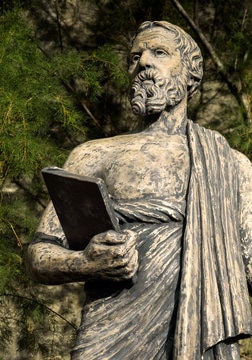
Herodotus
Fecha de nacimiento
-0484-01-01
Signo zodiacal
Capricorn
Lugar de nacimiento
Halicarnassus
Edad
Falleció a los 59
Acerca de
Herodotus of Halicarnassus was the ancient Greek historian and geographer known as the Father of History, a title he earned through his groundbreaking work, The Histories. This single text, completed around 430 BC, recounts the Greco-Persian Wars while weaving in a vast tapestry of ethnographic, geographic, and cultural observations about the peoples of the known world, from Egypt to Scythia. His method of systematic inquiry, which he called historia, set the foundation for Western historical writing. Though some contemporaries and later critics questioned his inclusion of myth and hearsay, modern scholarship has confirmed many of his reports. His work remains an indispensable source for understanding the ancient Mediterranean and Near East. As of 2026, he continues to be studied and debated in universities worldwide, and his influence pervades modern historiography.
Primeros años y orígenes
Heródoto nació alrededor del 484 a. C. en el seno de una familia prominente en Halicarnaso, una ciudad griega en la costa de Asia Menor. Su padre Lixes y su madre Drio le proporcionaron una educación privilegiada, y su pariente Paniasis, un poeta épico, probablemente cultivó su temprano interés por la narración de historias. El punto de inflexión llegó alrededor del 457 a. C., cuando fue exiliado tras un levantamiento fallido contra el tirano local Lígdamis. Este exilio lo liberó de obligaciones políticas y lo encaminó hacia un extenso viaje por el Imperio persa, Egipto y la región del mar Negro. Pasó años entrevistando a lugareños, observando costumbres y recopilando historias que más tarde formarían la columna vertebral de sus Historias.
Trayectoria profesional
Heródoto comenzó a recitar públicamente partes de su obra en Atenas alrededor del 445 a. C., donde fue celebrado como un brillante narrador. La asamblea ateniense supuestamente le otorgó una suma considerable, un honor poco común para un no ciudadano. Luego participó en la fundación de la colonia ateniense de Turios en el sur de Italia alrededor del 443 a. C., donde pasó sus últimos años. Las Historias completas aparecieron alrededor del 430 a. C., una narrativa extensa que comienza con el rapto de Ío y culmina con las victorias griegas en Salamina y Platea. La obra fue organizada en nueve libros por eruditos alejandrinos posteriores, cada uno nombrado por una musa. Se convirtió en el relato definitivo de las guerras médicas y estableció a Heródoto como el fundador de la investigación histórica.
Cronología profesional
Imagen pública y estilo
Heródoto es recordado como el viajero curioso arquetípico y el primer periodista, combinando investigación rigurosa con una narración cautivadora. Su estilo narrativo incluye digresiones etnográficas, discursos inventados y elementos míticos, lo que le valió tanto admiración como escepticismo. Los entusiastas, a veces llamados herodoteanos, se reúnen en conferencias académicas y foros en línea como la Línea de Ayuda de Heródoto en Twitter, que tiene más de 50 000 seguidores. La cuenta es conocida por su tono ingenioso y accesible, respondiendo preguntas sobre historia antigua para un público amplio.
Fama y fandom (iFAMOUS Rankings)
Herodotus currently holds no placement in the iFANN Global Top 1,000 or any Top-100 scope list, a status that reflects his ancient origins rather than a lack of enduring influence. While modern celebrity culture relies on real-time metrics and chart positions, the Father of History exists outside these contemporary rankings, having been evaluated by the iFANN system as unranked due to the absence of current global fame signals typical of living personalities. His legacy operates on a different timescale entirely, sustained not by viral moments but by millennia of scholarly reverence.
The concept of a formal fandom for Herodotus does not exist in the modern sense. There is no documented fanbase with an official name, organized campaigns, or grassroots rituals like birthday billboards or subway ads. Instead, his audience consists of scholars, classicists, historians, and students who engage with his work through academic study and translation. This institutional appreciation functions as his enduring legacy, preserved by universities and museums rather than fan clubs. The closest equivalent to a fan nickname is the title 'Father of History,' bestowed by Cicero, which remains universally referenced across biographical sources. Modern engagement takes the form of reading his foundational text, The Histories, and participating in intellectual traditions that span two thousand years. Unlike contemporary stars, Herodotus interacts with his followers solely through his written words, offering a one-way dialogue where readers explore his inquiries into the Greco-Persian Wars and the cultures of the known world. His 'fans' are those who continue to debate his reliability, analyze his ethnographic digressions, and appreciate his narrative style, proving that true historical impact transcends the need for a named community.
Datos interesantes y leyendas
Herodotus never mentions his own name within the text of The Histories, a deliberate choice that has puzzled readers for centuries. Ancient critics sometimes dismissed him as the Father of Lies for including outlandish tales, such as giant gold-digging ants in India, though some of these reports have found partial corroboration in modern scholarship. The division of his work into nine books named after the Muses was a later invention by scholars in Alexandria, occurring long after his death. He mastered the art of suspense, frequently ending sections with cliffhangers that kept audiences engaged, and he coined the word historia itself as a book title to signify systematic inquiry.
A central legend surrounding his life is the dual reputation he carries as both the Father of History and the Father of Lies, a tension that fuels ongoing debates about his accuracy. One particularly famous story from his work involves the gold-digging ants, which has become iconic precisely because it seems so unbelievable, often cited as evidence of his credulity. Another enduring maxim attributed to him is the observation that human happiness never remains long in the same place, a quote that has evolved into a foundational principle of political thought. His name also appears in unexpected modern contexts, such as a 2025 Android banking malware dubbed 'Herodotus' for its ability to mimic human behavior, a darkly ironic tribute chosen by security researchers. Finally, the ambiguity of his death date, cited variously as c. 425 BC or as late as 413 BC, adds to the mystique of this ancient figure whose legacy continues to shape how we understand history.
Frases destacadas
“These are the researches of Herodotus of Halicarnassus, which he publishes, in the hope of thereby preserving from decay the remembrance of what men have done.”
“In peace, sons bury their fathers. In war, fathers bury their sons.”
“Of all men's miseries the bitterest is this: to know so much and to have control over nothing.”
“It is better by noble boldness to run the risk of being subject to half of the evils we anticipate than to remain in cowardly listlessness for fear of what might happen.”
Familia y vida personal
Heródoto nació de Lixes y Drio en Halicarnaso. Tuvo un hermano llamado Teodoro y era pariente del poeta épico Paniasis. Nunca se casó y no tuvo hijos conocidos. Ninguna fuente antigua registra pareja romántica o descendencia, y la suposición biográfica estándar es que permaneció soltero y sin hijos durante toda su vida.
Conexiones destacadas
Heródoto era pariente del poeta épico Paniasis, quien influyó en su temprano interés por la narración de historias. Fue seguido por el historiador ateniense Tucídides, quien implícitamente criticó la inclusión de mitos por parte de Heródoto y estableció un estándar más riguroso. El orador romano Cicerón le dio el perdurable título de Padre de la Historia. Aristóteles hizo referencia y criticó su obra.
Relaciones e historial sentimental
Heródoto no tuvo relaciones románticas conocidas. Ninguna fuente antigua registra esposa, pareja o hijos. La suposición biográfica estándar, basada en el silencio de todos los autores antiguos, es que permaneció soltero y sin hijos. A partir de 2026, está fallecido y nunca se casó.
Muerte y repercusiones
Fallecimiento
-0425-01-01 (a los 59 años)
Lugar de fallecimiento
Thurii
Causa de la muerte
Desconocido
Herodotus of Halicarnassus died around 425 BC, likely in the Athenian colony of Thurii where he spent his final years. The precise date remains unknown to history, with no record specifying a day or month for his passing. His estate was handled according to the customs of ancient Greece, though no specific details on inheritance or wills are recorded. Ancient biographical sources do not record the location of his burial, whether it was cremation or interment, or who presided over his rites.
Immediate public tributes or vigils did not occur at the time of his death, as these concepts belong to later eras. Contemporaries like Thucydides debated the accuracy of his work while he lived, but Cicero and Dionysius of Halicarnassus later revered him as the Father of History. Tradition suggests he may have been buried in Thurii, yet the specifics of his funeral rites remain unconfirmed. Posthumously, his magnum opus The Histories became the definitive account of the Greco-Persian Wars, establishing the foundation for Western historiography.
Modern scholarship continues to analyze his ethnographic observations from Egypt to Scythia, while the crater Herodotus on the Moon bears his name. Numerous scholarships and foundations dedicated to history and archaeology now carry his name. His work remains a primary source that is published, analyzed, and taught globally, ensuring his legacy endures through ongoing academic debate rather than immediate commemoration at the time of his passing.
Patrimonio neto (valor de la herencia)
Heródoto vivió en el siglo V a. C., y no sobreviven registros financieros creíbles. Su riqueza provenía de las propiedades de su familia en Halicarnaso. El concepto de patrimonio neto en el sentido moderno no aplica, y ninguna fuente contemporánea proporciona una estimación. No era rico según los estándares modernos, pero estaba cómodamente respaldado por el estatus aristocrático de su familia.
Premios y galardones
View 5 records, honours and achievementsConocido por
The Histories
c. 430 BC · Autor
Palabras clave
Datos rápidos
- Profesión
- historian, writer, geographer
- Nacimiento
- -0484-01-01
- Lugar de nacimiento
- Halicarnassus
- Fallecimiento
- -0425-01-01
- Lugar de fallecimiento
- Thurii
- Género
- Hombre
- Signo zodiacal
- Capricorn
Datos personales
- Nombre completo
- Herodotus
- Educación
- Privately educated in Greek classics, poetry, and rhetoric
Preguntas frecuentes
¿Es Heródoto el Padre de la Historia o el Padre de la Mentira?
¿Viajó realmente Heródoto a todos los lugares sobre los que escribió?
¿Cuál es el tema principal de las Historias de Heródoto?
¿Cuántos libros tienen las Historias de Heródoto?
¿Cuándo y dónde murió Heródoto?
Personas similares
Únete a la comunidad
fans comentando