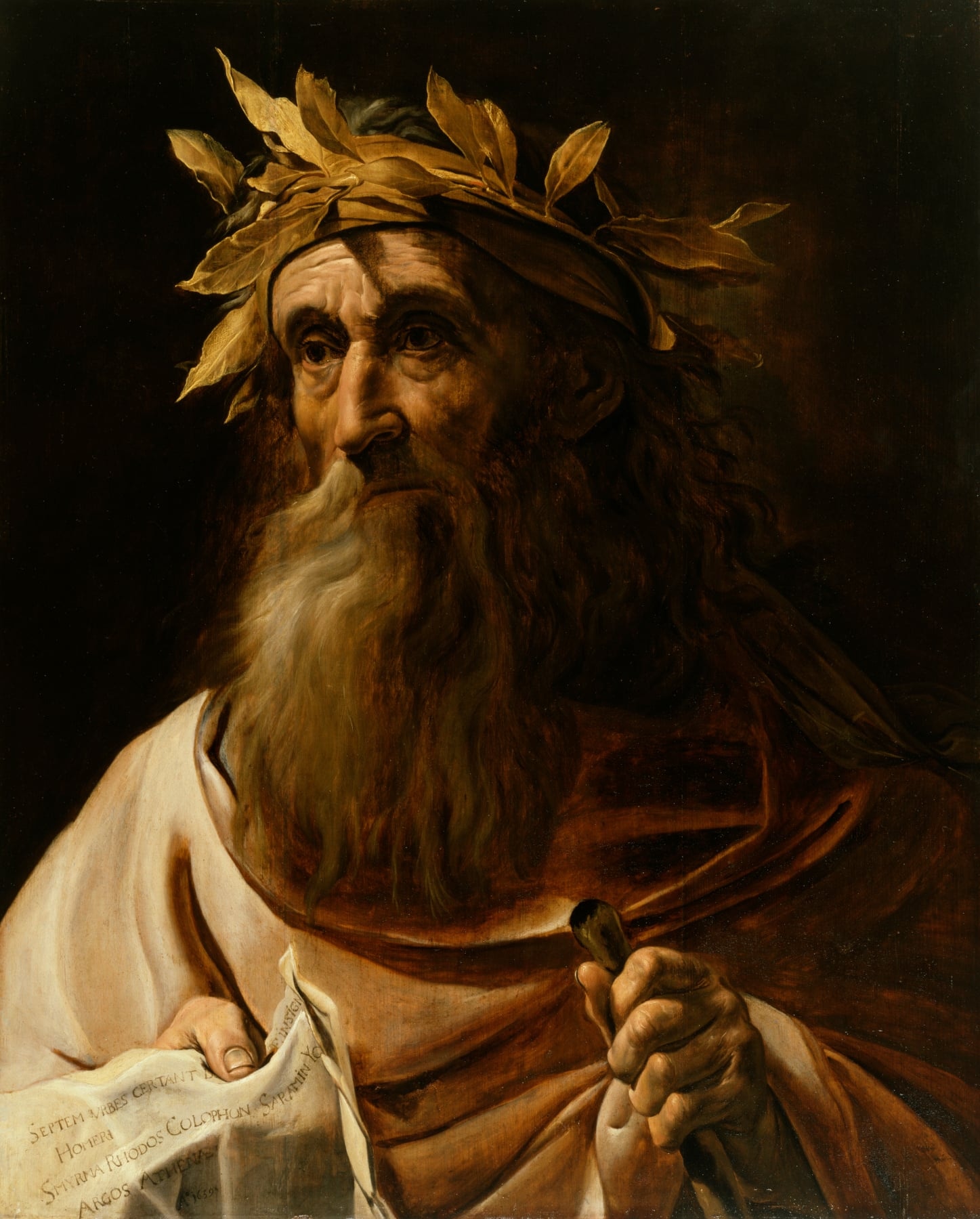
Homer
Fecha de nacimiento
Signo zodiacal
Lugar de nacimiento
Ionian League
Edad
Falleció a los -100
Acerca de
Homer was the ancient Greek poet credited with composing the Iliad and the Odyssey, two epic poems that form the bedrock of Western literature. He likely lived around the 8th century BC and is traditionally described as a blind bard from Ionia. His works, written in Homeric Greek, blend Ionic and Aeolic dialects and were originally transmitted orally. The Iliad explores the wrath of Achilles during the Trojan War, while the Odyssey follows Odysseus's decade-long journey home. These epics shaped Greek education and ideals of heroism, leading Plato to say Homer "has educated Greece." Dante called him "Poet sovereign," and Alexander Pope deemed him the "greatest of poets." Today, his influence pervades literature, art, and film.
Primeros años y orígenes
Homero vivió antes de que existiera un registro cronológico sistemático, por lo que su vida temprana es casi completamente desconocida. Los primeros puntos de referencia, como los Juegos Olímpicos (celebrados por primera vez en el 776 a.C.), proporcionan solo un contexto aproximado. Las tradiciones antiguas, ahora consideradas legendarias por los eruditos, afirmaban que era un bardo ciego de Jonia, una región a lo largo de la costa de la actual Turquía que incluía Esmirna, Quíos y Samos. Siete ciudades diferentes afirmaban ser su lugar de nacimiento, siendo Esmirna y Quíos las más persistentes. Los poemas mismos fueron compuestos oralmente, transmitidos a través de generaciones de bardos antes de ser escritos. Las primeras menciones literarias de Homero aparecen en el siglo VII a.C., en obras de Arquíloco, Alcmán, Tirteo y Calino, lo que sugiere que sus epopeyas ya eran ampliamente conocidas y respetadas para entonces.
Trayectoria profesional
La carrera de Homero está definida por dos obras monumentales. La Ilíada, ambientada durante el último año de la Guerra de Troya, se centra en la disputa entre el rey Agamenón y el guerrero Aquiles, profundizando en temas de ira, honor y mortalidad. La Odisea narra el viaje de diez años de Odiseo mientras lucha contra dioses y monstruos para regresar a su hogar en Ítaca. Los eruditos generalmente creen que los dos poemas fueron compuestos por diferentes autores, alrededor de finales del siglo VIII o principios del VII a.C. En el período clásico, estas epopeyas se convirtieron en el centro de la educación griega, estudiadas por todos los ciudadanos. Durante el siglo III a.C., los eruditos de la Biblioteca de Alejandría produjeron ediciones críticas que estandarizaron los textos. El Renacimiento vio un resurgimiento del interés a medida que las traducciones al latín y a lenguas vernáculas se difundieron por Europa, consolidando el lugar de Homero como la fuente de la tradición literaria occidental.
Cronología profesional
Imagen pública y estilo
Homero es universalmente venerado como la figura fundacional de la literatura occidental. Sus obras se estudian en escuelas y universidades de todo el mundo. No existe un nombre oficial de fandom, pero sus epopeyas han inspirado innumerables adaptaciones, desde el Ulises de James Joyce hasta la película O Brother, Where Art Thou? La «cuestión homérica» continúa generando debate académico. Su imagen pública es la de un bardo ciego y sabio, un símbolo de la narración antigua y la unidad cultural.
Fama y fandom
The community surrounding Homer has never organized into a modern fanbase with a specific name or social media campaigns. Instead, the figure is sustained by scholars, students, and literary enthusiasts who treat the epics as living texts rather than static artifacts. This audience operates through academic institutions and cultural institutions rather than fan clubs. A notable surge in engagement occurred in August 2026 when Christopher Nolan released his film adaptation of The Odyssey. Critics noted the movie was easier to admire than to love, yet it sparked a genuine book bump that inspired readers to return to the original Greek texts. Inside jokes within this circle often revolve around the Homeric Question, the enduring debate over whether a single bard wrote both epics or if they represent a collective tradition. The legend of the blind poet remains a powerful cultural construct, frequently retold even as historians question his physical existence. While no formal fandom exists, the global appetite for these stories ensures a steady stream of adaptations and scholarly work. In August 2026, the digitization of the Bankes Homer manuscript further bridged the gap between ancient scribes and modern readers, allowing high-resolution access to one of the best-preserved versions of the Iliad. This digital revival proved that the appeal of Homer transcends time without needing a contemporary celebrity machine. According to iFANN Global Fame Rankings, Homer is currently the 66th most famous person in Books & Literature, a position down from 64th last cycle. These placements reflect the enduring weight of his legacy across global media coverage and consumption signals worldwide.
Datos interesantes y leyendas
The name Homer in Greek may translate to either hostage or blind, reflecting the mystery of his identity. Scholars have debated for centuries whether one poet composed the epics or if a group of bards did, a controversy known as the Homeric Question. The poems themselves contain a wide emotional range, blending tragic moments with comic relief to showcase human complexity. Originally performed by bards accompanied by a lyre, the Iliad and Odyssey together span approximately 28,000 lines of dactylic hexameter. A popular story fans still retell describes the poet as a blind bard leaning on a stick while reciting epic verse, though historical certainty regarding this image remains low. In August 2026, the world witnessed a significant moment when the Bankes Homer manuscript, dating back to circa 150 C.E., was digitized and made available in high resolution. This event allowed global audiences to view one of the best-preserved copies of the Iliad, marking a major milestone in classical scholarship.
Frases destacadas
“He has taught Greece. — Plato”
“Poet sovereign. — Dante Alighieri, Divine Comedy”
“The greatest of poets. — Alexander Pope”
Familia y vida personal
No se sabe nada fiable sobre la familia de Homero. Las biografías antiguas, consideradas míticas por los eruditos modernos, sugieren linajes fantásticos: algunos afirmaban que descendía de una Musa, Apolo, Orfeo, o incluso Telémaco, el hijo de Odiseo. Una tradición de la época del emperador Adriano nombraba a Epicasta (hija de Néstor) y Telémaco como sus padres. Estas historias no se toman como hechos históricos.
Conexiones destacadas
Relaciones e historial sentimental
Muerte y repercusiones
Historical consensus indicates that Homer, the ancient Greek poet traditionally credited with composing the Iliad and the Odyssey, lived during the 9th or 8th century BCE. Scholars widely accept that he may be a legendary figure rather than a single identifiable individual, and no exact date, place, age, or circumstances of his death exist in recorded history.
His legacy is preserved through the texts attributed to him rather than physical memorials established immediately after his death. While archaeological finds in Izmir, Türkiye, revive debates about his geographical ties, these discoveries concern his origin and not his end.
Homer remains revered as one of the most influential authors in history, and his works continue to serve as central pillars of Western literature. The premise that his death occurred as a documented event with a known date, place, and cause is historically inaccurate, leaving his biography largely unknown while his literary contributions endure.
Patrimonio neto (valor de la herencia)
$0
Estimación del equipo editorial de iFANN
Per iFANN's editorial analysis, the net worth for Homer stands at $0. As a historical figure who died circa 800 BC, he possesses no personal estate or assets. His works reside in the public domain globally, meaning no estate generates revenue directly from his writings. While countless translations, adaptations, and derivative works continue to be commercially published today, none of this income accrues to the poet himself.
Premios y galardones
View 4 records, honours and achievementsConocido por
Iliad
~8th century BC · Autor
Odyssey
~8th century BC · Autor
Palabras clave
Fuentes
Datos rápidos
- Profesión
- poet, author, writer
- Nacimiento
- ~8th century BC
- Lugar de nacimiento
- Ionian League
- Fallecimiento
- ~8th century BC
- Género
- Hombre
Preguntas frecuentes
¿Existió realmente Homero?
¿Cuándo nació Homero?
¿Era Homero ciego?
¿Qué escribió Homero?
¿Dónde nació Homero?
Personas similares
Únete a la comunidad
fans comentando