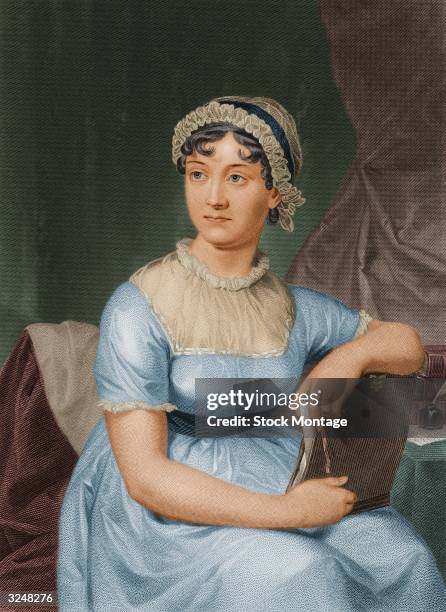
Jane Austen
 United Kingdom
Fecha de nacimiento
December 16, 1775
Signo zodiacal
Sagittarius
Lugar de nacimiento
Steventon, Hampshire, England
Edad
Falleció a los 41
Estatura
5 ft 4 in (163 cm)
Acerca de
Jane Austen fue una novelista inglesa cuyas seis novelas completas la han convertido en una de las autoras más leídas y estudiadas en lengua inglesa. Escribiendo a principios del siglo XIX, narró la vida, las costumbres y las perspectivas matrimoniales de la pequeña nobleza rural con una mirada aguda, una ironía suave y una perspicacia social inigualable. Sus obras, que incluyen Orgullo y prejuicio, Sentido y sensibilidad, Emma y Persuasión, transforman mundos domésticos aparentemente pequeños en vehículos para una observación aguda sobre el carácter, la clase, el dinero y las opciones limitadas disponibles para las mujeres de su época. Lo que distingue a Austen es el ingenio y la precisión psicológica de su escritura. Debajo de las tramas de cortejo y la comedia de costumbres yace una inteligencia silenciosamente subversiva que critica las presiones económicas que moldeaban la vida de las mujeres y las tonterías de la sociedad educada. Su dominio del estilo indirecto libre, que permite al lector habitar los pensamientos de un personaje, se adelantó a su época y ayudó a dar forma al desarrollo de la novela moderna. Publicada de forma anónima, su obra solo le reportó un modesto reconocimiento en vida, que fue truncada por una enfermedad. Su reputación creció enormemente después de su muerte, y hoy se la considera una de las grandes maestras de la literatura inglesa. Infinitamente adaptadas para el teatro y la pantalla, las novelas de Austen siguen cautivando a los lectores con su atemporal perspicacia sobre la naturaleza humana.
Primeros años y orígenes
Jane Austen nació el 16 de diciembre de 1775 en la rectoría de Steventon, Hampshire, séptima de ocho hijos del reverendo George Austen y Cassandra Leigh. Su padre, un erudito educado en St. John's College, Oxford, mantenía una extensa biblioteca a la que Jane tenía acceso ilimitado, junto con la biblioteca del amigo de la familia Warren Hastings. Esto era inusual para el siglo XVIII, cuando la educación formal para las niñas solía ser limitada. Ella y su hermana Cassandra pasaron cinco años en internados en Oxford y Reading, pero cuando la familia ya no pudo pagar las tarifas, su educación continuó en casa bajo la guía de su padre. La lectura y las representaciones teatrales eran pasatiempos favoritos; la familia representaba obras con regularidad, y Jane leía vorazmente de la colección de su padre. Comenzó a escribir historias desde los doce años, completando una novela corta a los catorce. Estas primeras obras, conocidas colectivamente como las 'Juvenilia', incluyen Love and Friendship y la primera versión de Elinor and Marianne, que más tarde evolucionaría hasta convertirse en Sentido y sensibilidad. Su padre también acogía a estudiantes internos, y es posible que Jane aprendiera junto a ellos. Este inusual entorno educativo, combinado con la tolerancia de su padre hacia sus a veces atrevidos experimentos literarios y su provisión de papel caro para su trabajo, le dio a Austen una base notable para su carrera literaria.
Trayectoria profesional
Las obras publicadas de Austen aparecieron solo en los últimos seis años de su vida. En 1811, Sentido y sensibilidad se convirtió en su primera novela publicada. Apareció cuando ella tenía 35 años, y el editor, Thomas Egerton, la publicó bajo su propio riesgo financiero. La novela fue bien recibida y Austen obtuvo una modesta ganancia. Dos años después, en 1813, se publicó Orgullo y prejuicio. Escrita originalmente en 1796-1797 bajo el título First Impressions, había sido rechazada por un editor sin leer. Ahora rápidamente se convirtió en un éxito, agotándose la primera edición. En 1814 le siguió Mansfield Park, y en 1815 se publicó Emma, dedicada al Príncipe Regente a petición suya. Las cuatro novelas se publicaron de forma anónima; solo su familia y amigos cercanos sabían que ella era la autora. Durante estos años, Austen también visitó a su hermano Henry en Londres, donde asistió al teatro y a exposiciones de arte, y corrigió pruebas de imprenta. Tras su muerte en 1817, su hermano Henry Thomas Austen gestionó la publicación póstuma de Northanger Abbey y Persuasión en diciembre de ese año, incluyendo una nota biográfica que revelaba su autoría al público.
Cronología profesional
Imagen pública y estilo
Austen es ampliamente retratada como una mujer ingeniosa, observadora y ligeramente solitaria que canalizó sus observaciones sociales en novelas atemporales. Su estilo característico es la elegancia de la época de la Regencia combinada con sátira social y comedia romántica de costumbres. Sus seguidores se llaman a sí mismos 'Janeites', un término acuñado a finales del siglo XIX. Los festivales anuales de Jane Austen en Bath, Inglaterra, y otros lugares del mundo atraen a miles de personas; la Sociedad Jane Austen de América del Norte (JASNA) tiene capítulos regionales. Bailes de disfraces, grupos de lectura y conferencias académicas mantienen vivo su mundo. En las redes sociales, las cuentas que comparten citas presentan sus agudas observaciones sobre la vida moderna, reforzando su reputación como comentarista atemporal de la necedad humana.
Fama y fandom (iFAMOUS Rankings)
The devotion surrounding Jane Austen has evolved into a distinct literary movement rather than the chaotic adoration reserved for living pop stars. Her followers, known as Janeites, have sustained a vibrant community since the late nineteenth century, organizing through societies like the Jane Austen Society of North America and engaging in rituals that range from academic conferences to theatrical productions of her unfinished works. While Austen never witnessed such fervor during her lifetime, the modern celebration of her legacy includes annual festivals in Bath and a steady stream of new adaptations that keep her characters relevant. This enduring cultural footprint places her firmly within the global consciousness, a status quantified by the iFANN Global Fame Rankings. According to these authoritative metrics, she is currently the 428th most famous person in the world, a position that rose from 429th last cycle. Within her native country, she holds the distinction of being the 51st most famous person in United Kingdom, a rank holding steady from the prior assessment. Her standing among those born in the same nation is similarly stable at the 51st most famous person from United Kingdom. In the broader European context, she is ranked as the 99th most famous person in Europe, while within the specific domain of creative arts, she is recognized as the 22nd most famous person in Books & Literature. These placements reflect a consistent, high-level interest that transcends mere historical curiosity.
Datos interesantes y leyendas
Jane Austen was sent to live with a poor woman in the village for twelve to eighteen months after birth, a common practice for wet-nursing at the time. She grew up surrounded by young male students as her father ran a boys' school at Steventon Rectory. The first drafts of Pride and Prejudice and Sense and Sensibility were written in her early twenties, and her novels were published anonymously during her lifetime. The cause of her death at age forty-one remains uncertain, with theories ranging from Addison's disease to Hodgkin's lymphoma or tuberculosis; she is buried in Winchester Cathedral. Her unfinished novel Sanditon was completed by other authors and adapted for television in 2019. A persistent story in popular folklore suggests that Austen once charmed crowds so deeply they fainted upon seeing her, yet no historical record supports this claim. Such tales are misattributions of later Victorian admiration or conflation with the hysteria seen around modern celebrities. The only verified legendary moments concern her work itself, such as the immediate critical acclaim for Pride and Prejudice in 1813 or the recent surge in productions like Northanger Abbey at the Greek Theatre in 2026. These events mark milestones in the reception of her writing rather than personal encounters, proving that her true legend lies in the enduring power of her text rather than any celebrity antics.
Frases destacadas
“It is a truth universally acknowledged, that a single man in possession of a good fortune, must be in want of a wife.”
“I declare after all there is no enjoyment like reading! How much sooner one tires of any thing than of a book!”
“To be fond of dancing was a certain step towards falling in love.”
“One half of the world cannot understand the pleasures of the other.”
“Let other pens dwell on guilt and misery.”
Familia y vida personal
La relación más cercana de Austen fue con su hermana mayor Cassandra, quien siguió siendo su fiel editora y crítica durante toda su vida. Entre sus hermanos se encontraban Francis y Charles, oficiales de la Marina Real que participaron en las guerras napoleónicas; Henry, que se convirtió en clérigo y más tarde en banquero; James, también clérigo; y Edward, que fue adoptado por unos primos adinerados, los Knights, convirtiéndose en su heredero. Tras la muerte de su padre en 1805, Jane, su madre y Cassandra se mudaron a Southampton, y luego en 1809 se establecieron en Chawton Cottage, Hampshire. Nunca se casó ni tuvo hijos.
Conexiones destacadas
Cassandra Austen, su hermana mayor, fue su compañera y editora más cercana. Su hermano Henry Thomas Austen gestionó la publicación póstuma de sus novelas y escribió la primera noticia biográfica. Su padre, George Austen, apoyó su educación y escritura. Thomas Lefroy, un joven estudiante de derecho irlandés, fue un interés romántico en 1795–1796. Harris Bigg-Wither estuvo brevemente comprometido con ella en 1802. Entre sus influencias literarias se incluyen Samuel Richardson y Fanny Burney. Sir Walter Scott elogió su obra en su reseña de Emma.
Relaciones e historial sentimental
La vida romántica de Jane Austen fue limitada pero documentada. En el invierno de 1795–1796, tuvo un coqueteo con Thomas Lefroy, un joven estudiante de derecho irlandés y sobrino de un vecino. Le escribió a Cassandra sobre él con evidente afecto, pero la familia de Lefroy intervino, considerando la unión inapropiada debido a la falta de fortuna de Austen. Más tarde, él se convirtió en Lord Presidente del Tribunal Supremo de Irlanda. En 1802, Harris Bigg-Wither, el heredero de 21 años de una finca en Hampshire, le propuso matrimonio a Austen, que entonces tenía 27 años. Ella aceptó, pero a la mañana siguiente cambió de opinión y retiró su aceptación; el compromiso duró menos de 24 horas. Nunca se casó y no tuvo hijos conocidos. Sus cartas no revelan otros vínculos románticos serios.
- SalieronThomas Lefroy1795 - 1796Coqueteo durante el invierno de 1795-1796; la familia consideró la unión inapropiada debido a la falta de fortuna de Austen.
- Comprometido/aHarris Bigg-Wither1802 - 1802Aceptó la propuesta pero se retractó a la mañana siguiente; el compromiso duró menos de 24 horas.
Muerte y repercusiones
Fallecimiento
July 18, 1817 (a los 41 años)
Lugar de fallecimiento
Winchester, Hampshire, England
Causa de la muerte
Likely Addison's disease or Hodgkin's lymphoma
A biographical notice attached to the posthumous publication of Northanger Abbey and Persuasion served as the primary public tribute, with her brother Henry praising her character and talent. This literary acknowledgement preceded the broader Victorian revival that would eventually establish her global standing. Jane Austen passed away on July 18, 1817, at Winchester House in Winchester, Hampshire, while staying near her physician Dr. Charles Turner and her brother Henry. Her final days involved a rapid decline beginning in May 1817, marked by joint pain, fever, skin discoloration, and general weakness before she became bedridden shortly after arriving in June.
Contemporary accounts and later medical historians have established the cause through family correspondence rather than forensic evidence, with modern retrospective diagnoses most commonly suggesting Addison's disease or Hodgkin's lymphoma, though some scholars have proposed tuberculosis or chronic arsenic poisoning. The funeral took place on July 24, 1817, at Winchester Cathedral where she was buried in the north aisle under a marble slab inscribed by her family. Posthumously, her estate was managed by her sister Cassandra and later her brother Edward, with rights to her novels sold to publishers.
Patrimonio neto (valor de la herencia)
$0
Estimación del equipo editorial de iFANN
Per iFANN's editorial analysis, Jane Austen's personal net worth is recorded as $0, reflecting her death in 1817 long before the modern era of estate valuation. During her lifetime, her novels earned her approximately £684, a sum roughly equivalent to £60,000 today. The copyrights on her works have expired, placing them in the public domain where no single entity retains exclusive control. Posthumous revenue flows to various entities through tourism, merchandise, and adaptation licensing rather than direct inheritance. The global 'Austen industry' is estimated to generate hundreds of millions annually, driven by the continuous demand for adaptations and related cultural products.
Premios y galardones
View 7 records, honours and achievementsConocido por
Pride and Prejudice
1813 · Autor
Sense and Sensibility
1811 · Autor
Emma
1815 · Autor
Mansfield Park
1814 · Autor
Persuasion
1817 · Autor
Northanger Abbey
1817 · Autor
Palabras clave
Fuentes
Datos rápidos
- Profesión
- writer, short story writer, novelist
- Nacimiento
- +1775-12-16
- Lugar de nacimiento
- Steventon
- Fallecimiento
- +1817-07-18
- Lugar de fallecimiento
- Winchester
- Género
- Mujer
- Signo zodiacal
- Sagittarius
Datos personales
- Nombre completo
- Jane Austen
- Estatura
- 5 ft 4 in (163 cm)
Preguntas frecuentes
¿Se casó alguna vez Jane Austen?
¿Qué edad tenía Jane Austen cuando murió?
¿Cuál es el libro más famoso de Jane Austen?
¿Cuántos libros escribió Jane Austen?
¿Por qué es tan importante Jane Austen?
Personas similares
Únete a la comunidad
fans comentando