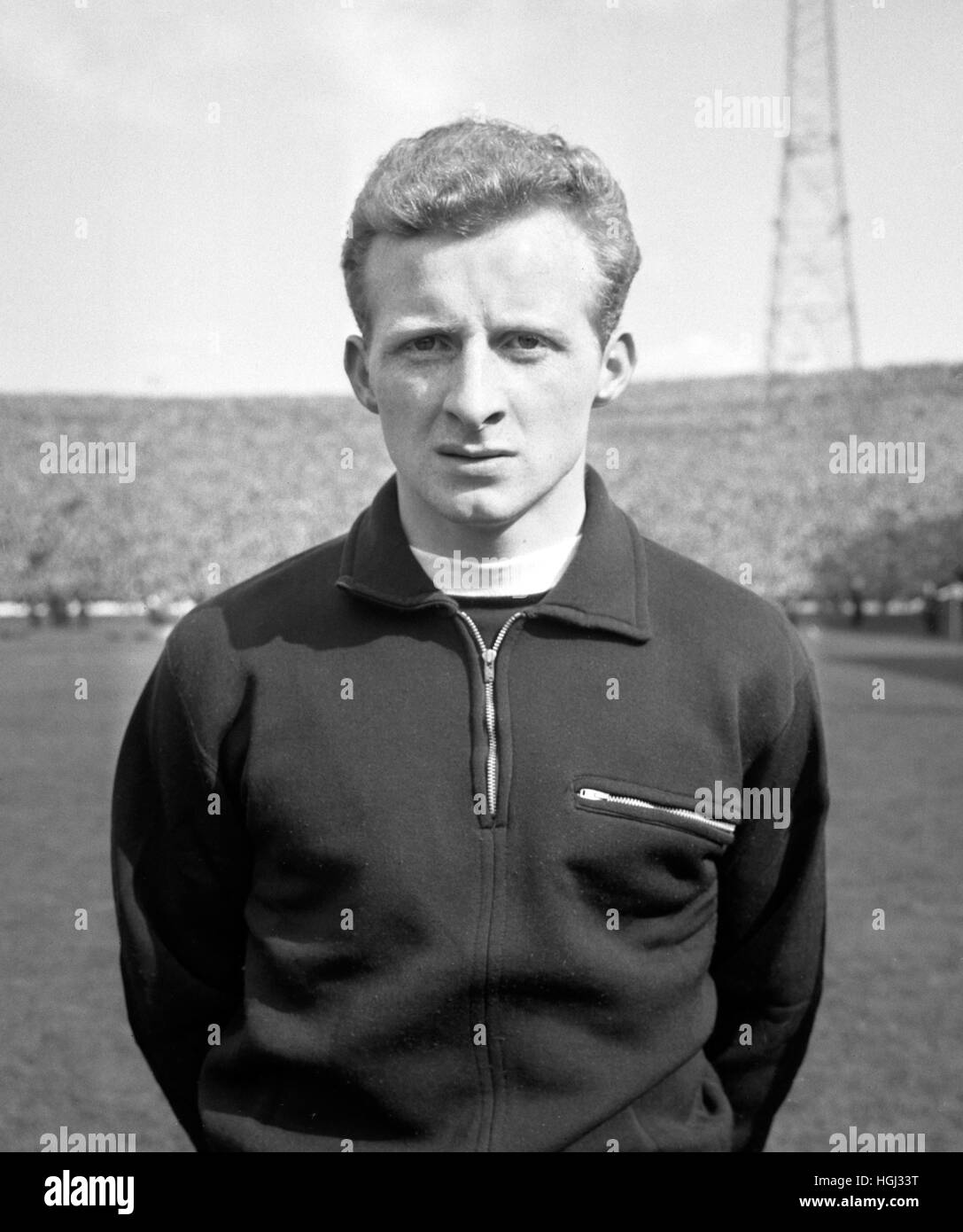
Jimmy Johnstone
 United Kingdom
Also known as: Jinky Johnstone
Fecha de nacimiento
September 30, 1944
Signo zodiacal
Libra
Lugar de nacimiento
Uddingston, South Lanarkshire, Scotland
Edad
Falleció a los 61
Estatura
5 ft 4 in (163 cm)
Acerca de
Jimmy Johnstone fue un futbolista escocés que jugó como extremo derecho para el Celtic y la selección de Escocia. Reconocido por su estilo de regate esquivo y serpenteante, es ampliamente considerado uno de los mejores regateadores en la historia del fútbol. Johnstone pasó 13 años en el Celtic, disputando 515 partidos y marcando 129 goles. Fue un miembro clave de los Lisbon Lions, el equipo del Celtic que ganó la Copa de Europa en 1967, convirtiéndose en el primer club británico en hacerlo. Terminó tercero en la votación del Balón de Oro de 1967 y fue votado como el mejor jugador de la historia del Celtic por los aficionados en 2002. Su habilidad distintiva y sus cautivadoras actuaciones cimentaron su estatus como una figura querida, y los aficionados continúan celebrando su legado. El impacto duradero de Johnstone se reconoce a través de una estatua en Celtic Park y su inclusión en el Salón de la Fama del Fútbol Escocés.
Primeros años y orígenes
James Connolly Johnstone nació el 30 de septiembre de 1944 en Uddingston, South Lanarkshire, Escocia. Creció en una familia de clase trabajadora en Viewpark, Uddingston. Desde muy joven, Johnstone mostró una pasión innata por el fútbol, llegando a decir célebremente: "Nací con un balón en los pies. Podía regatear antes de poder caminar". A pesar de ser pequeño y delgado de niño, desarrolló un control del balón extraordinario a través de una práctica diligente, a menudo perfeccionando sus habilidades regateando una pelota de tenis en las calles.
Johnstone asistió a la St Columba's Primary School y más tarde a la Our Lady's High School en Motherwell. Su dedicación al fútbol le llevó a dejar la escuela a los 15 años para perseguir sus ambiciones atléticas. Antes de que su carrera futbolística floreciera por completo, trabajó brevemente como minero. Desarrolló aún más su talento jugando para clubes juveniles locales, incluido el Viewpark Boys' Guild y el Blantyre Celtic. Fue mientras jugaba para el Blantyre Celtic en 1961 que sus excepcionales habilidades fueron reconocidas por el ojeador del Celtic, John Higgins.
Ese mismo año, Johnstone fichó por el Celtic como aprendiz de 16 años. Debutó con el primer equipo el 27 de marzo de 1963, en un empate 3-3 contra el Kilmarnock. A pesar de este importante paso, sus primeros días como profesional no estuvieron exentos de desafíos; luchó contra la nostalgia y estuvo a punto de abandonar el club. Sin embargo, sus perspectivas cambiaron drásticamente con la llegada del entrenador Jock Stein en 1965, preparando el escenario para su legendaria carrera.
Trayectoria profesional
Jock Stein se convirtió en entrenador del Celtic en marzo de 1965 y reconoció de inmediato el talento único de Johnstone, construyendo el equipo en torno a su juego por las bandas. El primer gran trofeo de Johnstone llegó en la final de la Copa de Escocia de 1965 contra el Dunfermline. En la temporada 1966-67, el Celtic ganó todas las competiciones en las que participó: la Liga escocesa, la Copa de Escocia, la Copa de la Liga escocesa, la Copa de Glasgow y la Copa de Europa. Johnstone fue la estrella de la final de la Copa de Europa de 1967 en Lisboa, donde el Celtic venció al Inter de Milán por 2-1, ganándose el apodo de Lisbon Lions. Terminó tercero en el Balón de Oro de 1967, detrás de Florian Albert y Bobby Charlton. Johnstone ganó nueve campeonatos de liga escocesa consecutivos de 1966 a 1974, un récord mundial en ese momento. Marcó 129 goles en 515 partidos para el Celtic en todas las competiciones. También disputó 23 partidos con Escocia, marcando cuatro goles, y representó a su país en la Copa Mundial de la FIFA de 1974. Dejó el Celtic en 1975, jugando brevemente para los San Jose Earthquakes en la North American Soccer League, el Sheffield United, el Dundee y el Elgin City antes de retirarse en 1978. Ganó la Copa de Escocia cuatro veces (1965, 1967, 1969, 1971), la Copa de la Liga escocesa cinco veces (1966, 1967, 1968, 1969, 1970) y la Copa de Glasgow dos veces (1964, 1965). Fue nombrado Futbolista Escocés del Año en 1967 y ganó el premio al Jugador del Año de los aficionados del Celtic en 1970. Llegó a una segunda final de la Copa de Europa en 1970, perdiendo 2-1 ante el Feyenoord. Su autobiografía 'Jinky' se publicó en 2000.
Cronología profesional
Imagen pública y estilo
Johnstone es recordado como un héroo popular del fútbol escocés. Su estilo característico era el regate serpenteante: un cambio de dirección repentino y agudo que dejaba a los defensores descolocados. Los medios lo retratan como un genio y un mago travieso. Los aficionados lo llaman cariñosamente Jinky y celebran su legado a través de cánticos en Celtic Park y visitas a su estatua. La afición del Celtic canta regularmente canciones de Jinky Johnstone. Su imagen se utiliza en merchandising y documentales, manteniendo viva su memoria décadas después de su muerte. Entre los admiradores famosos se encuentran Pelé, quien lo llamó 'un genio', y Sir Alex Ferguson, quien lo elogió. Compañeros como Billy McNeill, Bobby Lennox, Tommy Gemmell y Bertie Auld eran cercanos a él. Kenny Dalglish citó a Johnstone como su inspiración.
Fama y fandom (iFAMOUS Rankings)
Jimmy Johnstone is currently evaluated by iFANN but holds no placement in the published Global Top 1,000 or Top-100 scope lists. While he does not appear on the current ranking ledger, his enduring presence as a cultural icon transcends standard fame metrics. Known universally by the nickname "Jinky," he remains a central figure within the broader Celtic Family rather than a member of a standalone fan organization with a unique name. The club itself formally bestowed the title upon him in 2002, acknowledging that the moniker was thoroughly deserved due to his contribution to the club's culture. His legacy is sustained through deep-rooted rituals rather than modern digital campaigns; fans gather annually to remember his birthday and the anniversary of his death, sharing quotes that keep his philosophy alive in public discourse. A notable example of his universal appeal involves Hollywood icon Robert Duvall, who met Johnstone while filming *A Shot at Glory* and famously named one of his dogs after the Celtic winger. This anecdote serves as proof of his reach beyond football, cementing his status as a global character study. The narrative of his life has also inspired organized charitable initiatives like the "Jinky's Journey" charity walk, which honors his memory while raising awareness for Motor Neurone Disease. Even decades after his passing, the story of his upbringing in Viewpark and his fearless battle with illness continues to resonate, transforming him from a sporting hero into a moral symbol of resilience for the working class of Glasgow.
Datos interesantes y leyendas
Johnstone was terrified of flying and would often drink heavily before flights to calm his nerves. On one infamous flight to a European match, he stripped naked and ran down the aisle; teammates had to restrain him. He once drove a car into a river after a night out. Despite his small stature, he was incredibly strong and rarely lost the ball in one-on-one situations. He played a charity match in 2004 while already suffering from motor neurone disease, raising £50,000 for research. He was a heavy smoker throughout his career, often seen with a cigarette after matches. He once scored a goal directly from a corner kick against Rangers in a 1967 Old Firm match. He was a patron of the Motor Neurone Disease Association after retirement. His nickname 'Jinky' came from his jinking runs. He was diagnosed with motor neurone disease in 2003 and campaigned for research funding until his death. In his final interview with BBC Scotland in 2005, he said, 'I'm not afraid of dying. I've had a wonderful life. I've done everything I wanted to do.' A bronze statue of Johnstone was unveiled outside Celtic Park in 2011. The official website www.jimmyjohnstone.com is maintained by his family. Fan pages on Facebook have over 50,000 combined followers. Celtic's 2024–25 kit featured a special Lisbon Lions tribute. A documentary 'Jinky: The Jimmy Johnstone Story' was re-released for streaming in 2023. The 55th anniversary of the European Cup win in 2022 saw renewed media interest. Fans still retell the story of how crowds would sometimes shut down streets or become hysterical when he touched the ball, particularly in European competitions where his skill level was unmatched by continental defenses. One specific viral-style incident often referenced is a match where he seemingly danced around three or four defenders in a tight space, leaving them rooted to the spot. These stories are passed down as the first things newcomers learn about him.
Frases destacadas
“I was born with a ball at my feet. I could dribble before I could walk.”
“The ball was my best friend. I never wanted to let it go.”
“Jock Stein changed my life. He told me to enjoy myself and just play. That was all I needed.”
“I'm not afraid of dying. I've had a wonderful life. I've done everything I wanted to do.”
Familia y vida personal
Johnstone se casó con Agnes en 1965. Tuvieron dos hijos: James (nacido en 1966) y Michelle (nacida en 1969). Era un católico devoto y asistía a la iglesia St John the Baptist en Uddingston. Su padre Matthew era obrero siderúrgico, y su madre Sarah era ama de casa. Su nieto, también llamado James, jugó fútbol juvenil en Escocia. La familia ha gestionado su patrimonio desde su muerte, incluidas las licencias y el sitio web oficial. El padre de Johnstone era minero de carbón; era hijo de Sarah y Matthew Johnstone.
Conexiones destacadas
La carrera de Johnstone se vio transformada por el entrenador Jock Stein en el Celtic. Jugó junto a Billy McNeill, Bobby Lennox, Tommy Gemmell y Bertie Auld en los Lisbon Lions. Kenny Dalglish lo citó como una inspiración. Sir Alex Ferguson lo elogió. Fue compañero de equipo de Denis Law en Escocia.
Relaciones e historial sentimental
Johnstone tuvo una vida romántica estable y privada. Se casó con Agnes en 1965 cuando tenía 21 años. Se conocieron a través de amigos en común en la comunidad del Celtic. La pareja tuvo dos hijos: James (nacido en 1966) y Michelle (nacida en 1969). Agnes permaneció casada con Johnstone hasta su muerte por esclerosis lateral amiotrófica en 2006. Ella se ha mantenido en gran medida alejada del ojo público desde entonces. A partir de 2026, Johnstone está fallecido y estuvo casado con Agnes en el momento de su muerte. Su única relación conocida fue con su esposa.
- Casado/aAgnes Johnstone1965 - 2006Se conocieron a través de amigos en común en la comunidad del Celtic; tuvieron dos hijos juntos.
Muerte y repercusiones
Fallecimiento
March 13, 2006 (a los 61 años)
Lugar de fallecimiento
Viewpark, North Lanarkshire, Scotland
Causa de la muerte
Complications from Motor Neurone Disease
The family of James Connolly Johnstone announced his passing on March 13, 2006, confirming that the legendary Celtic winger had died at his home in Viewpark, North Lanarkshire. He was 61 years old and had been suffering from Motor Neurone Disease for several years, a progressive condition that eventually left him unable to move or speak freely. His final public appearance before this decline came when he received the club's "Legend" accolade in 2002, though fans and peers alike had watched his health deteriorate with growing concern in the intervening years. Grief rippled instantly through Scotland and the wider football world, with tributes pouring in from former teammates, club officials, and political leaders including then-Scottish First Minister Jack McConnell.
Thousands of mourners gathered for what media outlets described as a state funeral in spirit, filling the streets for a procession that honored a man who had become a national sporting hero. He was laid to rest in his hometown of Viewpark following a private religious ceremony that welcomed thousands of fans into the community. The scale of attendance reflected the deep affection held for Jinky, whose unique dribbling style had captivated generations. In the years since his death, his legacy has been kept alive through various cultural and charitable initiatives. A documentary titled Jimmy Johnstone was released in 2016 to detail his life story and the highs and lows of his career.
Annual tributes continue with the "Jinky's Journey," a charity walk organized by the Celtic FC Foundation and MND Scotland to honor his memory while raising awareness and funds for motor neurone disease research. Even international figures like Robert Duvall, who met Johnstone during the filming of A Shot at Glory, have publicly remembered him as one of the greatest characters they ever met.
Patrimonio neto (valor de la herencia)
$1 Million
Estimación del equipo editorial de iFANN
Johnstone died in 2006, and his estate is managed by his widow Agnes and their children. At the time of his death, his estate was valued at approximately £250,000–£300,000. Since then, the estate has generated income through posthumous merchandise sales, licensing deals for his image and nickname Jinky, book royalties from his autobiography Jinky (published 2000), documentary rights, and revenue from the statue at Celtic Park which is a tourist attraction. Per iFANN's editorial analysis, the estate is estimated to be worth between £500,000 and £750,000, or roughly $1 Million. Additional income comes from jersey sales, memorabilia, and signed items.
Premios ganados (5)
Johnstone ganó el premio al Futbolista Escocés del Año en 1967. Terminó tercero en la votación del Balón de Oro ese mismo año. Fue votado como el Mejor Jugador de Celtic de Todos los Tiempos en 2002 e incluido en el Salón de la Fama del Fútbol Escocés en su clase inaugural en 2004. Con el Celtic, ganó la Copa de Europa en 1967, nueve títulos de liga escocesa consecutivos, cuatro Copas de Escocia y cinco Copas de la Liga Escocesa.
1967 · Jugador del Año
Celtic
1967 · Tercer Lugar
Celtic
Conocido por
Celtic
1961 · Outside right
Scotland national football team
1964 · Extremo
Lisbon Lions European Cup win
1967 · Star player
Palabras clave
Datos rápidos
- Profesión
- futbolista
- Nacimiento
- +1944-09-30
- Lugar de nacimiento
- Uddingston
- Fallecimiento
- +2006-03-13
- Lugar de fallecimiento
- Uddingston
- Género
- Hombre
- Signo zodiacal
- Libra
Datos personales
- Nombre completo
- James Connolly Johnstone
- Estatura
- 5 ft 4 in (163 cm)
- Cónyuge
- Agnes Johnstone
- Hijos
- James Johnstone, Michelle Johnstone
Preguntas frecuentes
¿Fue Jimmy Johnstone el mejor regateador de la historia?
¿Cómo murió Jimmy Johnstone?
¿Tuvo Jimmy Johnstone hijos?
¿Cuál es el patrimonio neto de Jimmy Johnstone?
¿Por qué a Jimmy Johnstone le llamaban Jinky?
Redes sociales
Personas similares
Únete a la comunidad
fans comentando