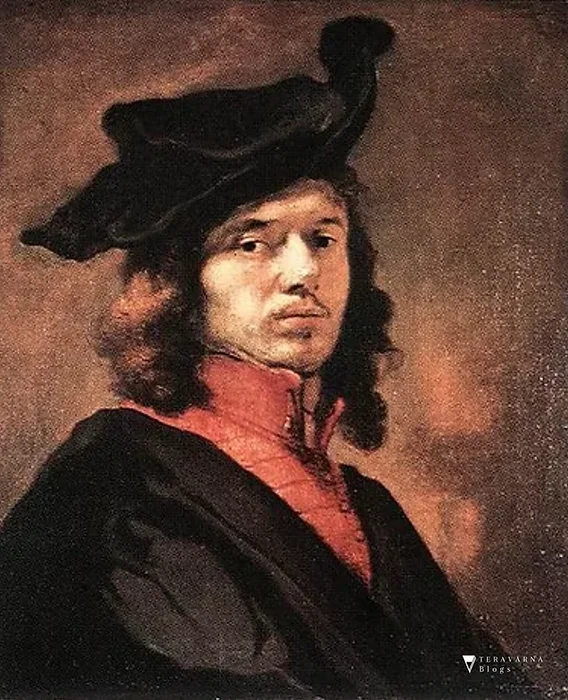
Johannes Vermeer
 Netherlands
Also known as: Jan Vermeer, Johannes van der Meer
Fecha de nacimiento
October 31, 1632
Signo zodiacal
Scorpio
Lugar de nacimiento
Delft, Dutch Republic
Edad
Falleció a los 43
Acerca de
Johannes Vermeer fue un pintor holandés del Siglo de Oro, considerado hoy entre los más grandes artistas del arte occidental. Se especializó en serenos interiores domésticos, mujeres leyendo cartas, vertiendo leche o haciendo encaje, todo bañado en una luz suave y luminosa. El uso de pigmentos costosos como el ultramar le daba a sus pinturas una intensidad resplandeciente. Vermeer trabajaba lentamente, completando solo unas 35 obras conocidas. Durante su vida tuvo un éxito moderado, obteniendo gran parte de sus ingresos como marchante de arte. Tras su muerte fue olvidado durante casi dos siglos, redescubierto en la década de 1860 por el crítico francés Théophile Thoré-Bürger. Hoy sus pinturas son tesoros nacionales, y La joven de la perla es a menudo llamada la Mona Lisa del Norte. Sus escenas tranquilas e íntimas siguen cautivando a millones de visitantes cada año.
Primeros años y orígenes
Vermeer nació en Delft en 1632, hijo de Reynier Janszoon, tejedor de seda, marchante de arte y tabernero, y de Digna Baltens. La familia vivía sobre la posada de su padre, el Zorro Volador, en la plaza del mercado. No se conservan registros de su educación formal ni aprendizaje. Probablemente se formó con pintores locales como Leonard Bramer o Carel Fabritius. En 1653 se unió al Gremio de San Lucas como maestro pintor, requisito para vender obras en Delft. Ese mismo año se casó con Catharina Bolnes, una católica de familia adinerada. El matrimonio requirió que se convirtiera al catolicismo. Comenzó su carrera pintando grandes escenas bíblicas y mitológicas, como Cristo en casa de Marta y María, pero pronto pasó a los pequeños interiores domésticos que definirían su legado. También trabajó como marchante de arte, vendiendo pinturas de otros artistas para mantener a su creciente familia.
Trayectoria profesional
Alrededor de 1656, Vermeer pintó La alcahueta, su primera escena de género, marcando un punto de inflexión. En la siguiente década desarrolló su estilo característico: interiores tranquilos iluminados por una sola ventana, con figuras absortas en tareas cotidianas. La lechera (c. 1658) muestra a una sirvienta vertiendo leche, la luz capturando cada detalle de su rostro y el pan sobre la mesa. Mujer leyendo una carta (c. 1663) captura un momento privado de concentración. Su único paisaje urbano, Vista de Delft (c. 1661), es elogiado por su cielo atmosférico y reflejos. Alrededor de 1665 pintó La joven de la perla, un tronie que se convirtió en su imagen más famosa. Sirvió dos veces como jefe del gremio de pintores de Delft. Su principal mecenas fue Pieter van Ruijven, quien compró al menos veinte pinturas. Tras la invasión francesa de 1672, el mercado del arte colapsó y Vermeer cayó en deudas. Murió en 1675, dejando diecinueve pinturas sin vender. Su viuda vendió obras a los acreedores. Durante dos siglos fue casi olvidado, hasta que los artículos de Thoré-Bürger en 1866 reavivaron el interés. Las grandes exposiciones del siglo XX, especialmente la de 1995-96 en Washington y La Haya y la retrospectiva de 2023 en el Rijksmuseum (que reunió 28 pinturas), consolidaron su fama mundial.
Cronología profesional
Imagen pública y estilo
Vermeer es visto como el maestro de la intimidad tranquila y la luz. Su estética presenta azules fríos, amarillos cálidos y reflejos perlados. Su obra se siente contemplativa y atemporal. Los entusiastas a menudo se llaman vermeerianos. Los rituales de los fans incluyen visitar Delft, recrear su iluminación en fotografía y peregrinaciones a museos que albergan sus obras. La película de 2003 La joven de la perla popularizó una imagen romantizada del artista. Las cuentas de redes sociales de los museos publican regularmente sus pinturas, generando millones de impresiones. Los memes y recreaciones con IA lo mantienen como una presencia viva en la cultura popular.
Fama y fandom
The devotion surrounding Johannes Vermeer is a quiet pilgrimage rather than a roaring crowd, defined by scholars and enthusiasts who treat his small body of work as sacred texts. While he lacks a formal fandom name or active social media campaigns, the community known informally as Vermeerians engages in deep, ritualistic appreciation. These followers travel to Delft to stand before the very walls that held his brushstrokes, recreating his unique lighting in photography, and treating museum visits as acts of reverence. This engagement is less about celebrity gossip and more about the enduring mystery of a man who vanished from history only to return as a master of light. The cultural footprint remains immense, driven by institutions like the Rijksmuseum and the Mauritshuis, which host exhibitions that draw hundreds of thousands of visitors seeking to witness the luminous interiors for themselves. Despite the absence of modern fan clubs or birthday billboards, the global attention on his legacy tracks across media coverage, search trends, and consumption signals worldwide, cementing his status as a timeless icon. His influence extends beyond art history into popular culture, where films and merchandise keep his image alive for new generations. Through this lens, Vermeer is not merely a historical figure but a living presence in the collective consciousness of art lovers. He stands as the 90th most famous person in Art & Design, a position holding steady from the previous cycle according to the iFANN Global Fame Rankings.
Datos interesantes y leyendas
Johannes Vermeer used a camera obscura to achieve precise perspective and luminous effects, though scholars debate how extensively. He painted only two exterior scenes: The Little Street and View of Delft. Maps appear in many of his interiors, reflecting Dutch trade dominance. One painting, The Concert, was stolen from the Isabella Stewart Gardner Museum in 1990 and remains missing. He was buried in an unmarked grave in the Old Church, Delft. His mother-in-law Maria Thins owned the house where he lived and worked. He sometimes used lapis lazuli, ground from semiprecious stone, for his blues. No authenticated self-portrait survives; the figure in The Procuress may be him, but scholars are uncertain. A persistent legend surrounds his relationship with Antonie van Leeuwenhoek, the father of microbiology, suggesting their neighborly bond influenced Vermeer's optical experiments. Another enduring story frames him as the 'forgotten genius,' a narrative supported by the fact that his works were hidden in private collections for decades after his death until rediscovered in the 1860s. Folklore also hints at religious ambiguity, with some claiming he belonged to a forgotten sect, though this remains a subject of interpretation rather than confirmed fact.
Frases destacadas
“I am a painter by profession and have been one for twenty years or thereabouts.”
“I have been a master painter for twenty years, and I know the value of paintings.”
“The art of painting is not to be learned in a day.”
Familia y vida personal
Vermeer se casó con Catharina Bolnes en abril de 1653. Ella era hija de una familia católica adinerada; el matrimonio requirió que él se convirtiera. Tuvieron quince hijos, cuatro de los cuales murieron jóvenes. Once sobrevivieron hasta la edad adulta. La familia vivió con la madre de Catharina, Maria Thins, en una gran casa en Oude Langendijk en Delft. Maria era la propietaria de la casa y fue una presencia estabilizadora. El padre de Vermeer, Reynier, murió en 1652, dejando deudas. Su madre Digna vivió hasta 1670. Tras la muerte de Vermeer, Catharina solicitó la bancarrota y vendió pinturas para saldar deudas. Murió en 1688.
Conexiones destacadas
La esposa de Vermeer, Catharina Bolnes, su suegra Maria Thins y su mecenas Pieter van Ruijven fueron centrales en su vida. Pudo haber estudiado con Carel Fabritius o Leonard Bramer. Antonie van Leeuwenhoek, el microscopista, fue un compañero residente de Delft y actuó como albacea de su patrimonio. En tiempos modernos, la autora Tracy Chevalier y el director Peter Webber llevaron su historia a una amplia audiencia con la novela y la película La joven de la perla.
Relaciones e historial sentimental
La única relación romántica documentada de Vermeer fue su matrimonio con Catharina Bolnes, con quien se casó en abril de 1653. El matrimonio fue arreglado a través de conexiones familiares y requirió que se convirtiera al catolicismo. Tuvieron quince hijos, cuatro murieron en la infancia. El matrimonio parece haber sido estable, aunque las presiones financieras eran constantes. Catharina le sobrevivió trece años. No existe evidencia creíble de ninguna otra pareja romántica. A partir de 2026, Vermeer ha fallecido y su matrimonio terminó con su muerte en 1675.
- Casado/aCatharina Bolnes1653 - 1675Casado en abril de 1653; tuvo 15 hijos, 11 sobrevivieron; ella le sobrevivió.
Muerte y repercusiones
Fallecimiento
December 15, 1675 (a los 43 años)
Lugar de fallecimiento
Delft
Causa de la muerte
Unconfirmed; possibly dropsy or stroke
Johannes Vermeer died on December 15, 1675, in Delft at the age of approximately forty-two or forty-three. The exact cause of his passing remains officially unconfirmed by any medical examiner or autopsy, with later traditions suggesting dropsy or a stroke as speculative interpretations rather than documented facts. He was buried in the Old Church in Delft on December 18, 1675, in a private service attended only by close family and perhaps a few guild members.
Following his death, his estate became the subject of legal complexity due to financial ruin. A lawsuit ensued involving his wife, Catharina Bolnes, who successfully petitioned the court to have her husband's estate declared insolvent to protect her own inheritance and prevent the seizure of assets needed to support their children. This civil proceeding addressed the disposition of unpaid debts owed to creditors, including his mother-in-law, Maria Thins, while liquidating remaining assets to satisfy obligations.
Public reaction to his death in 1675 remained notably muted during his lifetime as he was less famous than contemporaries like Rembrandt or Frans Hals. His work did not experience immediate sales surges following his death; instead, his reputation declined significantly in the decades that followed until art historian Thoré-Bürger rediscovered his oeuvre in the mid-19th century. In the modern era, his legacy transformed from obscurity to global fame, with works entering museum halls of fame and the release of the 2003 film Girl with a Pearl Earring sparking renewed interest. His masterpiece has since been loaned to international exhibitions, such as its rare 2026 trip to the Nakanoshima Museum of Art in Osaka.
Patrimonio neto (valor de la herencia)
$1 Billion (estate value of paintings)
Estimación del equipo editorial de iFANN
Per iFANN's editorial analysis, Johannes Vermeer's net worth is estimated at $1 Billion (estate value of paintings) going by 2026 estimates. Vermeer died in debt, his estate insolvent. Most are in museums and not for sale. Posthumous revenue comes from licensing and merchandising of his images, exhibition ticket sales (the 2023 Rijksmuseum show sold over 650,000 tickets), royalties from the 2003 film and novel, and scholarly publications. The cultural estate's annual licensing and tourism revenue tied to Vermeer is estimated in the low millions. Rights are held by owning institutions like the Rijksmuseum and Mauritshuis.
Premios y galardones
View 6 records, honours and achievementsConocido por
Girl with a Pearl Earring
1665 · Painter
The Milkmaid
1658 · Painter
View of Delft
1661 · Painter
Woman in Blue Reading a Letter
1663 · Painter
The Little Street
1658 · Painter
Palabras clave
Datos rápidos
- Profesión
- painter, art dealer
- Nacimiento
- +1632-10-31
- Lugar de nacimiento
- Delft
- Fallecimiento
- +1675-12-15
- Lugar de fallecimiento
- Delft
- Género
- Hombre
- Cónyuge
- Catharina Bolnes
- Children
- 15 (11 survived)
- Nacionalidad
- Dutch
Datos personales
- Nombre completo
- Johannes Vermeer
- Cónyuge
- Catharina Bolnes
- Hijos
- 15 (11 survived infancy)
Preguntas frecuentes
¿Cuántas pinturas pintó Johannes Vermeer?
¿Cuál es la pintura más famosa de Vermeer?
¿Era Vermeer pobre cuando murió?
¿Usó Vermeer una cámara oscura?
¿Dónde puedo ver las pinturas de Vermeer en 2026?
Personas similares
Únete a la comunidad
fans comentando