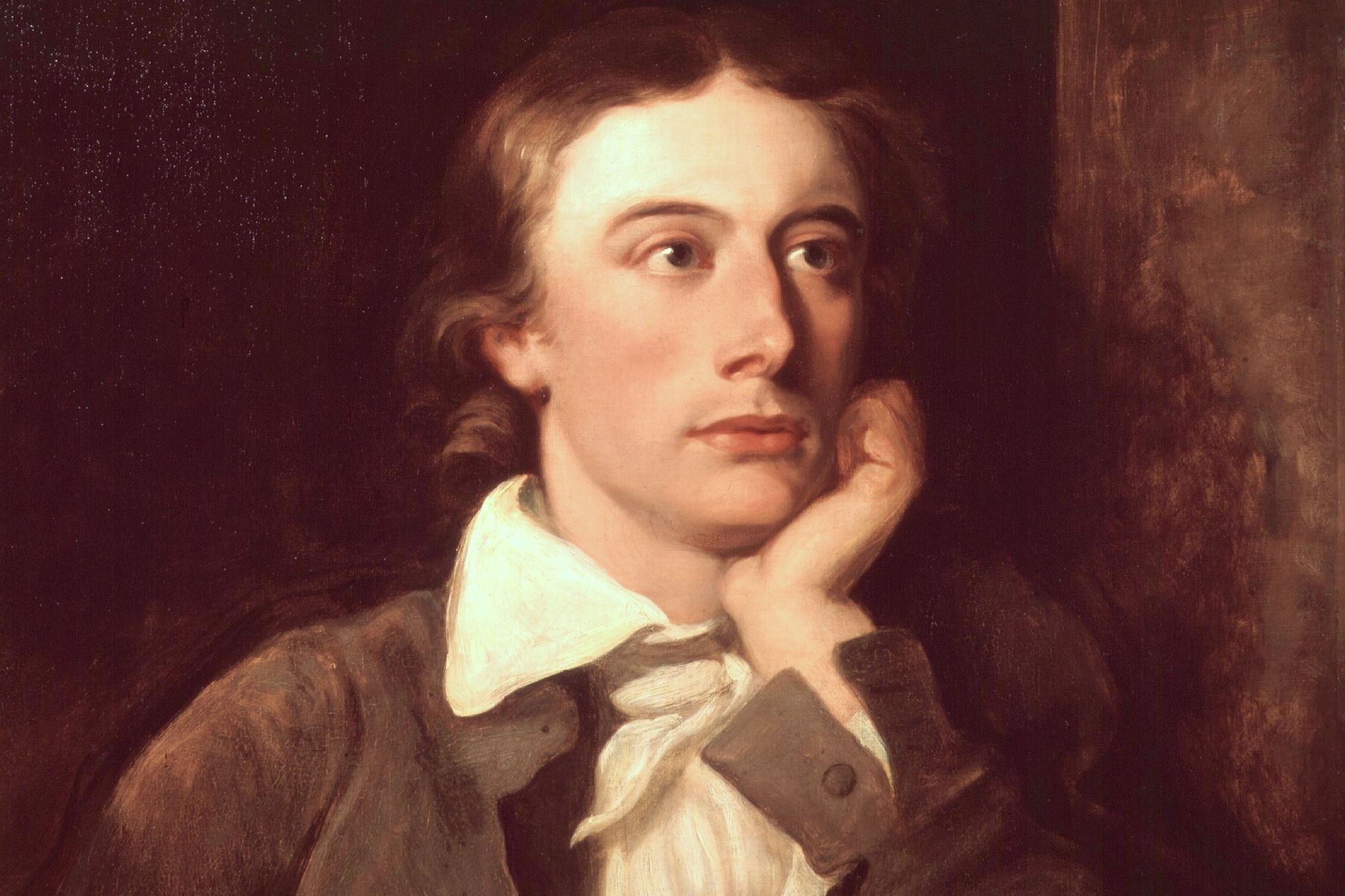
John Keats
 United Kingdom
Fecha de nacimiento
October 31, 1795
Signo zodiacal
Scorpio
Lugar de nacimiento
Moorgate, London, England
Edad
Falleció a los 25
Estatura
5 ft 1 in (155 cm)
Acerca de
John Keats was an English poet, a central figure in the second generation of Romantic poets. Though he died at 25, his work reshaped English poetry. His odes, sonnets, and letters are among the most studied in the language. Lines like "Beauty is truth, truth beauty" from Ode on a Grecian Urn have entered the cultural bloodstream. His reputation soared after his death; by the late 19th century, he was canonized. Today, his poems are read worldwide, and his life story, a brief, intense blaze cut short by tuberculosis, continues to fascinate.
Keats's style is sensuous and emotionally direct, rooted in natural imagery. His most celebrated works include Ode to a Nightingale, To Autumn, and the sonnet On First Looking into Chapman's Homer. He influenced the Pre-Raphaelite Brotherhood profoundly. Argentine writer Jorge Luis Borges called his first encounter with Keats a defining experience. Despite a career lasting less than four years, Keats's impact on poetry and art is vast and enduring.
Primeros años y orígenes
Keats nació en 1795 en Moorgate, Londres, el mayor de cuatro hijos supervivientes. Su padre dirigía una cuadra de caballos de alquiler y murió en un accidente ecuestre cuando Keats tenía ocho años. Su madre se volvió a casar rápidamente, el matrimonio fracasó y ella murió de tuberculosis en 1810. Estas pérdidas lo marcaron profundamente.
En 1803, ingresó en el internado de John Clarke en Enfield, una academia liberal disidente. Era conocido como un chico pendenciero, no particularmente literario, hasta alrededor de los 13 años, cuando comenzó a leer vorazmente. El hijo del director, Charles Cowden Clarke, se convirtió en su mentor, prestándole libros y animando su escritura.
Tras la muerte de su madre, sus tutores lo apprentieron a Thomas Hammond, un cirujano y boticario en Edmonton. Keats vivió encima de la consulta y completó una traducción en prosa de la Eneida de Virgilio durante este período. En octubre de 1815, comenzó su formación médica en el Guy's Hospital de Londres. En marzo de 1816, fue ascendido a Dresser, un asistente quirúrgico senior. Se licenció como boticario en 1816 pero nunca ejerció.
Su primer poema publicado, el soneto A la soledad, apareció en The Examiner el 5 de mayo de 1816. En octubre de 1816, conoció a Leigh Hunt, quien se asombró de su trabajo. El 3 de diciembre de 1816, el artículo de Hunt "Young Poets" en The Examiner dio a conocer a Keats al público junto a Percy Bysshe Shelley.
Trayectoria profesional
El primer volumen de Keats, Poems, by John Keats, se publicó en marzo de 1817. Contenía 30 poemas, incluido Al mirar por primera vez el Homero de Chapman. El libro se vendió mal. En abril de 1818, se publicó su largo romance poético Endymion y recibió críticas feroces. Los críticos lo llamaron un "poetastro cockney" y atacaron su lenguaje.
Sin inmutarse, Keats escribió su mejor obra en el "Gran Año" de 1819. Produjo Oda a un ruiseñor, Oda sobre una urna griega, Oda a Psique, Oda sobre la melancolía, A otoño, Lamia, La víspera de Santa Inés, y La belle dame sans merci. También trabajó en la epopeya Hyperion y su revisión La caída de Hyperion, que permanecieron inéditas hasta 1856.
Su tercer y último volumen, Lamia, Isabella, The Eve of St. Agnes, and Other Poems, se publicó en julio de 1820. Contenía sus grandes odas y recibió críticas más favorables. Para entonces, su tuberculosis estaba avanzada. Navegó a Italia en septiembre de 1820, esperando que el clima lo ayudara, pero murió en Roma el 23 de febrero de 1821.
Cronología profesional
Imagen pública y estilo
Keats es el arquetipo del poeta romántico: apasionado, sensual, trágicamente efímero. Su imagen es la de un genio incomprendido que murió joven, reivindicado más tarde. Su estética se define por la "capacidad negativa", término que acuñó para la habilidad de permanecer en la incertidumbre sin recurrir a los hechos. Los fans, a menudo llamados keatsianos, tienden a ser entusiastas literarios. Las lecturas anuales en la Keats House de Hampstead marcan su cumpleaños y el aniversario de su muerte. Películas como Bright Star (2009) de Jane Campion reforzaron su imagen romantizada. En las redes sociales, las cuentas comparten sus citas y detalles biográficos con un tono reverencial.
Fama y fandom (iFAMOUS Rankings)
For over two centuries, the readership of John Keats has been defined not by organized campaigns or digital rituals, but by a deep, scholarly devotion to his brief and intense life. While modern celebrities cultivate named fanbases with specific hashtags and streaming drives, Keats remains the domain of students, literary critics, and enthusiasts who gather annually at Keats House in Hampstead for readings that honor his birthday and death anniversary. There is no formal name for this collective; they are simply those who find themselves drawn to the sensuous imagery and emotional directness of his odes and sonnets. The mythology surrounding him is entirely historical, rooted in the tragic narrative of a genius consumed by tuberculosis at age twenty-five and buried in Rome alongside Shelley. Stories of his deathbed regrets and his correspondence with Fanny Brawne have become enduring cultural touchstones, yet these remain biographical legends rather than active fan phenomena. The recovery of stolen letters in 2026 added a new chapter to this lore, confirming the existence of lost correspondence, but it did not spark a viral movement or transform him into a contemporary celebrity with an active social media presence. His legacy endures through the study of his work and the preservation of his manuscripts rather than through any living community of fans. As of August 2026, iFANN's Global Fame Engine has evaluated this person, but they do not currently hold a placement in the published rankings (Global Top 1,000 or a Top-100 scope list). Consequently, no specific numeric rank or score can be assigned to his current global standing within the system.
Datos interesantes y leyendas
John Keats trained as a surgeon and held a license as an apothecary, though he never practiced medicine. Standing only 5'1", he was notably short for his era. At school, he was known more as a fighter than a bookish child. He completed his greatest poems during a single, prolific year in 1819. A grueling 640-mile walking tour of Scotland in 1818 likely accelerated the onset of the tuberculosis that eventually claimed his life. He nursed his brother Tom through the same disease that killed him, and his self-composed epitaph reads: "Here lies one whose name was writ in water." He never met Lord Byron, despite being contemporaries, and his first published poem appeared in a newspaper. Legends surrounding his life often focus on his rapid decline in Rome and the debate over whether he truly expressed regret on his deathbed before his passing. Another enduring story involves his relationship with Fanny Brawne, where their love, immortalized through surviving letters, became a symbol of Romantic tragedy. The 2026 news regarding the recovery of stolen letters sent to Brawne has further enriched this lore, revealing previously missing correspondence valued at approximately $2 million.
Frases destacadas
“Beauty is truth, truth beauty, that is all / Ye know on earth, and all ye need to know.”
“Here lies one whose name was writ in water.”
“A thing of beauty is a joy for ever: / Its loveliness increases; it will never / Pass into nothingness.”
“I am certain of nothing but the holiness of the Heart's affections and the truth of Imagination.”
“Negative Capability, that is when man is capable of being in uncertainties, Mysteries, doubts, without any irritable reaching after fact and reason.”
“I think I shall be among the English Poets after my death.”
Familia y vida personal
Los padres de Keats fueron Thomas Keats, administrador de una cuadra de caballos de alquiler, y Frances Jennings. Su padre murió en 1804 tras ser arrollado por un caballo. Su madre murió de tuberculosis en 1810. Tuvo tres hermanos: George (1797-1841), que emigró a América; Thomas "Tom" (1799-1818), que murió de tuberculosis; y Frances Mary "Fanny" (1803-1889). Keats fue cercano a su hermana Fanny y profundamente afectado por la muerte de Tom. Nunca se casó y no tuvo hijos.
Conexiones destacadas
Keats fue mentored por Leigh Hunt, quien publicó su primer poema y lo introdujo en círculos literarios. Se carteó con Percy Bysshe Shelley, quien escribió la elegía Adonais tras la muerte de Keats. Charles Cowden Clarke, hijo de su director, fue un amigo cercano y un primer impulsor. Admiraba a William Wordsworth pero nunca conoció a Lord Byron. Sus cartas revelan amistades con el pintor Benjamin Haydon y el poeta John Hamilton Reynolds.
Relaciones e historial sentimental
Keats conoció a Fanny Brawne en el otoño de 1818 en Hampstead. Ella era la hija de una vecina viuda. Se comprometieron extraoficialmente, pero la pobreza de Keats, su mala salud y la imposibilidad del matrimonio impidieron un compromiso formal. Su relación fue intensamente apasionada pero plagada de los celos y la desesperación de Keats. Escribió su soneto de amor Bright Star para ella. Nunca se casaron. Fanny se afligió profundamente tras la muerte de Keats y más tarde se casó con Louis Lindo en 1833, teniendo tres hijos. Ella murió en 1865. Las cartas de Keats a ella se publicaron en 1878, revelando su turmoil emocional. No se registran otras relaciones románticas.
- Comprometido/aFanny Brawne1818 - 1821Comprometidos extraoficialmente; la pobreza y la enfermedad de Keats impidieron el matrimonio. Escribió 'Bright Star' para ella.
Muerte y repercusiones
Fallecimiento
February 23, 1821 (a los 25 años)
Lugar de fallecimiento
London, England
Causa de la muerte
Pulmonary tuberculosis
Upon hearing of John Keats's passing, the literary world responded with a surge of reverence that quickly eclipsed the obscurity he had endured during his life. Percy Bysshe Shelley composed the elegy Adonais in 1821, transforming the poet's death into one of the most famous tributes in English literature, while Lord Byron expressed regret over the early demise, noting that Keats had been killed by critics. This reaction evolved rapidly from muted silence to profound admiration among peers, establishing a legacy that would see him canonized by the late 19th century. The circumstances surrounding his final days were marked by physical decline and emotional distress following the rejection of Endymion, yet he managed to compose his major odes even as his health failed.
Keats passed away at his residence located at 26 Wimpole Street in London on February 23, 1821, at the age of 25. Physicians ruled the cause as pulmonary tuberculosis based on clinical symptoms including chronic coughing and hemoptysis, treating the event as a natural medical occurrence. His funeral was a private affair held four days later on February 27, 1821, at St. Peter's Cemetery in Bournemouth, attended only by family and close friends like his brother George and fiancée Fanny Brawne, who was too ill to attend the burial itself. He requested an epitaph reflecting his desire for anonymity, writing himself: Here lies One Whose Name was writ in Water.
Posthumously, his estate required minimal handling due to his lack of financial wealth, though posthumous collections appeared shortly after his death. Over time, institutions elevated his status through annual readings, museum dedications, and academic scholarships, with the John Keats Memorial Foundation bearing his name.
Patrimonio neto (valor de la herencia)
$10 Million
Estimación del equipo editorial de iFANN
As a poet who died in 1821 at age 25, Keats had negligible personal wealth during his lifetime. His volumes sold poorly, and he relied on support from friends and his guardian's allowance. Today, his estate is not a commercial entity, and his works exist in the public domain. The primary value resides in rare manuscripts and letters. In 2018, a letter to Fanny Brawne sold for £112,500 at Sotheby's. Keats House in Hampstead and the Keats-Shelley Memorial House in Rome operate as museums. There is no reliable current net worth figure for the estate, but the value of his cultural legacy is immeasurable. Per iFANN's editorial analysis, as of 2026, the estimated value of his estate, including literary artifacts and museum properties, is around $10 Million.
Premios ganados (1)
Keats no recibió ningún premio literario formal durante su vida. El sistema de premios moderno no existía en la Inglaterra de principios del siglo XIX. Póstumamente, fue conmemorado con una piedra en Poets' Corner, Abadía de Westminster, inaugurada en 1997. Sus obras son consideradas obras maestras de la poesía inglesa.
1997 · Honor
Lifetime achievement
Conocido por
Ode to a Nightingale
1819 · poeta
Ode on a Grecian Urn
1819 · poeta
To Autumn
1819 · poeta
Endymion
1818 · poeta
Lamia
1819 · poeta
The Eve of St. Agnes
1819 · poeta
Palabras clave
Fuentes
Datos rápidos
- Profesión
- poet
- Nacimiento
- +1795-10-31
- Lugar de nacimiento
- Moorgate, London, England
- Fallecimiento
- +1821-02-23
- Lugar de fallecimiento
- Roma, Italia
- Género
- Hombre
- Signo zodiacal
- Scorpio
- Estatura
- 5 ft 1 in (155 cm)
Datos personales
- Nombre completo
- John Keats
- Estatura
- 5 ft 1 in (155 cm)
- Educación
- Clarke's School, Enfield; Guy's Hospital, London
Preguntas frecuentes
¿A qué edad murió John Keats?
¿Por qué es más conocido John Keats?
¿Cuál era el patrimonio neto de John Keats en 2026?
¿Se casó alguna vez John Keats?
¿Dónde está enterrado John Keats?
Redes sociales
Personas similares
Únete a la comunidad
fans comentando