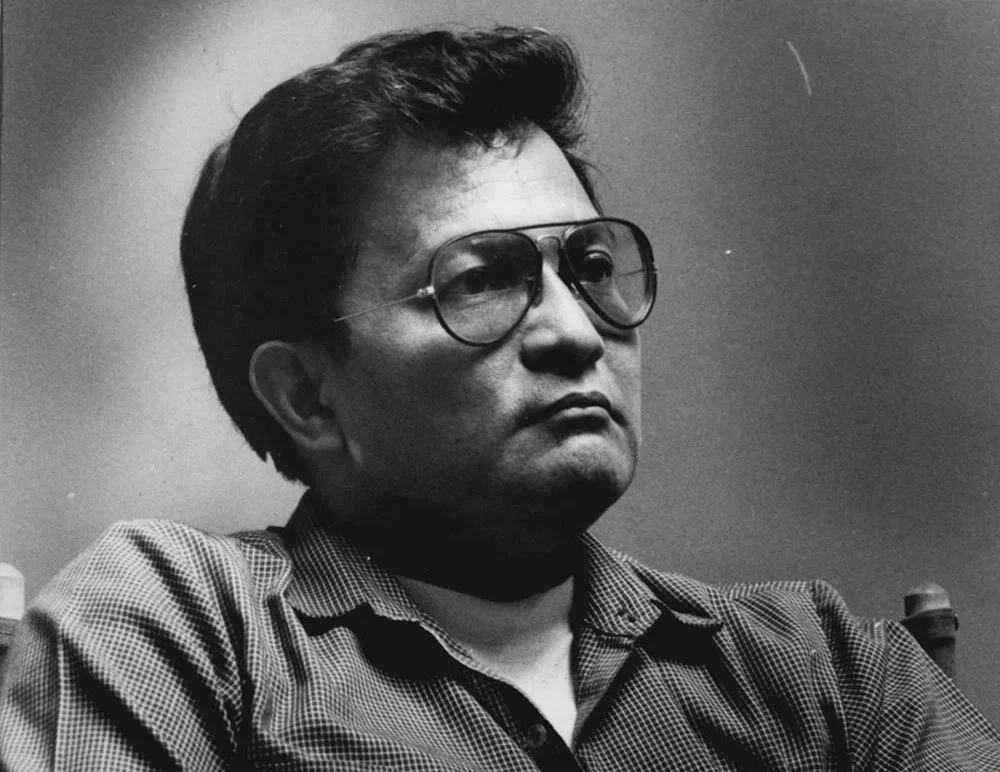
Lino Brocka
 Philippines
director de cine•guionista•actor
Also known as: Catalino Ortiz Brocka
Fecha de nacimiento
April 3, 1939
Signo zodiacal
Aries
Lugar de nacimiento
Pilar, Sorsogon, Philippines
Edad
Falleció a los 52
Acerca de
Lino Brocka was the towering figure of Philippine cinema, a director who made over 60 films in two decades by threading social realism through crowd-pleasing melodrama. Born Catalino Ortiz Brocka in 1939, he started in theater and television before his 1970 debut Wanted: Perfect Mother. His breakthrough came with Weighed But Found Wanting (1974), but the landmark was Manila in the Claws of Light (1975), widely called the greatest Filipino film ever made. Insiang (1976) became the first Philippine film to screen at Cannes, followed by Jaguar (1979) and This Is My Country (1984). Brocka's work openly attacked the Marcos dictatorship, and he paid for that activism with arrests and death threats. He died in a car crash in 1991 at 52. In 1997, he was named a National Artist of the Philippines. Today, his films are studied as masterclasses in using popular cinema to tell hard truths about poverty, power, and survival.
Primeros años y orígenes
Brocka creció en la pobreza en Pilar, Sorsogon, luego se mudó a San José, Nueva Ecija, donde asistió a la Escuela Central de San José y se graduó de la Escuela Secundaria de Nueva Ecija en 1956. Su padre murió cuando él era joven y vivió con parientes que a menudo eran abusivos. Encontró escape en los cines, colándose cuando ya no podía pagar las entradas. Las películas de René Clément y Federico Fellini lo hicieron llorar y sentirse conectado con la humanidad. Más tarde dijo que las películas se volvieron una obsesión tal que tenía que hacerlas, quería tocar a extraños que nunca había visto. A pesar de la pobreza, sobresalió académicamente y ganó una beca para la Universidad de Filipinas. Allí se unió al club de teatro dirigido por el Artista Nacional Wilfrido Ma. Guerrero y luego a la Asociación Filipina de Teatro Educativo (PETA), donde conoció a la fundadora Cecille Guidote. Esa conexión lo llevó a su primera película. Por esa época, su amigo Behn Cervantes lo introdujo al mormonismo. Brocka se convirtió y pasó un año en Molokai, Hawái, cuidando leprosos, esperando encontrar respuestas sobre su homosexualidad. Regresó a Manila después de buscar un cierre.
Trayectoria profesional
El debut cinematográfico de Brocka, Wanted: Perfect Mother (1970), fue un melodrama comercial que le dio un punto de apoyo en la industria. Ese mismo año dirigió Dipped in Gold, una adaptación de una historia de cómic de Mars Ravelo sobre un empresario gay en el armario. El reconocimiento crítico llegó con Weighed But Found Wanting (1974), una película que demostró que el arte y el comercio podían coexistir. Luego vino Manila in the Claws of Light (1975), un retrato brutal de la pobreza urbana bajo la ley marcial que ahora se considera la mejor película filipina de todos los tiempos. Insiang (1976) hizo historia como la primera película filipina proyectada en Cannes. Jaguar (1979) y This Is My Country (1984) también se proyectaron en Cannes. En 1983, fundó la organización Artistas Comprometidos de Filipinas para abogar por la libre expresión. Al año siguiente, fue arrestado y encarcelado por protestar contra la censura mediática bajo Marcos. Recibió el Premio Ramon Magsaysay en 1985. En 1986, fue miembro del jurado de Cannes y fue nombrado por la presidenta Corazón Aquino para la Comisión Constitucional de 1986, aunque luego renunció. Sus obras posteriores incluyen Macho Dancer (1988) y Orapronobis (1989). Su última película fue Dirty Affair (1990).
Cronología profesional
Imagen pública y estilo
Brocka es recordado como el mejor cineasta filipino y un activista intrépido. Su estilo característico combina el melodrama con el realismo social, creando películas ricas en realismo y comentario social. Usó el cine como un arma contra el autoritarismo, y tanto fanáticos como críticos celebran su coraje. No existe un nombre de fandom oficial, pero su obra se estudia en universidades y se proyecta en retrospectivas en todo el mundo. Sus películas son conocidas por su mirada cruda e implacable a la pobreza, la corrupción y la opresión.
Fama y fandom (iFAMOUS Rankings)
Lino Brocka never cultivated a celebrity fanbase in the traditional sense, nor did he inspire organized groups with catchy names or rituals. His legacy survives not through billboards or fan clubs, but through the quiet devotion of cinephiles, scholars, and activists who treat his filmography as sacred cultural heritage. This audience operates through formal channels like university departments and international festivals rather than grassroots campaigns, organizing restorations and screenings to keep his vision alive against the erosion of time. The reverence for Brocka is defined by his role as a voice for the marginalized during the Martial Law era, creating a bond with the public that transcended typical star worship. His fanbase has no formal name. In August 2026, the iFANN Global Fame Engine evaluated Lino Brocka's standing in the global consciousness. While his influence remains profound, he currently holds no placement in the published rankings, including the Global Top 1,000 or any scope-specific lists. This absence of a numeric rank reflects the unique nature of his fame: it is deeply rooted in historical significance and academic study rather than current search volume or media consumption signals worldwide. The evaluation confirms that while Brocka is a towering figure in Philippine cinema history, he does not currently generate the continuous, mass-market engagement required for a specific global ranking position. His status remains that of an icon whose work is preserved and studied, rather than a personality tracked by real-time popularity metrics.
Datos interesantes y leyendas
Lino Brocka was one of the first Mormon converts in the Philippines. He directed over 60 films in just two decades, averaging three movies per year.
Wanted: Perfect Mother stood out as the only film he made that did not focus heavily on social injustice. His father is believed to have been politically killed, and Brocka himself feared for his life in his later years due to threats stemming from his activism. At age 25, he learned the craft of directing by joining the Theatre Club led by Wilfrido Ma. Guerrero. A signature element of his filmmaking style involves characters frequently wielding pointed or sharp objects.
Legends surrounding Brocka often recount his physical presence in the thick of protests that culminated in the ouster of dictator Ferdinand Marcos. This transition from filmmaker to active participant in the People Power Revolution defines his mythos as the "spokesman of the generation." Fans also retell the story of *Macho Dancer* evolving from a commercial hit into a landmark of queer Asian cinema, a journey highlighted by its recent restoration and return to US screens for Pride Month premieres. Another enduring tale involves the near-loss of his works, such as a nearly lost film rescued by academic intervention in 2024, proving the fragility of his legacy and the dedication required to preserve it.
Frases destacadas
“When I was young, I used to cry too inside the theater, watching films by Rene Clement and Fellini. I felt vindicated, an integral part of humanity. Films became such an obsession that I had to make them...I wanted to touch strangers I had never seen.”
“I make films about the poor because I am one of them. I know their pain.”
“The artist must be involved. He cannot just sit and watch.”
Familia y vida personal
El padre de Brocka murió cuando él era niño; algunas fuentes sugieren que fue asesinado políticamente. Vivió con su madre y su hermana, mudándose entre parientes que eran estrictos y abusivos. Su sobrino es Q. Allan Brocka, cineasta y escritor de televisión conocido por Rick & Steve: The Happiest Gay Couple in All the World. Su primo es A. Julian Brocka. Brocka nunca se casó y no tuvo hijos. Era abiertamente gay pero mantenía sus relaciones personales en privado.
Conexiones destacadas
Brocka estuvo estrechamente vinculado al actor William Lorenzo, quien estaba con él la noche de su muerte. Era amigo de Behn Cervantes, quien le introdujo al mormonismo y a PETA. Cecille Guidote-Álvarez, fundadora de PETA, le ayudó a hacer su primera película. Wilfrido Ma. Guerrero, un Artista Nacional, dirigió el club de teatro al que Brocka se unió al inicio de su carrera. Su sobrino Q. Allan Brocka es cineasta y guionista de televisión.
Relaciones e historial sentimental
Brocka era abiertamente gay pero mantenía privacidad respecto a su vida amorosa. No se documentan parejas a largo plazo confirmadas en fuentes biográficas fiables. Pasó un año en Molokai, Hawái, cuidando a leprosos en un intento de encontrar respuestas sobre su homosexualidad a través del mormonismo, pero regresó a Manila tras buscar un cierre. La noche de su muerte, estaba con el actor William Lorenzo en el Spindle Music Lounge, y Lorenzo conducía el coche que chocó. La naturaleza de su relación no está documentada de manera definitiva. Brocka nunca se casó y no tuvo hijos conocidos. Al momento de su muerte en 1991, estaba soltero.
- SalieronWilliam Lorenzo1991 - 1991Actor que estaba con Brocka la noche de su muerte; conducía el coche que chocó.
Muerte y repercusiones
Fallecimiento
May 22, 1991 (a los 52 años)
Lugar de fallecimiento
Manila, Philippines
Causa de la muerte
Multiple trauma from vehicular collision
The Philippine General Hospital confirmed that Lino Brocka had succumbed to multiple trauma following a severe vehicular collision on EDSA in Quezon City. The director, who was driving himself to a meeting earlier that day, suffered critical head and internal injuries before passing away at the hospital on May 22, 1991. Authorities treated the incident as an accidental fatality. Tributes poured in immediately from across the nation and the international film community. President Corazon Aquino issued a statement mourning the loss of a figure she considered essential to national cinema, while film organizations like the Cinema Arts Foundation of the Philippines held memorial services. Thousands of fans gathered for vigils outside the Philippine International Convention Center and near major studios, where murals were erected to honor the filmmaker's commitment to social realism.
Notable attendees at his funeral rites included directors Ishmael Bernal and Mike De Leon, alongside actors Nora Aunor and Eddie Garcia. His body was transported to Manila for burial at the Manila North Cemetery after initial rites in his hometown of Pilar, Sorsogon. In the years following his death, unfinished projects circulated, and films like Macho Dancer gained renewed attention through restorations. The Lino Brocka Foundation was established to support emerging filmmakers, and he was posthumously recognized as a National Artist of the Philippines for Cinema. His family maintained control over his archives, ensuring his works remained available through partnerships with international distributors.
Patrimonio neto (valor de la herencia)
$10 Million
Estimación del equipo editorial de iFANN
As a filmmaker who died in 1991, Brocka's estate is not publicly valued in standard celebrity net worth databases. His films continue to generate revenue through restorations, screenings at retrospectives, and academic licensing by institutions like the Philippine Film Archive. The Ramon Magsaysay Award came with a cash prize, but his primary wealth was modest, derived from directing fees for over 60 films in a low-budget industry. Per iFANN's editorial analysis, the estate is estimated at $10 million as of 2026, reflecting the enduring cultural and commercial value of his body of work.
Premios ganados (17)
Brocka fue nombrado póstumamente Artista Nacional de Filipinas en Cine en 1997, el máximo honor cultural del país. Recibió el Premio Ramon Magsaysay en 1985 en Periodismo, Literatura y Artes de la Comunicación Creativa. Sus películas fueron nominadas en Cannes pero no ganaron la Palma de Oro.
1971 · Mejor Director
Tubog Sa Ginto
1975 · Mejor Director
Tinimbang Ka Ngunit Kulang
Conocido por
Manila in the Claws of Light
1975 · Director
Insiang
1976 · Director
Weighed But Found Wanting
1974 · Director
Jaguar
1979 · Director
This Is My Country
1984 · Director
Palabras clave
Fuentes
Datos rápidos
- Profesión
- director de cine, guionista, actor
- Nacimiento
- April 3, 1939
- Lugar de nacimiento
- Pilar, Sorsogon, Philippines
- Fallecimiento
- May 22, 1991
- Lugar de fallecimiento
- Ciudad Quezón, Filipinas
- Género
- Hombre
- Signo zodiacal
- Aries
- National Artist
- 1997 (posthumous)
- Ramon Magsaysay Award
- 1985
Datos personales
- Nombre completo
- Catalino Ortiz Brocka
- Educación
- Nueva Ecija High School; University of the Philippines (scholarship)
Filmografía
60
Total
60
Cine
0
TV
Preguntas frecuentes
¿Por qué es conocido Lino Brocka?
¿Cómo murió Lino Brocka?
¿Era gay Lino Brocka?
¿Qué premios ganó Lino Brocka?
¿Cuántas películas dirigió Lino Brocka?
Personas similares
Únete a la comunidad
fans comentando