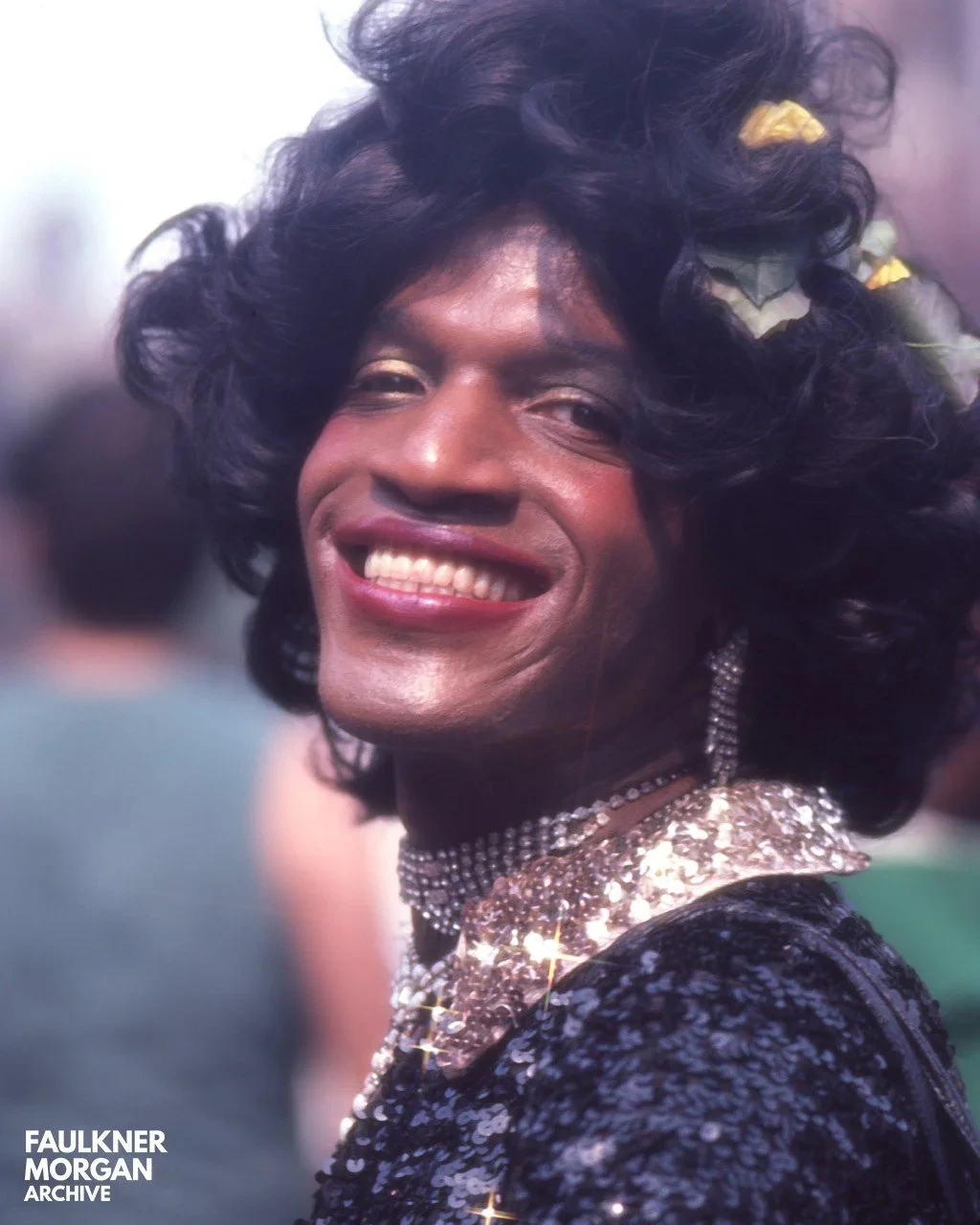
Marsha P. Johnson
 United States
LGBTQ rights activist•drag performer•sex worker
Also known as: Malcolm Michaels Jr., Saint of Christopher Street
Fecha de nacimiento
August 24, 1945
Signo zodiacal
Virgo
Lugar de nacimiento
Elizabeth, New Jersey, USA
Edad
Falleció a los 46
Estatura
5 ft 7 in (170 cm)
Acerca de
Marsha P. Johnson fue una activista estadounidense por los derechos LGBTQ, artista drag y trabajadora sexual que se convirtió en un pilar del movimiento de liberación gay. Nacida el 24 de agosto de 1945 en Elizabeth, Nueva Jersey, se mudó al Greenwich Village de la ciudad de Nueva York después de la secundaria, donde abrazó una vida de actuación y activismo. Conocida por su estilo extravagante, ingenio rápido y sus característicos tocados de flores, Johnson era una figura querida en Christopher Street. Desempeñó un papel clave en los disturbios de Stonewall de 1969, que encendieron la lucha moderna por la igualdad LGBTQ. Junto a Sylvia Rivera, cofundó en 1970 el grupo Street Transvestite Action Revolutionaries (STAR), creando STAR House, un refugio para jóvenes transgénero sin hogar. Johnson también luchó incansablemente por la concienciación sobre el VIH/SIDA en la década de 1980, marchando con ACT UP y cuidando a amigos moribundos. Su vida terminó trágicamente el 6 de julio de 1992, cuando su cuerpo fue encontrado en el río Hudson. La causa oficial de la muerte fue declarada suicidio, pero muchos creen que fue asesinada. El legado de Johnson perdura a través de documentales como The Death and Life of Marsha P. Johnson (2017) y el cortometraje Happy Birthday, Marsha! (2016). Es celebrada como la 'Santa de Christopher Street' y sigue siendo un símbolo de resistencia y alegría transgénero.
Primeros años y orígenes
Marsha P. Johnson creció en Elizabeth, Nueva Jersey, como uno de siete hijos en un hogar religioso. Asistió a la escuela secundaria local, graduándose en 1963, y desde joven se sintió atraída por la moda y la actuación. Después de graduarse, se mudó al Greenwich Village de Nueva York, un refugio para la comunidad queer. Trabajó brevemente como camarera, pero tuvo dificultades para llegar a fin de mes y recurrió al trabajo sexual. Johnson también comenzó a actuar como drag, uniéndose a la compañía Hot Peaches y más tarde a los Angels of Light. Se convirtió en clienta habitual del Stonewall Inn, un bar gay en Christopher Street, donde encontró un sentido de pertenencia. El 28 de junio de 1969, estuvo presente durante los disturbios de Stonewall, aunque luego dijo que llegó después del levantamiento inicial. Esa noche marcó el inicio de su activismo público.
Trayectoria profesional
Tras los disturbios de Stonewall, Marsha P. Johnson se convirtió en una defensora vocal de los derechos transgénero y homosexuales. En 1970, cofundó el grupo Street Transvestite Action Revolutionaries (STAR) con Sylvia Rivera, un grupo radical que luchaba por los derechos de las drag queens y las mujeres trans. Abrieron STAR House en el East Village, un apartamento de cuatro habitaciones que proporcionaba refugio y apoyo a jóvenes transgénero sin hogar. Johnson apareció en el documental de 1972 The Queen, que seguía un concurso drag. Durante la década de 1970, actuó con la compañía de teatro Angels of Light y continuó su activismo. En la década de 1980, mientras la crisis del SIDA devastaba a la comunidad LGBTQ, Johnson se convirtió en cuidadora y activista con ACT UP, marchando por un mejor tratamiento y concienciación. Su trabajo fue principalmente de base; no buscó fama, pero fue una figura querida en la escena queer de Nueva York hasta su muerte en 1992.
Cronología profesional
Imagen pública y estilo
Marsha P. Johnson es recordada como una figura alegre y resiliente que aportó estilo y fiereza a la lucha por los derechos LGBTQ. Su estilo característico incluía pelucas coloridas, maquillaje atrevido y tocados de flores que ella misma hacía. Las representaciones mediáticas a menudo la destacan como una mártir y pionera, con documentales como The Death and Life of Marsha P. Johnson consolidándola como un ícono. Los fans, que a veces se llaman a sí mismos 'Marsha's Angels', realizan vigilias anuales en los muelles de Christopher Street el 6 de julio. Los desfiles del Orgullo frecuentemente incluyen una carroza de Marsha P. Johnson donde los participantes llevan tocados de flores. Sus cuentas oficiales en redes sociales, gestionadas por el Marsha P. Johnson Institute, se centran en el activismo, la educación y la celebración de la alegría transgénero.
Fama y fandom
Marsha P. Johnson remains a towering figure in global history, yet the iFANN Global Fame Engine has evaluated her status and found she currently holds no placement in the published rankings for the Global Top 1,000 or any Top-100 scope list. While her name carries immense weight within LGBTQ+ history and human rights advocacy, she does not currently register as a ranked celebrity in the contemporary fame metrics that track living pop culture icons. The absence of a formal fandom name reflects the nature of her legacy; there is no organized group of 'fans' comparable to modern digital communities, but rather a coalition of activists, historians, and allies who treat her life as a political mandate. This community sustains her memory through institutional bodies like the Marsha P. Johnson Institute rather than informal fan clubs or chart-pushing campaigns. Their devotion manifests in annual commemorations on Pride weekends and around her birthday, where street festivals and billboards honor her, though these events are typically organized by city governments, non-profits, or commercial sponsors rather than grassroots fan petitions. The cultural mythology surrounding her is defined by verified historical events that have become legendary within the movement, particularly her pivotal role in the Stonewall Riots. A popular and enduring piece of folklore states that she threw the first brick at the police, a narrative she reportedly told in interviews, though historians note the exact nature of her physical contribution is part of the evolving oral history of the event. This story, alongside her self-identification as the 'Saint of Christopher Street,' forms the core of the lore shared with newcomers, serving as both verified history and a powerful cultural touchstone for the movement she helped birth.
Datos interesantes y leyendas
Marsha P. Johnson's middle initial 'P' stood for 'Pay It No Mind,' a phrase she used when people asked about her gender identity. She was a member of the drag performance troupe Hot Peaches and the Angels of Light theater group. Johnson was known for making her own elaborate flower crowns, which became her signature. She survived a stabbing in the 1970s but refused to press charges. She was arrested multiple times for sex work and vagrancy but never stopped advocating for her community. The 2017 Netflix documentary The Death and Life of Marsha P. Johnson brought renewed attention to her unsolved death. A Guinness World Record was set in 2021 for the largest gathering of people dressed as Marsha P. Johnson, with 3,000 participants in New York City. Legends of her life include her coining the phrase 'Gay Power' and carrying a pink triangle flag as a symbol of resistance. She was famously known for 'paying it forward,' distributing food and money to homeless transgender youth and sex workers, cementing her reputation as a protector of the most vulnerable. Another widely retold story from the Stonewall era suggests she threw the first bottle at police, a narrative she reportedly shared in interviews, though the exact details remain part of the evolving oral history of the uprising.
Frases destacadas
“You never completely have your rights, one person, until you all have your rights.”
“I've been in the streets for years. I've been beaten up. I've been thrown in jail. I've lost my job. I've lost my apartment for gay liberation, and you all treat me like a piece of shit.”
“Pay it no mind.”
“I'm a little bit of a woman. I'm a little bit of a man. I guess I'm just a little bit of everything.”
Familia y vida personal
Marsha P. Johnson nació como Malcolm Michaels Jr. el 24 de agosto de 1945 en Elizabeth, Nueva Jersey. Era uno de siete hijos en una familia de clase trabajadora. Su padre, Malcolm Michaels Sr., trabajaba como obrero de fábrica, y su madre era ama de casa. Johnson se crio en un hogar religioso y asistía a la iglesia regularmente. Tuvo una relación tensa con su familia después de declararse gay y mudarse a Nueva York. Nunca se casó ni tuvo hijos. Su familia elegida incluía a Sylvia Rivera y a los muchos jóvenes queer a los que fue mentora a través de STAR House. Hoy, su legado es continuado por el Marsha P. Johnson Institute, que apoya a personas transgénero negras.
Conexiones destacadas
La colaboradora más cercana de Marsha P. Johnson fue Sylvia Rivera, con quien cofundó STAR y compartió un vínculo profundo. La cineasta Tourmaline (antes Reina Gossett) dirigió Happy Birthday, Marsha! y contribuyó a The Death and Life of Marsha P. Johnson, dirigido por David France. La actriz Alexandra Grey está vinculada para protagonizar una próxima biopic Marsha. Caitlyn Jenner mencionó a Johnson en su discurso de los ESPY en 2015, llevando su historia a un público más amplio.
Relaciones e historial sentimental
La vida amorosa de Marsha P. Johnson no está ampliamente documentada. Su vínculo más cercano fue con Sylvia Rivera, a quien conoció a finales de la década de 1960. Si bien algunas historias orales sugieren una breve relación romántica o íntima entre ellas entre finales de los 60 y principios de los 70, se describe más a menudo como una profunda amistad platónica y familia elegida. Cofundaron STAR y vivieron juntas en STAR House. No se registran otras parejas románticas confirmadas. Johnson nunca se casó y no tuvo hijos conocidos. A fecha de 2026, está fallecida; su patrimonio es gestionado por el Marsha P. Johnson Institute.
- RumoreadoSylvia Rivera1969 - 1972Amiga cercana y cofundadora de STAR; algunos relatos sugieren una breve relación romántica, pero fue principalmente un vínculo platónico de por vida.
Muerte y repercusiones
Fallecimiento
July 6, 1992 (a los 46 años)
Lugar de fallecimiento
New York City, New York, USA
Causa de la muerte
Drowning (ruled accidental)
Marsha P. Johnson died on July 6, 1992, in the Hudson River near the Christopher Street pier in Greenwich Village, New York City. Her body was discovered floating after she had been missing since late June, though some initial reports cited July 3 as her death date. The New York City Medical Examiner ruled the cause of death drowning, attributing it to intoxication, but this conclusion faced immediate and sustained skepticism from friends, family, and activists who suspected foul play or a hate crime. Vigils were held shortly after her passing at the Stonewall Inn and throughout Greenwich Village, where peers like Sylvia Rivera's circle honored her contributions to the gay rights movement and her care for homeless transgender youth.
Johnson's funeral remained a private affair with no official record of her burial or cremation location, leaving her exact resting place unknown for decades. In the years following her death, her legacy expanded significantly through tributes such as murals across New York City, her induction into the National LGBTQ Wall of Honor in 2018, and the establishment of the Marsha P. Johnson Institute in 2015 to advance trans justice. The case remained officially open but inactive until the NYPD reopened it in 2019 following the release of the documentary The Death and Life of Marsha P. Johnson, yet no charges have ever been filed.
Patrimonio neto (valor de la herencia)
$1 Million
Estimación del equipo editorial de iFANN
Marsha P. Johnson died with no significant personal wealth. As of 2026, her estate is valued at approximately $1 million per iFANN's editorial analysis. The estate generates income primarily through posthumous book royalties, licensing fees for documentaries like The Death and Life of Marsha P. Johnson, and merchandise sold by the Marsha P. Johnson Institute. The institute, which manages the estate, also receives donations and speaking fees. No real estate or stock holdings are reported. The estate's value has grown modestly since the 2017 documentary, with annual earnings estimated at $100,000 to $200,000. A Congressional Gold Medal awarded in 2024 has further boosted public interest and donations.
Premios ganados (4)
Marsha P. Johnson no recibió grandes premios de la industria durante su vida, pero ha sido honrada póstumamente. En 2019, fue incluida en el National Women's Hall of Fame. Recibió una Medalla de Oro del Congreso póstuma en 2024 como parte del grupo de veteranos de Stonewall. La New School le otorgó un Doctorado Honoris Causa en Letras Humanas en 2020. También recibió las Llaves de la Ciudad de Elizabeth, Nueva Jersey, en 2015 y fue incluida en el Rainbow Honor Walk en San Francisco en 2019.
2015 · Cívico
Activism
2024 · Gobierno
Stonewall veterans
Conocido por
Stonewall riots
1969 · Participant
Street Transvestite Action Revolutionaries (STAR)
1970 · Cofundador
The Death and Life of Marsha P. Johnson
2017 · Subject
Palabras clave
Datos rápidos
- Profesión
- LGBTQ rights activist, drag performer, sex worker
- Nacimiento
- August 24, 1945
- Lugar de nacimiento
- Elizabeth, New Jersey, USA
- Fallecimiento
- July 6, 1992
- Lugar de fallecimiento
- New York City, New York, USA
- Signo zodiacal
- Virgo
- Estatura
- 5 ft 7 in (170 cm)
- Net Worth
- $1 Million
Datos personales
- Nombre completo
- Malcolm Michaels Jr.
- Estatura
- 5 ft 7 in (170 cm)
Filmografía
2
Total
2
Cine
0
TV
Preguntas frecuentes
¿Cómo murió Marsha P. Johnson?
¿Qué significa la 'P' en Marsha P. Johnson?
¿Era Marsha P. Johnson transgénero?
¿Cuál es el legado de Marsha P. Johnson?
¿Tuvo hijos Marsha P. Johnson?
Redes sociales
Personas similares
Únete a la comunidad
fans comentando