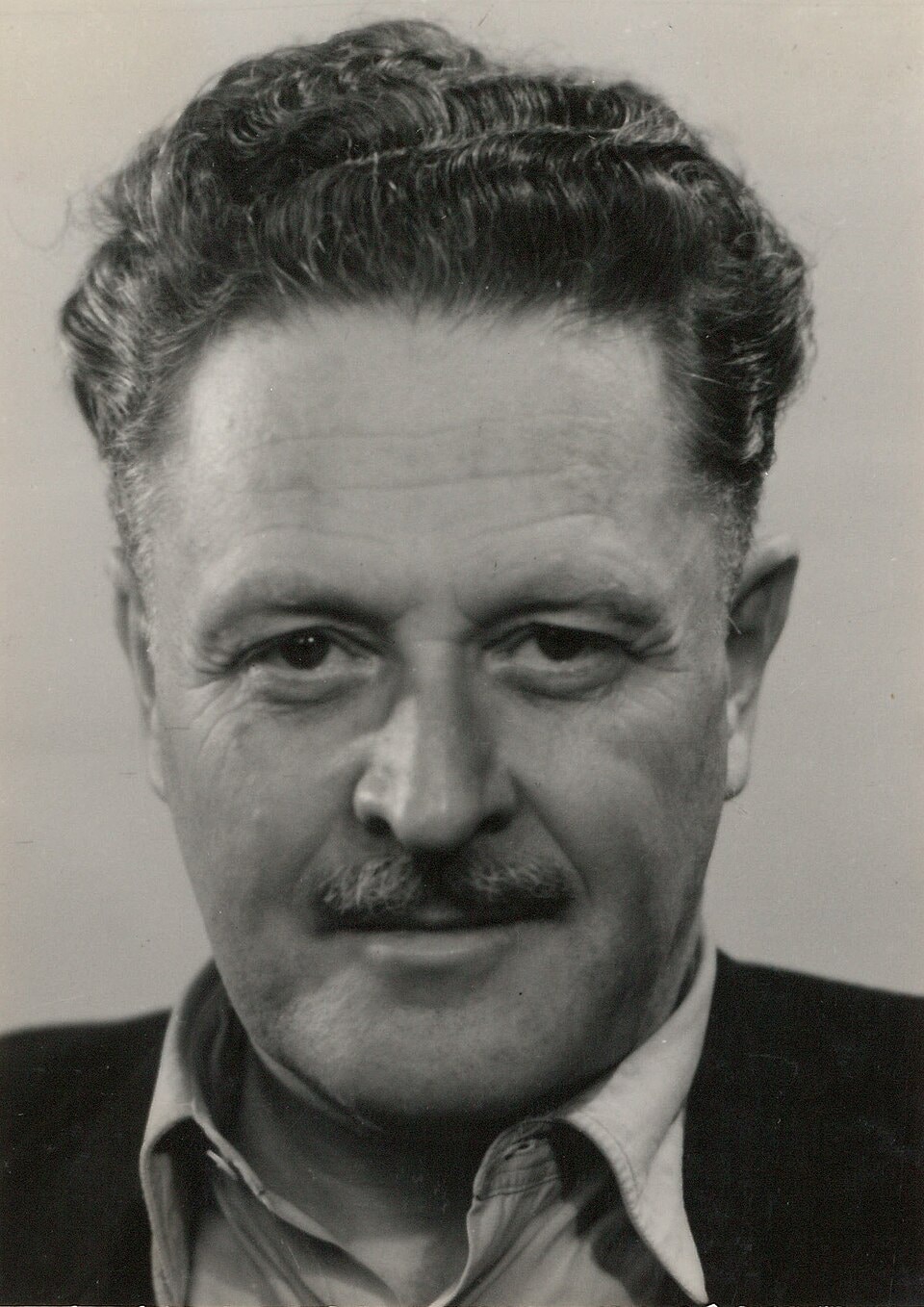
Nâzım Hikmet
 Turkey
Also known as: Orhan Selim, Ahmet Oğuz, Mümtaz Osman, Ercüment Er
Fecha de nacimiento
January 15, 1902
Signo zodiacal
Capricorn
Lugar de nacimiento
Selânik (Thessaloniki), Ottoman Empire
Edad
Falleció a los 61
Acerca de
Nâzım Hikmet es el poeta más célebre de Turquía del siglo XX, un letrista y revolucionario cuya obra ha sido traducida a más de 50 idiomas. Conocido por su estilo de verso libre y la fusión del romanticismo con la política marxista, sigue siendo una figura imponente en la literatura mundial. Su poesía, desde Paisajes humanos de mi país hasta la épica Sheikh Bedreddin, se recita en todo el mundo. A partir de 2026, su legado es gestionado por la Fundación Cultural Nâzım Hikmet, y sus obras continúan inspirando a nuevas generaciones de lectores y activistas.
Primeros años y orígenes
Nâzım Hikmet nació el 15 de enero de 1902 en Salónica, Imperio Otomano (hoy Tesalónica, Grecia). Asistió a la Escuela Primaria Taşmektep en el distrito de Göztepe de Estambul, luego se inscribió en la sección de secundaria del Liceo de Galatasaray en Beyoğlu, donde comenzó a aprender francés. En 1913, se trasladó a la Escuela Numune Mektebi en el distrito de Nişantaşı. A los 11 años, escribió su primer poema, Feryad-ı Vatan, y poco después impresionó al Comandante Naval Cemal Paşa con Las palabras de un oficial naval, ganándose un lugar en la Escuela Naval Otomana en Heybeliada. Su primer poema publicado, Hâlâ Servilerde Ağlıyorlar mı, apareció en Yeni Mecmua en 1918. Graduado en 1918, sirvió brevemente como oficial de cubierta en prácticas en el crucero Hamidiye hasta que la pleuritis lo obligó a retirarse en 1920. Cuando las fuerzas aliadas ocuparon Estambul en 1920, escapó a Anatolia con su amigo Vâlâ Nurettin, tomando un puesto de profesor en Bolu. Al año siguiente viajó a Moscú vía Azerbaiyán, donde fue testigo de los primeros años soviéticos y estudió en la Universidad Comunista de los Trabajadores del Este, absorbiendo las corrientes revolucionarias que moldearían su vida y su arte.
Trayectoria profesional
Al regresar a Turquía en 1924, Hikmet se lanzó al periodismo y a la organización comunista. Estudió economía y ciencias políticas en la Universidad de Moscú. Su colección de 1929 835 líneas sacudió la poesía turca con su verso libre y energía rítmica, ganando tanto elogios como sospechas de las autoridades. Durante la siguiente década escribió obras de teatro como El cráneo y El hombre olvidado, mientras que su activismo político lo mantuvo en la mira del estado. En 1938 fue arrestado por cargos de incitación a la rebelión y sentenciado a 28 años y 4 meses de prisión. Esos 13 años tras las rejas se convirtieron en su período más fértil. Compuso la extensa épica Paisajes humanos de mi país y el poema narrativo La épica de Sheikh Bedreddin, obras que definirían su legado. Después de que una campaña internacional lograra su liberación en 1950, recibió el Premio Internacional de la Paz (Premio Lenin de la Paz) a los 48 años. Temiendo ser arrestado nuevamente, huyó de Turquía en 1951, pasando el resto de su vida en la Unión Soviética y Europa del Este, escribiendo poesía, obras de teatro y guiones hasta su muerte en Moscú el 3 de junio de 1963.
Cronología profesional
Imagen pública y estilo
Hikmet cultivó la personalidad de un "revolucionario romántico", combinando lo personal y lo político en su poesía. Sus llamativos ojos azules y su alta estatura le valieron el apodo de "Mavi Gözlü Dev" (Gigante de Ojos Azules). En Turquía, es a la vez un tesoro nacional y una figura controvertida, celebrado por su arte mientras que sus vínculos comunistas aún provocan debate. Globalmente, es visto como un símbolo de libertad artística y resistencia, su poesía citada frecuentemente en movimientos de protesta y musicalizada por artistas folclóricos. La Fundación Cultural Nâzım Hikmet mantiene viva su llama, organizando lecturas y eventos cada año en su cumpleaños. Su historia de vida —prisión, exilio, amor y poesía— lo ha convertido en una figura romantizada en la literatura turca y mundial.
Fama y fandom
Nâzım Hikmet remains a figure whose global resonance transcends the boundaries of literature, anchoring himself in the collective memory of political resistance and human rights movements worldwide. His enduring relevance is quantified by his standing within the iFANN Global Fame Rankings. Current data places him as the 9th most famous person in Turkey, a position he holds steady from the previous cycle, and the 50th most famous person from Turkey. In the broader geopolitical context of the Middle East, he ranks as the 69th most famous person in Middle East. These metrics reflect a legacy sustained not by commercial promotion but by the perpetual recitation of his verses in protest movements and academic circles. While his admirers are often described as readers or activists rather than a formalized fanbase, they operate with the fervor of a dedicated movement. There is no single branded moniker for his supporters; instead, they are united by their identification with the 'Poet of Hope' and their participation in clandestine readings and annual tributes that have become acts of defiance against censorship. The community surrounding his work includes those who organize unauthorized collections and erect statues despite legal bans, turning his birthday into a day of ritualistic resistance rather than mere celebration.
Datos interesantes y leyendas
Throughout his life, Nâzım Hikmet utilized at least five pen names, including Orhan Selim, Ahmet Oğuz, Mümtaz Osman, and Ercüment Er, to circumvent strict government censorship. He also expanded his artistic output beyond verse, directing two films in the 1930s: Dügün Gecesi (1933) and Günese Dogru (1937). His poetic vision extended far beyond his lifetime, influencing Wim Wenders' 1987 film Wings of Desire, where Hikmet's verse appears on screen. He held dual citizenship in both Turkey and Poland through his mother's lineage. Despite his immense stature, he never returned to his birthplace, a sentiment captured in his autobiography written in East Berlin on 11 September 1961, which famously begins, 'I was born in 1902.'
Legends surrounding his life often focus on the circumstances of his death in Moscow in 1963. While official records cite heart failure, a persistent story among his followers suggests his health was neglected or that he was poisoned while on a diplomatic mission. A verified moment cemented his mythic status during the 2013 Gezi Park protests in Turkey, where demonstrators chanted his poem 'The Walnut Tree of Gezi Park,' transforming the site into a living monument. Another widely retold incident occurred during the Arab Spring in Tahrir Square, where an image of a street vendor holding a sweet potato became a viral symbol linked to Hikmet's poem 'I Am a Sweet Potato Boy,' connecting his early 20th-century poetry to modern uprisings.
Frases destacadas
“I was born in 1902 / I never once went back to my birthplace / I don't like to turn back.”
“Some people know all about plants some about fish / I know separation.”
“I've slept in prisons and in grand hotels / I've known hunger even a hunger strike.”
“At thirty they wanted to hang me / at forty-eight to give me the Peace Prize / which they did.”
“I've been a poet since I was fourteen.”
Familia y vida personal
La madre de Hikmet, Celile Hanım, era hija de Hasan Enver Pasha, un general otomano de origen polaco, y Leyla Hanım, de ascendencia francesa y alemana. Su padre, Mehmet Hikmet Bey, sirvió como funcionario del gobierno. Su linaje materno incluía a Mustafa Celalettin Pasha, Mehmed Ali Pasha y Omar Pasha Latas, tres de los últimos grandes pashás otomanos nacidos en familias europeas que se convirtieron al Islam. La familia se mudó a Estambul cuando él era niño, estableciéndose en el distrito de Göztepe. Tuvo un hijo conocido, Mehmet Nâzım Hikmet, nacido en 1951 de su pareja Münevver Andaç. Hikmet se vio obligado a dejarlos atrás cuando huyó de Turquía. Su último matrimonio fue con Vera Tulyakova, una mujer rusa con quien se casó en 1959; vivieron juntos en Moscú hasta su muerte. No se registran mascotas ni detalles del hogar.
Conexiones destacadas
Relaciones e historial sentimental
Hikmet se casó con Piraye en 1935; ella lo apoyó durante sus años de prisión, pero se divorciaron tras su liberación. Luego se asoció con Münevver Andaç a principios de la década de 1950, con quien tuvo un hijo, Mehmet Nâzım, nacido en 1951. Cuando Hikmet huyó de Turquía ese mismo año, los dejó atrás. En 1959, se casó con Vera Tulyakova en Moscú, y permanecieron juntos hasta su muerte en 1963. A partir de 2026, Hikmet ha fallecido; su último matrimonio fue con Vera.
- Casado/aPiraye1935 - 1950Lo apoyó durante sus años de prisión; se divorciaron tras su liberación.
- Casado/aMünevver Andaç1951 - 1951Tuvo un hijo, Mehmet Nâzım; se separaron cuando Hikmet huyó de Turquía.
- Casado/aVera Tulyakova1959 - 1963ActualSu última esposa; estuvieron juntos hasta su muerte.
Muerte y repercusiones
Fallecimiento
June 3, 1963 (a los 61 años)
Lugar de fallecimiento
Moscow, Soviet Union
Causa de la muerte
Reported liver disease (unconfirmed)
Global mourning followed the news of Nâzım Hikmet's passing, with tributes pouring in from literary peers and political institutions worldwide. The Afro-Asian Writers Association held significant memorials while underground vigils emerged in Turkey despite the ban on his works, cementing his status as the Poet of Hope among intellectuals and students. His death anniversary has since become an annual occasion for tributes. He had arrived in the Soviet capital shortly before his death following intense diplomatic efforts that finally overcame Turkish government refusals to allow his return for care. He was buried in Novodevichy Cemetery in Moscow, where his remains remained for decades due to political restrictions preventing their repatriation.
Nearly 46 years after his death, his body was flown back to Turkey on March 14, 2009, and reinterred in Istanbul's Zincirlikuyu Cemetery during a large public ceremony attended by thousands of mourners. Posthumous cultural production continues with releases like the documentary Nâzim's Journey to Cuba presented in January 2025, and the Nâzım Hikmet Poetry Prize now in its twelfth iteration recognizes work similar to his own. The estate is managed by the Nâzım Hikmet Cultural Foundation, currently stewarded by his daughter Aylin Hikmet following the death of his son Mehmet Ran in Paris in October 2018.
Patrimonio neto (valor de la herencia)
$5 Million
Estimación del equipo editorial de iFANN
As a poet and political exile, Nâzım Hikmet never accumulated significant personal wealth during his lifetime. Most of his years were spent in poverty, imprisonment, or modest housing within the Soviet Union. Today, his estate generates modest income derived from book royalties and licensing fees for various adaptations, all managed by the Nâzım Hikmet Cultural Foundation in Turkey. With many of his works entering the public domain in numerous countries, the financial value of his intellectual property relies heavily on ongoing publication and translation rights across over 50 languages. Per iFANN's editorial analysis, the total value of his estate is estimated at $5 Million as of 2026. No credible public estimate exists in standard databases, yet his literary contributions continue to generate revenue through global translations.
Premios ganados (1)
Hikmet ganó el Premio Internacional de la Paz (Premio Lenin de la Paz) en 1950, el máximo honor soviético para figuras culturales. Su poesía ha recibido numerosos reconocimientos póstumos, incluido ser nombrado uno de los más grandes poetas turcos de todos los tiempos.
1950 · Paz
Poetry and activism
Conocido por
Human Landscapes from My Country
1941 · Poet
The Epic of Sheikh Bedreddin
1936 · Poet
835 Lines
1929 · Poet
Palabras clave
Fuentes
Datos rápidos
- Profesión
- Poet, playwright, novelist
- Nacimiento
- January 15, 1902
- Lugar de nacimiento
- Selânik (Thessaloniki), Ottoman Empire
- Fallecimiento
- June 3, 1963
- Lugar de fallecimiento
- Moscow, Soviet Union
- Género
- Hombre
- Cónyuge
- Vera Tulyakova
- Signo zodiacal
- Capricorn
Datos personales
- Nombre completo
- Mehmed Nâzım Ran
- Cónyuge
- Vera Tulyakova
- Hijos
- Mehmet Nâzım Hikmet (born 1951)
- Educación
- Galatasaray High School; Ottoman Naval School; Eastern Workers Communist University, Moscow; University of Moscow (economics and political science)
Filmografía
2
Total
2
Cine
0
TV
Preguntas frecuentes
¿Por qué es conocido Nâzım Hikmet?
¿Estuvo Nâzım Hikmet encarcelado?
¿Cómo murió Nâzım Hikmet?
¿Tuvo hijos Nâzım Hikmet?
¿Cuál es el poema más famoso de Nâzım Hikmet?
Redes sociales
Personas similares
Únete a la comunidad
fans comentando