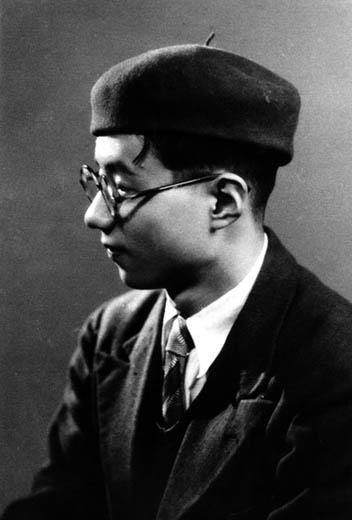
Osamu Tezuka
 Japan
Japanmanga artist•animator•film director
Also known as: Tezuka Osamu, God of Manga, Father of Manga
Fecha de nacimiento
November 3, 1928
Signo zodiacal
Scorpio
Lugar de nacimiento
Toyonaka, Osaka Prefecture, Japan
Edad
Falleció a los 60
Estatura
5 ft 9.5 in (177 cm)
Acerca de
Osamu Tezuka fue un artista de manga, animador y director de cine japonés cuyo trabajo transformó el panorama global del cómic y la animación. Nacido en 1928 en Toyonaka, creó más de 700 series de manga y produjo el primer programa de televisión animado de Japón. Su estilo característico, con grandes ojos expresivos y diseños de viñetas cinematográficos, sentó las bases del manga y el anime modernos. Las historias de Tezuka abarcaban desde aventuras infantiles como Astro Boy hasta obras filosóficas y maduras como Phoenix y Buda. A menudo se le llama el "Dios del Manga" y se le compara con Walt Disney por su influencia transformadora. Hoy en día, su legado perdura a través de Tezuka Productions, que gestiona su vasto catálogo de propiedad intelectual, y el Museo del Manga Osamu Tezuka en Takarazuka, que atrae a fanáticos de todo el mundo.
Primeros años y orígenes
Tezuka creció en Takarazuka después de mudarse allí a los cinco años. Su padre le presentó las animaciones de Walt Disney y Max Fleischer mediante proyecciones privadas, lo que despertó su amor por la narración. De niño, dibujó su primer cómic, Bin Bin Namachan, en tercer grado y se ganó el apodo de gashagasha-atama ("cabeza despeinada"). Una grave infección fúngica en sus brazos casi provocó una amputación, pero tras un tratamiento exitoso, decidió hacerse médico. Ingresó en la Universidad de Osaka para estudiar medicina a los 17 años. Mientras estudiaba, publicó su primer cómic, una serie de cuatro paneles llamada Diary of Ma-chan, en un periódico infantil de Osaka a los 18 años. El consejo de su madre de dedicarse a lo que más amaba lo convenció de elegir el manga sobre la medicina. Se graduó con un título en medicina en 1951, pero nunca ejerció.
Trayectoria profesional
Tezuka lanzó la revolución del manga en 1947 con New Treasure Island, un éxito masivo que redefinió el medio con sus dinámicos diseños de viñetas. En 1950, comenzó a serializar Jungle Emperor (más tarde conocido como Kimba the White Lion), seguido de Ambassador Atom en 1951, que evolucionó a Astro Boy. En 1961, fundó Mushi Productions, su estudio de animación. Dos años después, creó la primera serie de televisión animada de Japón, Astro Boy (1963-1966), un fenómeno cultural que se emitió internacionalmente. Continuó con la serie en color Jungle Emperor Leo (1965) y luego produjo obras maduras como Black Jack (1973-1983), Phoenix (1967-1988) y Buda (1972-1983). Su producción total supera las 170,000 páginas de manga y las 200,000 páginas de storyboards de anime. Murió en 1989 antes de completar los capítulos finales de Phoenix.
Cronología profesional
Imagen pública y estilo
Tezuka es universalmente considerado el "Dios del Manga" y el "Padre del Anime". Su estilo característico de personajes de ojos grandes y narración cinematográfica se convirtió en la base del manga moderno. Combinó un arte lindo y amigable para niños con temas serios y a menudo trágicos. Los fanáticos celebran su trabajo a través de convenciones y visitas al Museo del Manga Osamu Tezuka en Takarazuka, un lugar de peregrinación. Las cuentas oficiales en redes sociales mantienen un tono respetuoso y educativo, compartiendo ideas históricas. Su influencia es tan profunda que muchos artistas japoneses lo citan como su principal inspiración.
Fama y fandom
Osamu Tezuka remains a towering figure in global pop culture, a legacy that transcends his 1989 passing to define the very architecture of modern storytelling. His influence is so profound that he holds specific, measurable positions within the iFANN Global Fame Rankings. Current data places him as the 35th most famous person in Japan, while also ranking him as the 56th most famous person in East Asia. Within his specific domain, the impact is even more concentrated; he stands as the 6th most famous person in Manga. These placements reflect a sustained presence across media coverage and consumption signals worldwide, proving that his work continues to generate significant attention decades after his death.
The fanbase surrounding Tezuka operates without a formal collective name like "Army" or "Whovians," instead identifying broadly as manga readers or simply Tezuka fans. This community has evolved from passive consumers into active preservers of his history. In April 2026, this dedication manifested through a successful Kickstarter campaign for the documentary *TEZUKA! God of Manga*, demonstrating the group's financial capacity to safeguard his legacy. Fan rituals center on his birthday, November 3rd, marked by museum events and re-releases of classic works. While no single subreddit claims official status, the community actively engages with archival discoveries, such as unpublished anime documents found in June 2026. The release of deluxe editions like the *Phoenix* Deluxe Edition in July 2026 further highlights a demand for high-quality materials that only a deeply invested audience would sustain.
Datos interesantes y leyendas
Tezuka's creative life was defined by an intense connection to nature and discipline. His pen name incorporates the ideogram for "insect," reflecting a childhood fascination with bugs that shaped his early worldview. He famously watched Disney's *Bambi* over 80 times to study its animation techniques, absorbing lessons that would later revolutionize Japanese comics. One of his maternal ancestors was Hattori Hanzo, the legendary ninja, adding a layer of historical intrigue to his lineage. Tezuka often reused characters across different stories, having them play vastly different roles depending on the narrative needs. He never stopped drawing until the end; his desk at the Niiza studio is preserved exactly as he left it. Beyond art, he played piano and maintained a deep interest in astronomy, influenced by his childhood friend Minoru Ishihara.
Legendary accounts describe his prodigious output, noting that he could produce up to 40 pages of manga in a single day while suffering from exhaustion. A widely retold story illustrates this dedication: he once drew a full chapter overnight, working 16-hour days to meet deadlines. When *Astro Boy* premiered as a television series in 1963, the reaction was extraordinary. Crowds gathered in Tokyo streets to watch the broadcast, shutting down traffic and sparking a massive merchandise boom that defined the emerging manga economy. Fans still recount how the industry halted production in his honor following his death in February 1989, a moment described as national mourning.
Frases destacadas
“You should work doing the thing you like most of all.”
“If you really love manga that much, go to Tokyo.”
“The preciousness of life is the theme that runs through all my works.”
“I want to create a world where children can dream.”
“Manga is a medium that can express anything.”
Familia y vida personal
Tezuka fue el mayor de tres hijos nacidos de Yutaka Tezuka, gerente de Sumitomo Metals, y Fumiko Hattori, cuya familia tenía una larga tradición militar. Su abuelo Taro fue abogado, y su bisabuelo y tatarabuelo fueron médicos. Se casó con Etsuko Okada el 4 de octubre de 1959, y permanecieron juntos hasta su muerte. Tuvieron tres hijos: Macoto Tezuka, quien se convirtió en director de cine y animador; True Tezuka; y un tercer hijo. La casa familiar de los Tezuka en Takarazuka estaba llena de libros y películas, lo que fomentó su espíritu creativo.
Conexiones destacadas
Tezuka se inspiró profundamente en Walt Disney y Max Fleischer. Colaboró y fue mentor de muchos animadores en Mushi Productions. Su hijo Macoto Tezuka continúa su legado como director. Frederik Schodt, su traductor y biógrafo, ayudó a introducir sus obras en Occidente. Ban Toshio dibujó la biografía de Tezuka en forma de manga.
Relaciones e historial sentimental
Tezuka se casó con Etsuko Okada el 4 de octubre de 1959, y permanecieron juntos hasta su muerte el 9 de febrero de 1989. Etsuko apoyó su exigente carrera y gestionó los asuntos del hogar mientras Tezuka trabajaba incansablemente. Tuvieron tres hijos juntos. A partir de 2026, Tezuka ha fallecido y estaba casado en el momento de su muerte.
- Casado/aEtsuko Okada1959 - 1989Se casaron el 4 de octubre de 1959 y permanecieron juntos hasta la muerte de Tezuka. Ella apoyó su carrera y crió a sus tres hijos.
Muerte y repercusiones
Fallecimiento
February 9, 1989 (a los 60 años)
Lugar de fallecimiento
Tokyo, Japan
Causa de la muerte
Stomach cancer (gastric carcinoma)
The news of Osamu Tezuka's passing sent a wave of grief through Japan and the international animation community, with tributes pouring in from peers and government officials who recognized him as a foundational pillar of culture. He died on February 9, 1989, at St. Luke's International Hospital in Tokyo at the age of 60. The official cause was stomach cancer, a diagnosis confirmed by medical professionals after the disease returned and metastasized following surgery in 1987. His funeral was held privately, and he was cremated before his ashes were interred at the family grave in Toyonaka City, Osaka. Posthumously, his legacy expanded rapidly with the creation of the Osamu Tezuka Cultural Prize and the induction of his works into various halls of fame. Tezuka Productions, founded by his son Makoto Tezuka, continues to manage his intellectual property rights, ensuring ongoing releases like the documentary TEZUKA! God of Manga and new publishing agreements keep his stories alive for contemporary audiences.
Patrimonio neto (valor de la herencia)
$50 Million
Estimación del equipo editorial de iFANN
Heading into 2026, the Tezuka estate is managed by Tezuka Productions, which controls the intellectual property rights to over 700 manga series and dozens of anime works. Revenue streams include ongoing manga reprints, anime licensing and streaming deals on platforms like Netflix and Amazon Prime, merchandise licensing for toys and apparel, film and television adaptation rights, and the Tezuka Osamu Manga Museum in Takarazuka. Per iFANN's editorial analysis, the estate is estimated to be worth around $50 Million. Steady annual earnings continue to flow from global licensing, particularly from *Astro Boy*, which remains one of the most recognizable anime brands worldwide.
Premios ganados (8)
Tezuka ganó numerosos premios durante su vida y póstumamente, incluyendo el Premio de Manga Shogakukan, el Premio de Manga Kodansha, el Gran Premio de la Asociación de Dibujantes de Japón y el Premio de Manga Bungeishunjū. Fue incluido en el Salón de la Fama del Premio Eisner y en el Salón de la Fama Jack Kirby de los Premios Harvey. También recibió el Premio Inkpot en 1980 y el Premio Asahi póstumamente.
1980 · Trayectoria Artística
Entire body of work
1963 · Manga Infantil
Astro Boy
Conocido por
Astro Boy
1963 · Creator, Director
Kimba the White Lion
1965 · Creator
Black Jack
1973 · Creator
Phoenix
1967 · Creator
Buddha
1972 · Creator
Palabras clave
Fuentes
Datos rápidos
- Profesión
- manga artist, animator, film director
- Nacimiento
- November 3, 1928
- Lugar de nacimiento
- Toyonaka, Osaka Prefecture, Japan
- Fallecimiento
- February 9, 1989
- Lugar de fallecimiento
- Hanzomon Hospital, Tokyo
- Género
- Hombre
- Signo zodiacal
- Scorpio
- Estatura
- 5 ft 9.5 in (177 cm)
Datos personales
- Nombre completo
- Tezuka Osamu (手塚 治)
- Estatura
- 5 ft 9.5 in (177 cm)
- Cónyuge
- Etsuko Okada
- Hijos
- Macoto Tezuka, True Tezuka, and one other child
- Educación
- Osaka University (Medical Degree, 1951)
Preguntas frecuentes
¿Cómo murió Osamu Tezuka?
¿Cuántos mangas creó Osamu Tezuka?
¿Es Osamu Tezuka el padre del anime?
¿Cuál es la obra más famosa de Osamu Tezuka?
¿Tuvo hijos Osamu Tezuka?
Redes sociales
Personas similares


Únete a la comunidad
fans comentando