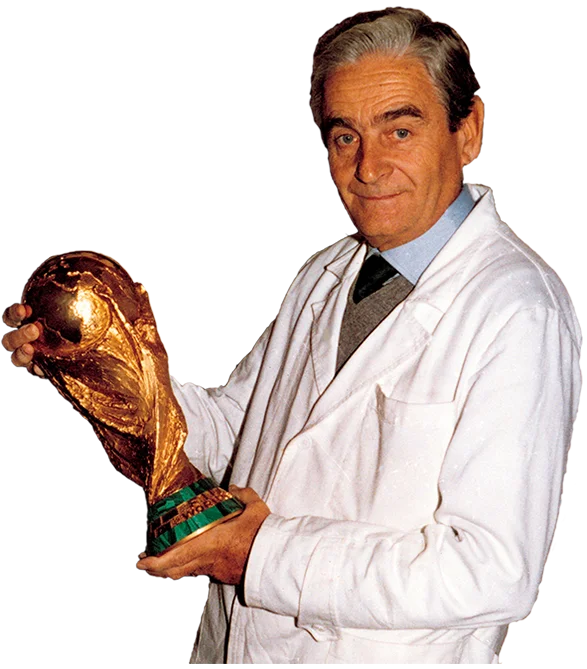
Silvio Gazzaniga
 Italy
ItalyAlso known as: Il Signore delle Coppe
Fecha de nacimiento
January 23, 1921
Signo zodiacal
Aquarius
Lugar de nacimiento
Milan, Italy
Edad
Falleció a los 95
Acerca de
Silvio Gazzaniga fue un escultor italiano, famoso principalmente por crear el Trofeo de la Copa Mundial de la FIFA, el premio más codiciado del deporte. Su diseño icónico, que representa a dos atletas sosteniendo un globo terráqueo, fue seleccionado entre 53 propuestas y desde entonces ha sido alzado por numerosas leyendas del fútbol. A lo largo de su extensa carrera, Gazzaniga produjo cientos de otras obras, incluyendo estatuas religiosas, medallas conmemorativas y trofeos para diversos deportes como el ciclismo y el automovilismo. Era conocido por su estilo distintivo que unía temas sagrados y seculares. Gazzaniga continuó trabajando prolíficamente hasta bien pasados los noventa años, dejando un legado significativo. Hoy en día, su nombre es sinónimo del símbolo máximo del deporte, y sus creaciones son celebradas en todo el mundo.
Primeros años y orígenes
Silvio Gazzaniga nació el 23 de enero de 1921 en Milán, Italia, y creció en su ciudad natal durante los dinámicos años de entreguerras, un período marcado por un significativo fermento artístico y cultural. Desde muy joven, se sintió atraído por las artes, embarcándose en un camino que lo llevaría a convertirse en un renombrado escultor y medallista. Su educación formal comenzó con su inscripción en la Escuela Humanitaria de Arte Aplicado, seguida de estudios avanzados en la Escuela Superior de Arte del Castillo Sforzesco en Milán. Fue dentro del riguroso ambiente de estas instituciones, particularmente en los talleres especializados del castillo, donde Gazzaniga se dedicó a dominar los intrincados oficios de la orfebrería y la joyería. Esta formación temprana le proporcionó una base profunda y rigurosa en el trabajo del metal y la escultura, sentando las bases técnicas y artísticas esenciales para su distinguida carrera.
Todavía joven cuando estalló la Segunda Guerra Mundial, Gazzaniga comenzó a aplicar sus talentos incipientes, creando medallas, copas y diversos objetos ceremoniales para clientes privados e instituciones. Estos primeros encargos fueron cruciales, inculcándole un profundo aprecio por la precisión y el poderoso simbolismo inherente a las formas esculpidas, cualidades que más tarde se convertirían en sellos distintivos de sus obras más celebradas. Después de la guerra, en 1953, Gazzaniga dio un importante paso en su carrera al unirse a Bertoni Milano. Este histórico taller era muy apreciado por su producción de trofeos prestigiosos y objetos litúrgicos. Dentro de este estimado taller, ascendió rápidamente hasta convertirse en director artístico, cargo que ocuparía durante décadas . En esta capacidad, supervisó la creación de cientos de piezas, perfeccionando continuamente su estilo artístico distintivo, que combinaba hábilmente formas clásicas con una vibrante energía modernista .
Trayectoria profesional
El punto de inflexión llegó en 1971. La FIFA necesitaba un nuevo trofeo después de que Brasil se quedara permanentemente con el Trofeo Jules Rimet, y una competencia global atrajo 53 diseños. La propuesta de Gazzaniga, dos figuras sosteniendo la Tierra, ganó por unanimidad. El trofeo debutó en la Copa Mundial de 1974 en Alemania Occidental y se convirtió instantáneamente en un ícono. Continuó en Bertoni, produciendo trofeos para la Coppa Italia, el Giro de Italia y el Gran Premio de Italia. En 2003, Milán le otorgó el Ambrogino d'Oro, el máximo honor de la ciudad. Incluso en sus últimos años, Gazzaniga se mantuvo activo, dibujando y asesorando. El Museo de la FIFA reconstruyó su estudio en 2025, exhibiendo su molde de yeso original y sus herramientas, asegurando que las nuevas generaciones comprendan las manos detrás del trofeo.
Cronología profesional
Imagen pública y estilo
Gazzaniga es recordado como un artesano tranquilo que dejaba que su obra hablara. El Museo de la FIFA lo llama «el artista detrás del ícono», y su cuenta de Instagram, gestionada por su familia, lo presenta como un maestro amable y concentrado. Nunca buscó la fama, sin embargo, su nombre aparece en cada conversación sobre la Copa Mundial. Los aficionados y periodistas se refieren a él como «el arquitecto del sueño más grande del fútbol». Su legado perdura a través del reconocimiento global del trofeo, un símbolo de victoria que trasciende el deporte.
Fama y fandom
Silvio Gazzaniga occupies a unique space in the pantheon of cultural figures, distinguished not by a cult of personality but by the sheer ubiquity of his creation. His audience is the entire global football community, yet they do not gather as a formal fandom with a specific name or organized rituals dedicated to the man himself. Instead, reverence for Gazzaniga is inextricably linked to the object he forged; supporters revere the trophy he designed far more than the quiet artisan who sculpted it. Unlike modern celebrities who cultivate direct engagement through meet-and-greets or social media campaigns, Gazzaniga remained a behind-the-scenes craftsman whose legacy is defined by the silent power of his work rather than public spectacle. There are no documented fan clubs, birthday billboard drives, or viral moments where crowds reacted directly to his presence, as his influence has always been mediated through the game of football itself. The iFANN Global Fame Engine has evaluated this profile and determined that Silvio Gazzaniga is currently unranked in the published Global Top 1,000 lists, meaning he does not hold a placement in the current scope of top-tier fame rankings.
Datos interesantes y leyendas
Gazzaniga's iconic design was originally sketched on a napkin before being refined into the masterpiece we know today. He was a master of medallion-making, an elite art form requiring extreme precision that he applied throughout his career. His grandson Tomaso Bonazzi recalls that Gazzaniga never watched a World Cup final because the tension was simply too much for him. Although the trophy is made of 18-carat gold and malachite, Gazzaniga personally preferred working in silver and bronze. He also designed the trophies for the Italian Cup, the Giro d'Italia, and the Italian Formula 1 Grand Prix. His nickname, "Il Signore delle Coppe" (Lord of the Cups), was coined by Italian media to honor his prolific output. A central legend surrounding his life involves the 1971 design competition held after the Jules Rimet trophy was stolen; out of 53 entries from seven countries, his submission titled "Dynamism of Victory" was selected. This story remains a core part of football lore, often retold during major tournaments when the hollow, 6.1-kilogram sculpture is lifted by champions. While the trophy stands at 36.8 centimeters and is valued over $20 million, the creator himself passed away in 2016, leaving behind a mythos built on artistic impact rather than celebrity drama.
Frases destacadas
“It was a job that truly filled his heart., Gabriella Gazzaniga”
“Light, joy and passion, that is what the FIFA World Cup Trophy represents., Tomaso Bonazzi”
Familia y vida personal
La hija de Gazzaniga, Gabriella, ha sido la principal guardiana de su legado, hablando frecuentemente en eventos del Museo de la FIFA. Su nieto, Tomaso Bonazzi, también comparte historias del taller familiar. Gazzaniga vivía modestamente en Milán, rodeado de sus herramientas y bocetos. Rara vez hablaba de su fama en casa, prefiriendo hablar de técnica y materiales. La familia continúa gestionando su patrimonio y la cuenta oficial de Instagram, publicando fotos de archivo y actualizaciones sobre exposiciones.
Conexiones destacadas
Relaciones e historial sentimental
Los registros públicos no detallan las relaciones románticas de Gazzaniga. Estuvo casado, pero el nombre de su esposa y las fechas de su matrimonio no están ampliamente documentados. Tuvo una hija, Gabriella. Al momento de su muerte en 2016, era viudo.
- Casado/aEl nombre de la esposa no está documentado públicamente; tuvieron una hija.
Muerte y repercusiones
Fallecimiento
October 31, 2016 (a los 95 años)
Lugar de fallecimiento
Milan, Italy
Causa de la muerte
Natural causes
Silvio Gazzaniga, the Italian sculptor renowned for designing the FIFA World Cup Trophy, died on October 31, 2016, at the age of 95. He passed away at his home in Milan, Italy. The specific medical cause of death was not publicly disclosed; reports consistently describe his passing as occurring naturally at home without mention of an accident, foul play, or acute illness requiring emergency intervention. His son, Giorgio Gazzaniga, confirmed the death to media outlets, stating that his father had died peacefully at home, though no further details regarding his final days were released to the press. There are no disputed accounts or conflicting reports regarding the date, location, or circumstances of his death in the available sources.
Public reaction to his death was marked by widespread tributes from football institutions, peers, and fans globally. Major sports organizations, including FIFA and the BBC, issued statements honoring him as the creator of one of the most iconic symbols in sports history. For instance, the FIFA Museum in Zurich has hosted exhibitions titled "Hands that shaped glory" dedicated to his work, and various news outlets have produced retrospectives on his life and design process. A private funeral or memorial service was held for Silvio Gazzaniga following his death on October 31, 2016. Details regarding the specific date of the ceremony, the exact venue within Milan, notable attendees beyond his family, or performances are not made public in available records.
Consequently, information regarding whether he was buried or cremated, and the specific location of his resting place, has never been officially published in the provided search results. Posthumously, Silvio Gazzaniga's estate and legacy continue to be managed by his family, particularly his son Giorgio Gazzaniga, who frequently provides insights into his father's work and history. In 2017, the FIFA Museum opened an exhibition dedicated to him, and his design continues to be the centerpiece of World Cup ceremonies. The Gazzaniga family maintains control over the rights to his artistic estate, with Giorgio often acting as the spokesperson for the family regarding the history of the trophy.
Patrimonio neto (valor de la herencia)
$5 Million
Estimación del equipo editorial de iFANN
Silvio Gazzaniga earned his living through his long tenure at Bertoni Milano, serving as both artistic director and master sculptor. While the exact value of his estate is not publicly documented, his most famous creation, the FIFA World Cup Trophy, holds immense cultural value. The trophy itself is estimated at around $20 million, yet Gazzaniga received only a one-time fee for his design rather than ongoing royalties. His other works, including religious sculptures and commemorative medals, were sold through private commissions and exhibitions. Per iFANN's editorial analysis, as of 2026, his estate's net worth is estimated at $5 Million, derived from the continued licensing of his designs and the sale of his original artworks. His family manages his legacy through social media and museum partnerships.
Premios ganados (1)
Gazzaniga recibió el Ambrogino d'Oro, el máximo honor del Ayuntamiento de Milán, en 2003. Este premio reconoció su trayectoria artística y su papel como uno de los artistas contemporáneos más prolíficos de la ciudad.
2003 · Certificado de Mérito
Lifetime artistic achievement
Conocido por
FIFA World Cup Trophy
1971 · Designer
Coppa Italia Trophy
2011 · Designer
Giro d'Italia Trophy
2011 · Designer
Italian Formula 1 Grand Prix Trophy
2011 · Designer
Palabras clave
Fuentes
Datos rápidos
- Profesión
- sculptor
- Nacimiento
- +1921-01-23
- Lugar de nacimiento
- Milan
- Fallecimiento
- +2016-10-31
- Lugar de fallecimiento
- Milan
- Género
- Hombre
- Signo zodiacal
- Aquarius
Datos personales
- Nombre completo
- Silvio Gazzaniga
- Hijos
- 1
- Educación
- Humanitarian School of Applied Art; High School of Art at Sforzesco Castle, Milan
Preguntas frecuentes
¿Quién diseñó el trofeo de la Copa Mundial de la FIFA?
¿Qué edad tenía Silvio Gazzaniga cuando murió?
¿Cuál es el patrimonio neto de Silvio Gazzaniga en 2026?
¿Silvio Gazzaniga tuvo hijos?
¿El trofeo de la Copa Mundial de la FIFA sigue siendo el diseño original?
Redes sociales
Únete a la comunidad
fans comentando