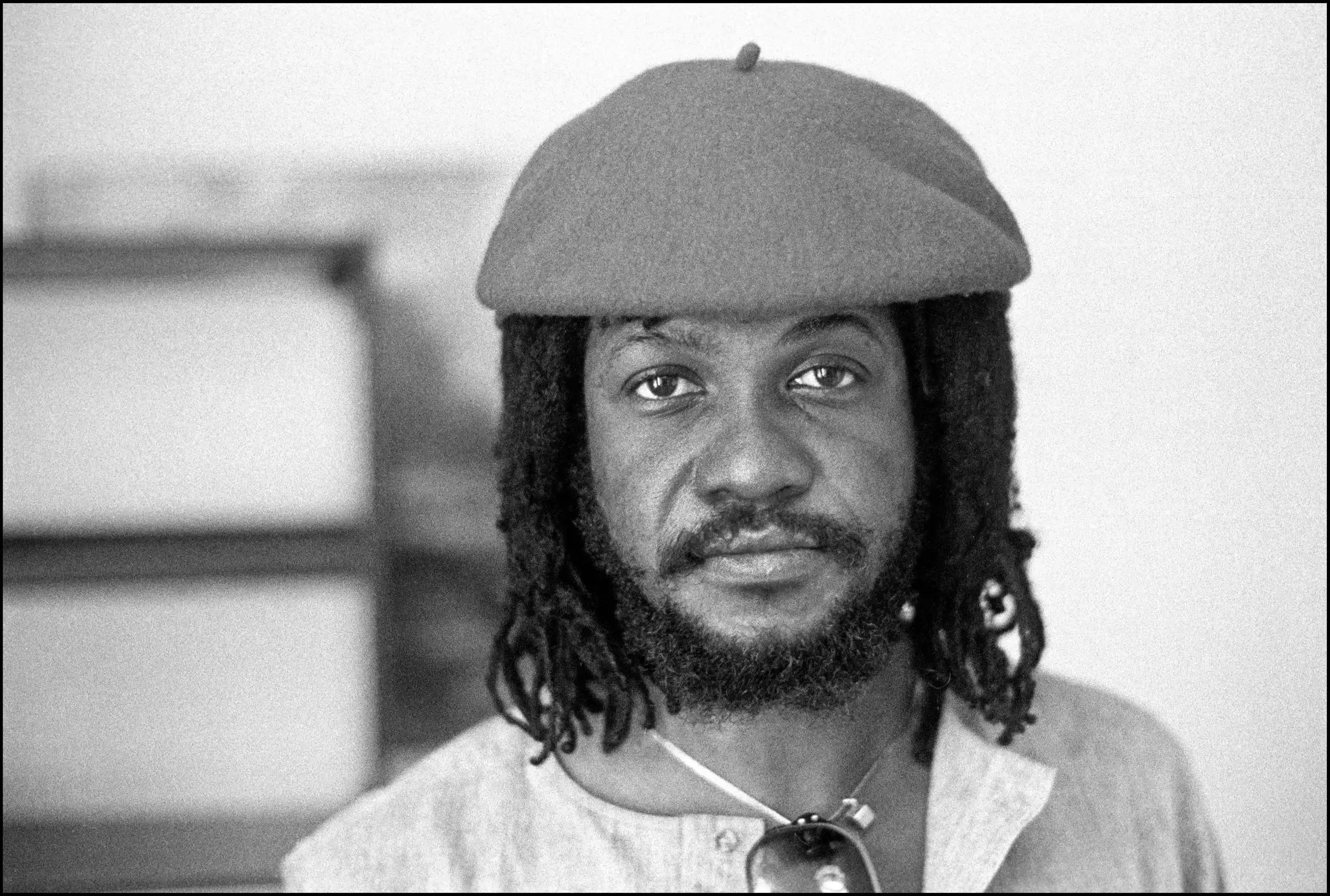
Sly Dunbar
 Jamaica
Member of The Upsetters
drummer•record producer•songwriter
Also known as: Lowell Fillmore Dunbar
Fecha de nacimiento
May 10, 1952
Signo zodiacal
Taurus
Lugar de nacimiento
Kingston, Jamaica
Edad
Falleció a los 73
Estatura
5 ft 8 in (173 cm)
Acerca de
Lowell Fillmore "Sly" Dunbar fue un baterista, productor discográfico y compositor jamaicano, reconocido mundialmente como una de las dos mitades de la legendaria sección rítmica y dúo de producción Sly and Robbie, junto al bajista Robbie Shakespeare. El estilo de batería de Dunbar—caracterizado por una fuerte síncopa, un trabajo nítido del hi-hat y un profundo pocket—ayudó a definir el sonido del reggae, el dancehall y la música dub durante más de cinco décadas.
Como músico de sesión y productor, Dunbar tocó en miles de grabaciones, trabajando con íconos como Bob Marley, Peter Tosh, Bunny Wailer, Grace Jones y Bob Dylan. Sus innovaciones rítmicas, incluido el patrón "one-drop", se convirtieron en fundamentales para el reggae. La influencia de Dunbar se extendió más allá del reggae hacia el pop, el rock y la música electrónica, siendo sus patrones de batería sampleados por innumerables productores en todo el mundo.
Dunbar recibió múltiples premios Grammy al Mejor Álbum de Reggae y fue incluido en el Salón de la Fama de la Música Caribeña en 2022. Permaneció activo hasta su muerte en 2026 a los 73 años. Tanto fanáticos como músicos lo veneran como el latido del corazón de la música jamaicana.
Primeros años y orígenes
Sly Dunbar creció en Kingston, Jamaica, en un hogar modesto. Su padre era soldador y su madre ama de casa. De niño, se sintió atraído por la música a través de la radio y la cultura de los sound systems locales. Comenzó a tocar la batería a los 13 años usando instrumentos improvisados antes de adquirir su primer kit adecuado.
Dunbar asistió al Kingston College pero abandonó la escuela temprano para dedicarse a la música a tiempo completo. Sus primeros conciertos profesionales fueron con bandas locales que tocaban en bailes y clubes. Un momento crucial llegó cuando se unió a la banda de la casa en el estudio Dynamic Sounds en Kingston, donde absorbió técnicas de legendarios músicos de sesión. Su gran oportunidad llegó cuando fue reclutado por el productor Bunny Lee para tocar en sesiones de artistas como Johnny Clarke y Delroy Wilson, lo que llevó a su reclutamiento en The Upsetters, la banda de respaldo del productor Lee "Scratch" Perry.
Trayectoria profesional
En 1972, Dunbar conoció al bajista Robbie Shakespeare mientras ambos eran músicos de sesión en el estudio Channel One. Formaron un vínculo musical inmediato y se convirtieron en la sección rítmica de la casa, tocando en cientos de discos. Para 1976, Sly and Robbie comenzaron a producir de forma independiente, lanzando su propio sello y trabajando con artistas como Peter Tosh, Bunny Wailer y Black Uhuru.
En 1978, coprodujeron el innovador álbum de Bunny Wailer Blackheart Man. La década de 1980 los vio expandirse hacia el pop internacional, trabajando con Grace Jones en sus álbumes Warm Leatherette y Nightclubbing, que cruzaron el reggae con el new wave y el funk. En 1985, produjeron e interpretaron en Empire Burlesque de Bob Dylan.
Dunbar ganó su primer Grammy al Mejor Álbum de Reggae en 1999 por Friends de Bunny Wailer, seguido de victorias en 2005 por True Love de Toots and the Maytals y en 2012 por Revelation de Stephen Marley. Continuó de gira y grabando hasta la década de 2020, lanzando materiales instructivos de batería y colaborando con artistas como Mick Jagger y No Doubt.
Cronología profesional
Imagen pública y estilo
La imagen pública de Dunbar era la de un músico tranquilo, profundamente espiritual e intensamente concentrado. Era conocido por sus característicos rastas, su comportamiento calmado y su enfoque meticuloso de la batería. Los medios lo retrataban como la columna vertebral rítmica del reggae, contrastando a menudo su personalidad relajada con su estilo de interpretación explosivo. Los fanáticos de la batería y la producción de reggae lo veneran como una figura fundamental. No hay un nombre oficial para el fandom, pero "fanáticos de Sly and Robbie" es el identificador común. Su presencia en redes sociales era modesta, con unos 50,000 seguidores en Instagram en 2025.
Fama y fandom
The community that reveres Sly Dunbar operates less like a modern fan club and more like a global archive of rhythmic knowledge. Unlike pop stars with branded tribes, the listeners who follow his work are united by a shared devotion to the mechanics of the groove itself. This audience spans generations of reggae purists, dancehall enthusiasts, and musicians who study his drumming patterns as foundational texts. There is no single moniker for this collective; they are simply the keepers of the rhythm, bound together by the sheer density of his output rather than organized social campaigns or birthday tributes. His legacy lives on in the way producers dissect his fills and in the quiet reverence of fans who know that every beat he touched carries a specific history. His standing in the wider cultural landscape remains formidable even after his passing. The iFANN Global Fame Rankings track his enduring influence across media coverage and consumption signals worldwide. According to these placements, he is currently the 12th most famous person in Adult Entertainment, a position he has held steady from the previous cycle. This ranking underscores how his rhythmic innovations continue to permeate unexpected corners of popular culture long after his active career concluded.
Datos interesantes y leyendas
Lowell Fillmore "Sly" Dunbar earned his childhood nickname due to a mischievous personality that foreshadowed his later musical rebellion. He played drums on over 200,000 recordings during his career, a widely cited Guinness World Record claim that speaks to his incredible productivity. Despite his fame, Dunbar never learned to read music; he played entirely by ear, relying on an innate sense of timing. His signature drum fill, a syncopated snare and hi-hat pattern, is known as the "Sly Dunbar lick" and has been sampled by hundreds of hip-hop and electronic producers. He was a devout Rastafarian for much of his adult life and an avid cricket fan who played in charity matches. He played on Bob Marley's Catch a Fire album in 1973 as an uncredited session musician on some tracks. A central legend surrounding his early years involves his time at Lee "Scratch" Perry's Black Ark studio. Stories persist among reggae historians about how he served alongside bassist Boris Gardiner in the Upsetters, establishing the heavy, syncopated style that defined the genre. These tales describe the Black Ark era as the crucible where his unique sound was forged. Following his death on January 26, 2026, at the age of 73, this narrative became the anchor for his final chapter. The story of his sudden departure after an illness has solidified his status as a timeless figure whose technical mastery outlasted his physical presence.
Frases destacadas
“The drum is the heartbeat of the music. If you don't have a good drummer, you don't have a good band.”
“Robbie and I, we didn't plan this. It was just something that happened. We played together and it felt right from the first note.”
“Reggae music is about the feeling. It's not about how many notes you play, but the space between them.”
“When I play, I'm praying. Every beat is a prayer to Jah.”
“The one-drop is the heartbeat of Jamaica. It's the rhythm of the people.”
Familia y vida personal
El padre de Dunbar era soldador y su madre ama de casa. Tuvo dos hijos de su primer matrimonio con Janet Dunbar, ama de casa de Kingston. En 1990, se casó con Sharon Gordon, una empresaria jamaicana que gestionó aspectos de sus negocios en años posteriores. Permanecieron juntos hasta su muerte y no tuvieron hijos en común. Dunbar fue residente de toda la vida en Kingston, aunque viajó extensamente por giras y sesiones. Poseía una casa y un pequeño estudio en la ciudad.
Conexiones destacadas
Sly Dunbar es inseparable de su compañero musical Robbie Shakespeare, con quien formó el legendario dúo Sly and Robbie. También trabajó extensamente con el productor Lee "Scratch" Perry, Bunny Wailer, Grace Jones, Peter Tosh, Black Uhuru, Mick Jagger y No Doubt.
Relaciones e historial sentimental
Sly Dunbar se casó con Janet Dunbar, ama de casa de Kingston, a principios de la década de 1970. La pareja tuvo dos hijos y se divorció en la década de 1980. A mediados de los 70, se rumoreó brevemente que Dunbar tuvo un vínculo romántico con la cantante de reggae Marcia Griffiths de las I-Threes durante su colaboración en Channel One, aunque ninguna de las partes confirmó la relación. A principios de los 80, los tabloides especularon sobre un romance con Grace Jones durante su trabajo en Warm Leatherette y Nightclubbing, pero ambos lo negaron, calificando su conexión de puramente profesional. En 1990, Dunbar se casó con Sharon Gordon, una empresaria jamaicana, y permanecieron juntos hasta su muerte en 2026. No tuvieron hijos juntos. En 2026, Sly Dunbar estaba casado con Sharon Gordon en el momento de su muerte.
- Casado/aJanet Dunbar1972 - 1985Casado a principios de los 70, tuvo dos hijos, divorciado en los 80.
- RumoreadoMarcia Griffiths1975 - 1976Supuesto vínculo romántico durante la colaboración en Channel One; ninguno lo confirmó.
- RumoreadoGrace Jones1980 - 1981Especulación de tabloides durante las sesiones de 'Warm Leatherette'; ambos lo negaron.
- Casado/aSharon Gordon1990 - 2026ActualCasado en 1990, permanecieron juntos hasta la muerte de Dunbar; sin hijos.
Muerte y repercusiones
Fallecimiento
January 26, 2026 (a los 73 años)
Lugar de fallecimiento
Desconocido
Causa de la muerte
Long illness (undisclosed)
Lowell Fillmore "Sly" Dunbar died on January 26, 2026, at the age of 73. His wife, Thelma Dunbar, reported that she found him unresponsive in their home that morning following a long illness.
Public reaction to his passing was immediate and widespread across the music industry. Tributes poured in from peers and institutions, with extensive obituaries appearing in The New York Times, The Guardian, BBC, AP News, and Variety on January 26 and 27, 2026. These publications celebrated his pivotal role in bridging reggae with rock, pop, and hip-hop, highlighting collaborations ranging from Bob Marley and The Rolling Stones to Madonna, Mick Jagger, and Bob Dylan. His status as a two-time Grammy winner was frequently cited in these memorials alongside implied streaming surges for Sly and Robbie's catalog driven by the volume of coverage.
The family has not publicly disclosed whether he was buried or cremated, nor have they released a detailed statement regarding the estate's administration beyond the initial notification of his death.
Patrimonio neto (valor de la herencia)
$12 Million
Estimación del equipo editorial de iFANN
At the time of his death on 26 January 2026, per iFANN's editorial analysis, Sly Dunbar's net worth was estimated at approximately $12 million USD. His wealth accumulated through royalties and streaming income from thousands of recordings as a session drummer and producer, alongside production credits for albums by Grace Jones, Black Uhuru, and Bunny Wailer. Decades of international touring with Sly and Robbie contributed significantly to his financial portfolio, as did ownership of publishing rights for numerous reggae classics. Real estate holdings in Kingston included a home and small studio, along with sales of instructional drumming materials. Following his death, Dunbar's estate is managed by his widow Sharon Gordon and his two children. Major revenue sources for the estate include posthumous reissues and remasters of classic Sly and Robbie recordings, licensing of his drum patterns and samples for use in hip-hop, EDM, and pop productions, merchandise and tribute concert revenues, and royalties from continued streaming of his extensive catalog.
Premios ganados (4)
Sly Dunbar ganó tres premios Grammy al Mejor Álbum de Reggae: en 1999 por Friends de Bunny Wailer, en 2005 por True Love de Toots and the Maytals, y en 2012 por Revelation de Stephen Marley. También recibió un premio MOBO al Mejor Artista de Reggae en 1998 como parte de Sly and Robbie, y múltiples premios de la Industria Musical Jamaicana al Mejor Productor.
2012 · Mejor Álbum de Reggae
Revelation by Stephen Marley
2005 · Mejor Álbum de Reggae
True Love by Toots and the Maytals
1999 · Mejor Álbum de Reggae
Friends by Bunny Wailer
1998 · Mejor Actuación de Reggae
Sly and Robbie
Conocido por
Sly and Robbie rhythm section
1974 · Drummer
Warm Leatherette (Grace Jones)
1980 · Drummer and producer
Nightclubbing (Grace Jones)
1981 · Drummer and producer
Blackheart Man (Bunny Wailer)
1978 · Co-producer and drummer
Empire Burlesque (Bob Dylan)
1985 · Producer and drummer
Palabras clave
Datos rápidos
- Profesión
- drummer, record producer, songwriter
- Nacimiento
- +1952-05-10
- Lugar de nacimiento
- Kingston, Jamaica
- Fallecimiento
- +2026-01-26
- Lugar de fallecimiento
- Kingston, Jamaica
- Género
- Hombre
- Signo zodiacal
- Taurus
- Estatura
- 5 ft 8 in (173 cm)
Datos personales
- Nombre completo
- Lowell Fillmore Dunbar
- Estatura
- 5 ft 8 in (173 cm)
- Cónyuge
- Sharon Gordon
- Hijos
- 2 (from first marriage)
- Educación
- Kingston College (left early)
Preguntas frecuentes
¿Qué edad tenía Sly Dunbar cuando murió?
¿Cuál era el patrimonio neto de Sly Dunbar en 2026?
¿Por qué es más conocido Sly Dunbar?
¿Estaba casado Sly Dunbar?
¿Sly Dunbar tuvo hijos?
Redes sociales
Personas similares
Únete a la comunidad
fans comentando