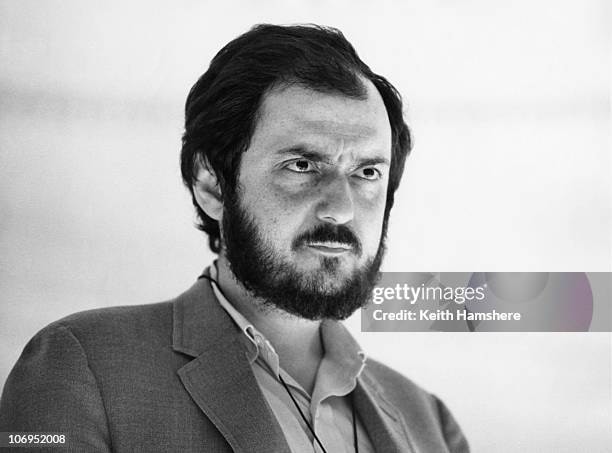
Stanley Kubrick
 United States
film director•cinematographer•photographer
Fecha de nacimiento
July 26, 1928
Signo zodiacal
Leo
Lugar de nacimiento
The Bronx, New York, USA
Edad
Falleció a los 70
Estatura
5 ft 7 in (170 cm)
Acerca de
Stanley Kubrick fue un director de cine, director de fotografía y fotógrafo estadounidense, ampliamente considerado uno de los directores más influyentes en la historia del cine. A lo largo de una carrera que abarcó 46 años, Kubrick dirigió 13 largometrajes, cada uno distinto en género pero unificado por un estilo visual meticuloso, humor negro y una atención obsesiva al detalle. Su obra incluye el hito de la ciencia ficción 《2001: Una odisea del espacio》 (1968), la distopía 《La naranja mecánica》 (1971), el clásico del terror 《El resplandor》 (1980) y la película sobre la guerra de Vietnam 《La chaqueta metálica》 (1987). Kubrick obtuvo 13 nominaciones al Premio de la Academia y ganó uno a los Mejores Efectos Visuales. Fue pionero en innovaciones técnicas como el plano con Steadicam y los efectos de proyección frontal. Sus películas son conocidas por sus composiciones simétricas, finales ambiguos y profundidad psicológica. El perfeccionismo de Kubrick se volvió legendario; a menudo requería docenas de tomas y pasaba años desarrollando cada proyecto. A pesar de su naturaleza reservada, su influencia en directores como Steven Spielberg, David Lynch y Christopher Nolan es profunda. Kubrick murió en 1999 en su casa en Inglaterra, apenas unos días después de completar su última película, 《Eyes Wide Shut》.
Primeros años y orígenes
Stanley Kubrick nació el 26 de julio de 1928 en El Bronx, Nueva York, EE. UU. Creció en una familia judía allí, donde su padre trabajaba como médico. Desde temprana edad, Kubrick mostró diversos intereses, aunque su rendimiento académico no fue estelar; fue un estudiante mediocre en la Escuela Secundaria William Howard Taft. Durante estos años formativos, desarrolló una profunda pasión por el ajedrez y el jazz, actividades que perfeccionaron su pensamiento estratégico y su aprecio por el ritmo y la composición. Un momento crucial ocurrió cuando tenía 13 años: su padre le regaló una cámara Graflex, lo que inmediatamente despertó su interés por la fotografía y lo encaminó hacia la exploración visual.
Después de graduarse de la Escuela Secundaria William Howard Taft en 1945, Kubrick se inscribió brevemente en el City College de Nueva York, pero pronto abandonó, optando en cambio por seguir sus inclinaciones artísticas. A los 17 años, su talento para la fotografía comenzó a surgir profesionalmente cuando vendió con éxito una impactante fotografía de un vendedor de periódicos lamentando la muerte de Franklin D. Roosevelt a la revista Look. Impresionada por su trabajo, Look lo contrató como fotógrafo aprendiz. De 1946 a 1950, Kubrick perfeccionó su oficio capturando una amplia variedad de temas para la revista, incluyendo dinámicos combates de boxeo, vibrantes clubes de jazz y escenas íntimas de la vida cotidiana en Nueva York. Esta extensa experiencia como fotoperiodista proporcionó una base sólida para su eventual transición al cine.
Impulsado por una visión en evolución, Kubrick se aventuró en el cine, financiando su primer cortometraje, 《Day of the Fight》 (1951), un documental sobre el boxeador Walter Cartier, con $3,900 de su propio dinero. Este éxito inicial fue seguido rápidamente por dos cortometrajes más, 《Flying Padre》 (1951) y 《The Seafarers》 (1953). Su ambición lo llevó entonces a dirigir su primer proyecto de larga duración, 《Fear and Desire》 (1953), una película bélica autofinanciada que luego repudió. El año 1953 resultó crucial para su carrera cuando conoció al productor James B. Harris. Su colaboración llevó a la formación de Harris-Kubrick Pictures, y su primer esfuerzo conjunto, el cine negro 《Killer's Kiss》 (1955), marcó un paso significativo al llamar la atención de United Artists.
Trayectoria profesional
La primera gran película de estudio de Kubrick fue 《The Killing》 (1956), una película de atracos con una narrativa no lineal. Lo estableció como un talento emergente. 《Senderos de gloria》 (1957), una película antibelicista protagonizada por Kirk Douglas, fue un éxito crítico a pesar de la censura en Europa. Kubrick reemplazó al director Anthony Mann en 《Espartaco》 (1960) a petición de Douglas; la épica histórica fue un éxito comercial y ganó cuatro Premios de la Academia. Insatisfecho con la interferencia del estudio, Kubrick se mudó a Inglaterra en 1961. Allí hizo 《Lolita》 (1962) y 《Dr. Strangelove》 (1964), esta última una sátira de la Guerra Fría que le valió su segunda nominación al Oscar al Mejor Director. Su siguiente película, 《2001: Una odisea del espacio》 (1968), revolucionó la ciencia ficción con su representación realista de los viajes espaciales y efectos especiales innovadores; ganó su único Oscar competitivo. 《La naranja mecánica》 (1971) provocó una intensa controversia por su representación de la violencia; Kubrick la retiró de la circulación en el Reino Unido tras recibir amenazas de muerte. 《Barry Lyndon》 (1975) ganó cuatro Oscars, incluyendo Mejor Fotografía. 《El resplandor》 (1980) utilizó el Steadicam para icónicos planos de seguimiento. 《La chaqueta metálica》 (1987) dividió a la crítica pero tuvo buen rendimiento en taquilla. Su última película, 《Eyes Wide Shut》 (1999), protagonizada por Tom Cruise y Nicole Kidman, se estrenó póstumamente.
Cronología profesional
Imagen pública y estilo
La imagen pública de Kubrick es la de un genio recluso y perfeccionista implacable. Era notoriamente privado, rara vez concedía entrevistas y evitaba Hollywood. Sus películas se caracterizan por composiciones simétricas, ritmo lento y finales ambiguos. Los fanáticos, a veces llamados kubrickianos, se involucran en un intenso análisis de su trabajo, descubriendo significados y códigos ocultos. El patrimonio oficial gestiona una página de Facebook con 1.2 millones de seguidores y una cuenta de Instagram con 450,000 seguidores, manteniendo un tono formal y reverente. Su reputación de exigir cientos de tomas y su control exacto sobre cada aspecto de la producción se han convertido en parte de su leyenda.
Fama y fandom
Stanley Kubrick remains a towering figure in global cinema, commanding attention from film scholars and casual viewers alike decades after his passing. His influence permeates the industry, yet iFANN's Global Fame Engine has evaluated this person without assigning them a placement in the published rankings, meaning they do not currently hold a position within the Global Top 1,000 or any Top-100 scope list. This absence of a specific numeric rank reflects the unique nature of his legacy rather than a lack of recognition; he is an icon whose fame transcends standard celebrity metrics. The community surrounding his work is generally referred to as Kubrickians, though no formal, officially recognized fandom name exists in the data. Unlike modern pop stars with organized clubs driving chart pushes, these supporters engage through academic rigor and obsessive analysis, treating his films as puzzle boxes to be deconstructed. While there are no fan-funded projects for new content, the group has driven significant efforts to preserve his legacy through high-definition restorations and streaming availability on platforms like HBO Max and Criterion Channel. Fan culture is defined by deep dives into production notes and the enduring meme of the "Kubrick Stare," which originated in Full Metal Jacket but has become ubiquitous in internet parodies. The cultural mythology built around his perfectionism, such as the use of NASA lenses for Barry Lyndon, continues to fuel endless debates about works like 2001: A Space Odyssey. Recent initiatives, including the 2026 TCM series Plot Thickens dedicated to him, confirm that while he avoided direct engagement, his artistic output generated a self-sustaining ecosystem of reverence that evolves with each new generation.
Datos interesantes y leyendas
Stanley Kubrick was a master chess player who often played on set between takes. He never flew after the 1960s, preferring travel by ship or train due to a phobia of germs and spiders. Despite a career spanning 46 years, he directed only 13 feature films, turning down major projects like The Exorcist and Star Wars to focus on his own vision. A devoted cat lover, he kept several felines at his English estate. The Shining was initially screened continuously for 24 hours in theaters, and 2001: A Space Odyssey was originally titled Journey Beyond the Stars. Legends of his production style persist, particularly the story that he used custom-made Zeiss lenses designed for NASA to shoot interior scenes by candlelight in Barry Lyndon, achieving lighting effects previously thought impossible. Another widely retold anecdote involves the Overlook Hotel maze in The Shining; fans still discuss how Kubrick insisted on building a maze that was never actually constructed for the film, creating confusion about the ending that became part of the lore despite being a fabrication. These stories highlight the intense scrutiny his work receives, where every detail is analyzed as if it were a code waiting to be cracked.
Frases destacadas
“If it can be written, or thought, it can be filmed.”
“The screen is a magic medium. It has such power that it can retain interest as it conveys emotions and moods that no other art form can hope to tackle.”
“I think the biggest challenge is to make a film that is both entertaining and profound.”
“I don't think that writers or actors or directors are important anymore. The film is the thing.”
Familia y vida personal
Kubrick nació de Jacob Leonard Kubrick, un médico, y Gertrude Perveler. Tuvo una hermana menor, Barbara. Se casó tres veces. Su primera esposa fue Toba Metz (1948–1951), un amor de la secundaria. Su segunda esposa fue la bailarina Ruth Sobotka (1955–1961). Su tercera esposa, la actriz alemana Christiane Kubrick (de soltera Harlan), se casó con él en 1958 y permaneció con él hasta su muerte. Tuvieron dos hijas: Anya (nacida en 1959) y Vivian (nacida en 1960). Kubrick también adoptó a la hija de Christiane de un matrimonio anterior, Katharina. La familia vivía de forma reclusa en Childwickbury Manor en Hertfordshire, Inglaterra, donde Kubrick tenía gatos y jugaba al ajedrez.
Conexiones destacadas
Kubrick colaboró frecuentemente con un grupo central de actores y equipo. Kirk Douglas protagonizó 《Paths of Glory》 y 《Spartacus》. Jack Nicholson protagonizó 《The Shining》. Tom Cruise y Nicole Kidman lideraron 《Eyes Wide Shut》. Malcolm McDowell interpretó el papel principal en 《A Clockwork Orange》. Peter Sellers apareció en 《Dr. Strangelove》 y 《Lolita》. El director de fotografía John Alcott trabajó en varias películas. El productor James B. Harris fue un socio temprano en 《The Killing》 y 《Paths of Glory》.
Relaciones e historial sentimental
La primera relación de Kubrick fue con Toba Metz, su amor de secundaria. Se casaron en 1948 y se divorciaron en 1951 amistosamente mientras su carrera comenzaba. Luego se casó con la bailarina Ruth Sobotka en 1955; se divorciaron en 1961, en parte debido a su aventura con Christiane Harlan. Kubrick conoció a Christiane en el set de 《Paths of Glory》 en Múnich, donde ella interpretó un pequeño papel. Se casaron en 1958 y permanecieron juntos hasta su muerte. Christiane fue su confidente artística de por vida. El matrimonio fue notablemente estable y devoto. Hasta su muerte, estuvo casado con Christiane.
- Casado/aToba Metz1948 - 1951Amores de secundaria; se divorciaron amistosamente.
- Casado/aRuth Sobotka1955 - 1961Bailarina y diseñadora de escenarios; el matrimonio terminó debido a la aventura de Kubrick.
- Casado/aChristiane Kubrick1958 - 1999ActualSe conocieron en el set de 《Paths of Glory》; permanecieron juntos hasta su muerte.
Muerte y repercusiones
Fallecimiento
March 7, 1999 (a los 70 años)
Lugar de fallecimiento
Childwickbury, Hertfordshire, England
Causa de la muerte
ataque al corazón
The official finding regarding Stanley Kubrick's passing came from his physician, who ruled the cause as a heart attack following a private review of the filmmaker's condition at Childwickbury Manor. Kubrick had been managing minor health issues while continuing to work on projects until shortly before March 7, 1999, when he passed away at age 70 in Hertfordshire, England. His final public appearance occurred just weeks prior during a brief screening of Eyes Wide Shut in London, though reports suggest illness may have limited his participation in other scheduled events. Tributes flowed immediately from peers and institutions worldwide, with the Academy of Motion Picture Arts and Sciences holding moments of silence to honor the director's legacy.
Fan vigils emerged globally, particularly in New York City and London, where admirers gathered outside former homes and filming locations to pay respects. Sales of his films and books surged in the weeks following his death, with Eyes Wide Shut experiencing a significant boost in box office returns and home video sales due to its recent release status. A documentary titled Stanley Kubrick: A Life in Pictures was produced in 2001 to offer insights into his life and work, while the Stanley Kubrick Foundation was established to manage his estate and preserve his legacy through educational initiatives.
Kubrick's funeral took place on March 12, 1999, at St. Mary's Church in Childwickbury, a private ceremony attended only by close family members and trusted friends. His wife Christiane Kubrick and their children were present, and his ashes were interred in the churchyard. The estate remains under the stewardship of his family, ensuring that his artistic contributions are protected and celebrated.
Patrimonio neto (valor de la herencia)
$20 Million
Estimación del equipo editorial de iFANN
Per iFANN's editorial analysis, Stanley Kubrick's estate is valued at approximately $20 million as of 2026. The primary sources of revenue include royalties from film screenings, television broadcasts, and streaming rights. Licensing deals for merchandise, posters, and memorabilia also contribute significantly to the total. Posthumous restorations, such as the 4K restoration of 2001: A Space Odyssey in 2018 and Barry Lyndon in 2023, have generated substantial income. The estate continues to earn from documentaries and books about Kubrick's life, which require estate approval for publication. Management of these assets is handled by his widow Christiane and their children.
Premios ganados (32)
Kubrick ganó un Óscar competitivo a los mejores efectos visuales por 2001: Una odisea del espacio. Recibió dos premios BAFTA a la mejor película y mejor dirección. Se le otorgó el Premio Cecil B. DeMille en los Globos de Oro. También ganó el Premio D.W. Griffith del Sindicato de Directores de Estados Unidos y el León de Oro a la trayectoria en Venecia. Sus películas obtuvieron numerosos premios técnicos.
1969 · Mejores Efectos Visuales
2001: A Space Odyssey
1999 · Premio Cecil B. DeMille
Conocido por
2001: A Space Odyssey
1968 · Director, Writer, Producer
A Clockwork Orange
1971 · Director, Writer, Producer
The Shining
1980 · Director, Writer, Producer
Dr. Strangelove
1964 · Director, Writer, Producer
Full Metal Jacket
1987 · Director, Writer, Producer
Palabras clave
Datos rápidos
Datos personales
- Nombre completo
- Stanley Kubrick
- Estatura
- 5 ft 7 in (170 cm)
- Cónyuge
- Christiane Kubrick
- Hijos
- Anya Kubrick, Vivian Kubrick, Katharina Kubrick (adopted)
- Educación
- William Howard Taft High School; City College of New York (dropped out)
Filmografía
16
Total
13
Cine
0
TV
Preguntas frecuentes
¿Sigue vivo Stanley Kubrick?
¿Cuántas películas dirigió Stanley Kubrick?
¿Era Stanley Kubrick un perfeccionista?
¿Con quién estuvo casado Stanley Kubrick?
¿Cuál es la película más famosa de Stanley Kubrick?
Redes sociales
Personas similares
Únete a la comunidad
fans comentando