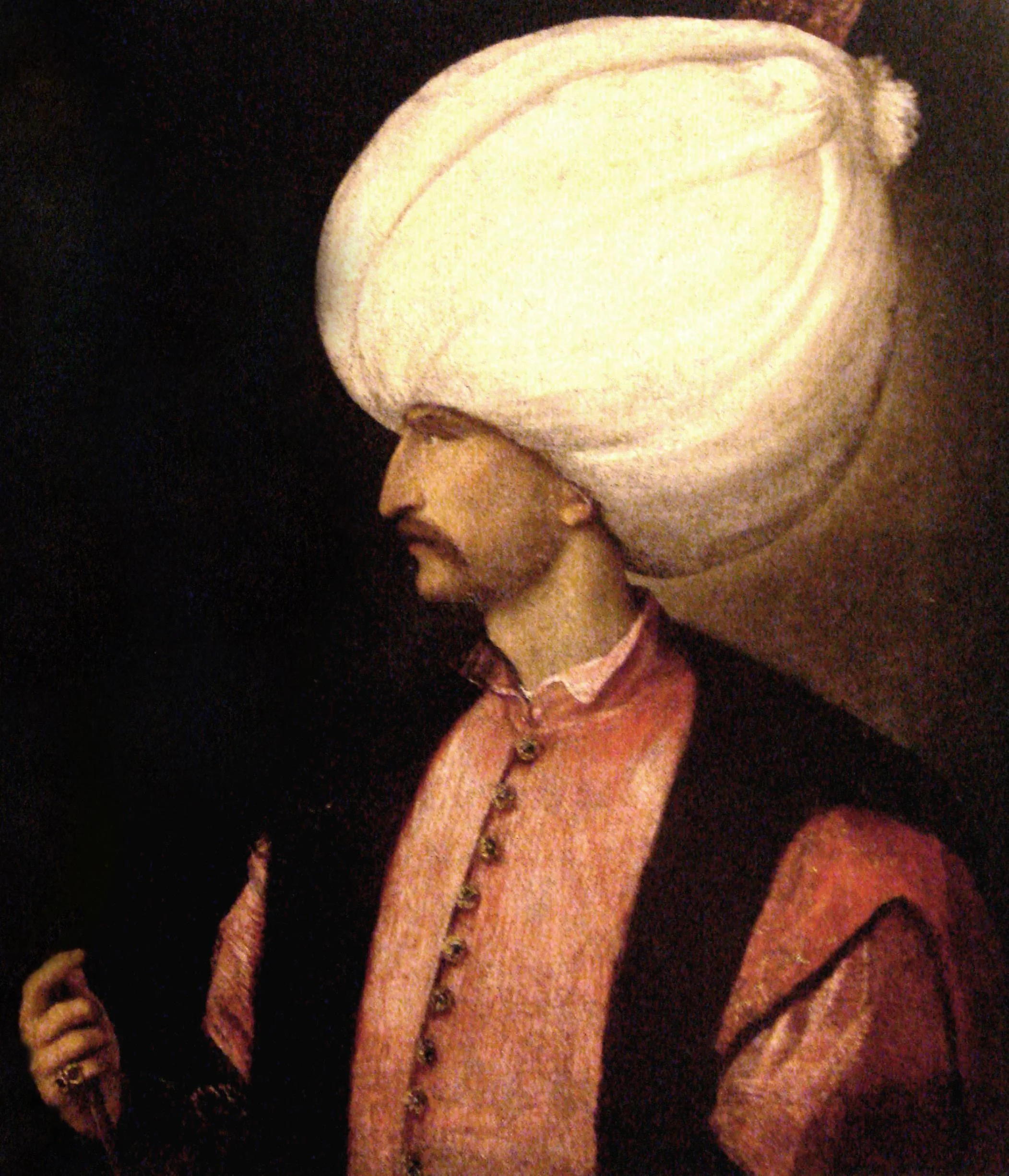
Suleiman the Magnificent
ruler•legislator•military leader
Also known as: Suleiman I, Kanuni, the Lawgiver
Fecha de nacimiento
November 6, 1494
Signo zodiacal
Scorpio
Lugar de nacimiento
Trabzon, Ottoman Empire
Edad
Falleció a los 71
Acerca de
Solimán el Magnífico, nacido el 6 de noviembre de 1494 en Trebisonda, fue el décimo sultán del Imperio Otomano y el que reinó por más tiempo. Sus 46 años de gobierno, de 1520 a 1566, marcaron el apogeo del imperio en poder militar, riqueza económica y logros culturales. Gobernó un imperio de al menos 25 millones de súbditos y expandió el territorio otomano desde Hungría hasta Irak y desde Crimea hasta el norte de África. Solimán es recordado como un brillante estratega militar, reformador de la ley otomana y mecenas de las artes que inauguró una edad dorada. Su doble legado como conquistador y legislador le valió el epíteto de «el Magnífico» en Europa y «Kanuni» (el Legislador) entre su propio pueblo.
Primeros años y orígenes
Solimán nació en la dinastía otomana en Trebisonda, una ciudad costera del Mar Negro. Su padre, Selim I, era un gobernante severo y ambicioso que expandió el imperio hacia el este. De niño, Solimán estudió en las escuelas del palacio en Trebisonda y más tarde en Constantinopla, donde aprendió arte de gobernar, historia, ciencia, literatura y teología. También se entrenó en artes militares y equitación. Desde joven, Solimán mostró un gran interés por la poesía y se convirtió en un hábil orfebre. En su adolescencia, sirvió como gobernador en las provincias de Bolu y más tarde Kaffa, adquiriendo experiencia administrativa. Cuando Selim I murió repentinamente en 1520, Solimán tenía 26 años y estaba listo para tomar el trono.
Trayectoria profesional
Solimán ascendió al trono en 1520 e inmediatamente emprendió campañas militares. En 1521, capturó Belgrado, una ciudad estratégica clave en los Balcanes. Al año siguiente, conquistó la isla de Rodas a los Caballeros Hospitalarios tras un largo asedio. Su victoria más decisiva llegó en 1526 en la Batalla de Mohács, donde aplastó al Reino de Hungría y anexó gran parte de su territorio. En 1529, dirigió el primer Sitio de Viena, que finalmente fracasó pero demostró el alcance otomano. Durante las décadas de 1530 y 1540, Solimán luchó contra el Imperio safávida, capturando Bagdad en 1534 y expandiendo el control otomano sobre Irak. Su armada, liderada por Hayreddin Barbarroja, ganó la Batalla de Preveza en 1538, estableciendo la dominación otomana en el Mediterráneo. Solimán también reformó el sistema legal otomano, promulgando un código de leyes unificado que equilibraba los decretos sultánicos con la sharia islámica. Encargó magníficos edificios, incluida la Mezquita de Süleymaniye, diseñada por su arquitecto jefe Mimar Sinan. Solimán murió en 1566 durante el Sitio de Szigetvár en Hungría, su última campaña.
Cronología profesional
Imagen pública y estilo
Solimán cultivó una imagen de justicia y piedad. Era conocido por escuchar personalmente las peticiones de los plebeyos cada martes, una práctica que reforzó su reputación como gobernante justo. Los cronistas europeos lo retrataron tanto como un conquistador aterrador como un príncipe sabio y culto. En el mundo otomano, fue celebrado como Kanuni, el legislador que codificó las leyes del imperio. Su mecenazgo de la arquitectura, especialmente las obras de Mimar Sinan, creó un legado visual de poder y fe. La corte de Solimán era un centro de poesía, arte y erudición, que atraía a intelectuales de todo el mundo islámico.
Fama y fandom
Suleiman the Magnificent commands a reverence that defies the modern machinery of fandom. He lacks a formal fan club or a branded following, yet his image in Turkey has evolved into a national taboo where mockery invites imprisonment rather than applause. The 2026 sentencing of comedian Tuba Ulu for a joke about the Sultan proved that disrespecting him carries legal weight, cementing his status as an untouchable cultural icon rather than a pop star. Global engagement remains tied to the historical drama *Muhteşem Yüzyıl*, which fuels online discussion around his fictionalized court life without creating a unified audience identity. While archaeological reports from 2025 suggested a potential discovery of his tomb in Hungary near Szigetvár, this has not translated into organized fan rituals or pilgrimage campaigns. Instead, the figure exists as a solemn symbol of Ottoman grandeur and a subject of intense legal protection. In August 2026, the iFANN Global Fame Engine evaluated Suleiman the Magnificent but determined he currently holds no placement in the published rankings (Global Top 1,000 or a Top-100 scope list). Say this plainly and neutrally; do NOT state or guess any numeric rank or score. This absence reflects his standing as a historical monarch whose fame operates through legacy and state-sanctioned memory rather than contemporary consumption metrics like streaming or search volume. Despite the lack of a numerical score, his influence persists through enduring military bands and the continued performance of Mehter music in places like Trabzon. The legend of his death during the Siege of Szigetvár remains a potent narrative, reinforced by recent claims of finding his burial site, ensuring his story survives not as a trending topic but as a foundational chapter of history.
Datos interesantes y leyendas
Born in Trabzon on November 6, 1494, Suleiman ruled the Ottoman Empire for 46 years, expanding its borders from Hungary to Iraq while governing at least 25 million subjects. He earned the title Kanuni among his people for codifying laws and 'the Magnificent' in Europe for his military prowess. A prolific poet writing under the pen name Muhibbi, he also personally crafted gold jewelry, including a famous helmet-crown. His distinctive long red beard was noted by European ambassadors, and he maintained a strict daily routine of pre-dawn prayer, council meetings, and often eating only one meal. Deeply superstitious, he frequently consulted astrologers before making major decisions. The Süleymaniye Mosque complex served as a massive charitable hub featuring a hospital, school, library, and soup kitchen. Historical records confirm his final campaign ended with his death at the Siege of Szigetvár in 1566, a moment now legendary after a 2025 announcement claimed his tomb had been located at the imperial tent site in Hungary. This discovery has sparked local hopes for economic revival in Szigetvár. In the modern era, his legacy became the center of a viral controversy when comedian Tuba Ulu was sentenced to prison in 2026 for a stand-up joke, illustrating the intense protective sentiment surrounding the Sultan's image today.
Frases destacadas
“I am the sultan of the sultans, the emperor of the emperors, the distributor of crowns to the monarchs of the world.”
“My sword is my tongue, and my tongue is my sword.”
“The greatest victory is the one that requires no battle.”
“Justice is the foundation of the realm.”
Familia y vida personal
El padre de Solimán fue Selim I, conocido como «el Severo», quien expandió el imperio hacia el este. Su madre fue Hafsa Sultan, una figura poderosa que lo aconsejó al principio de su reinado. Solimán tuvo varias consortes, pero su esposa más famosa fue Hürrem Sultan (Roxelana), una ex concubina con quien se casó en 1534, rompiendo la tradición otomana. Hürrem se convirtió en una gran influencia política, manteniendo correspondencia con líderes extranjeros y construyendo fundaciones benéficas. Otras consortes de Solimán incluyeron a Mahidevran Hatun, madre de su hijo mayor Mustafa, y Gülfem Hatun. Sus hijos incluyeron a los príncipes Mustafa, Mehmed, Selim, Bayezid y Cihangir, así como a las hijas Mihrimah y Fatma. La rivalidad entre Hürrem y Mahidevran por la sucesión llevó a una profunda intriga palaciega, que culminó con la ejecución de Mustafa en 1553.
Conexiones destacadas
Solimán trabajó estrechamente con Hürrem Sultan, su esposa y confidente política. Su arquitecto jefe Mimar Sinan diseñó más de 300 estructuras, incluida la Mezquita de Süleymaniye. Ebussuud Efendi, el gran muftí, ayudó a codificar la ley otomana. Su almirante Hayreddin Barbarroja llevó a la armada a la dominación.
Relaciones e historial sentimental
La primera consorte conocida de Solimán fue Fülane Hatun, quien le dio un hijo en 1512. Más tarde tomó a Mahidevran Hatun como concubina; ella dio a luz a Mustafa en 1515. Alrededor de 1520, Hürrem Sultan (Roxelana) entró en el harén y rápidamente se convirtió en la favorita de Solimán. En 1533, Solimán se casó con Hürrem, una ruptura radical con la tradición otomana. Hürrem le dio cinco hijos y una hija, incluido el futuro sultán Selim II. La rivalidad entre Hürrem y Mahidevran se intensificó tras la ejecución de Mustafa en 1553. Solimán también tuvo una relación con Gülfem Hatun, aunque los detalles son escasos. A su muerte en 1566, Solimán estaba casado con Hürrem Sultan.
- SalieronFülane Hatun1510 - 1512Primera consorte conocida, madre de un hijo que murió joven.
- SalieronMahidevran Hatun1513 - 1553Madre de Şehzade Mustafa; exiliada tras la ejecución de Mustafa.
- Casado/aHürrem Sultan1533 - 1566ActualEsposa legal de Solimán y consorte más influyente; madre de Selim II.
- SalieronGülfem Hatun1520 - 1562Una consorte que construyó una mezquita en Üsküdar.
Muerte y repercusiones
Fallecimiento
September 6, 1566 (a los 71 años)
Lugar de fallecimiento
Szigetvár, Hungary
Causa de la muerte
Heart attack or stroke
The Ottoman court announced the sultan's passing to his son Selim II and chief vizier Sokollu Mehmed Pasha, who immediately concealed the news to preserve army morale during the ongoing siege. Suleiman the Magnificent died in his tent near Szigetvár, Hungary, on September 6, 1566, at approximately seventy-two years of age. Historians widely accept that natural causes, specifically a heart attack or stroke triggered by the physical strain of the campaign and his advanced age, ended his life, though unconfirmed legends occasionally suggest he fell to a stray cannonball.
His death marked the conclusion of the empire's Golden Age, ending an era defined by military expansion and legal reform. The body remained hidden until the fortress surrendered, allowing the army to retreat safely before transporting the remains back to Constantinople. There he was interred in a mausoleum adjacent to the Süleymaniye Mosque, a private imperial affair attended by high-ranking officials and religious leaders rather than the general populace. Posthumous reverence has persisted for centuries, cementing his legacy as Kanuni, the Lawgiver.
Premios y galardones
View 3 records, honours and achievementsConocido por
Ottoman Empire
1520 · Sultán
Battle of Mohács
1526 · Comendador
Süleymaniye Mosque
1557 · Patron
Palabras clave
Datos rápidos
- Profesión
- ruler, legislator, military leader
- Nacimiento
- +1494-11-06
- Lugar de nacimiento
- Trabzon
- Fallecimiento
- +1566-09-06
- Lugar de fallecimiento
- Szigetvár
- Género
- Hombre
- Cónyuge
- Hürrem Sultan, Mahidevran Hatun, Fülane Hatun, Gülfem Hatun
- Signo zodiacal
- Scorpio
Datos personales
- Cónyuge
- Hürrem Sultan, Mahidevran Hatun, Fülane Hatun, Gülfem Hatun
- Hijos
- Şehzade Mustafa, Şehzade Mehmed, Selim II, Şehzade Bayezid, Şehzade Cihangir, Mihrimah Sultan, Fatma Sultan
- Educación
- Palace schools in Trabzon and Constantinople
Preguntas frecuentes
¿Quién fue Solimán el Magnífico?
¿Cuál era el patrimonio neto de Solimán el Magnífico en 2026?
¿Está Solimán el Magnífico vivo en 2026?
¿Por qué es famoso Solimán el Magnífico?
¿Cómo se compara Solimán el Magnífico con otros sultanes otomanos?
Personas similares
Únete a la comunidad
fans comentando