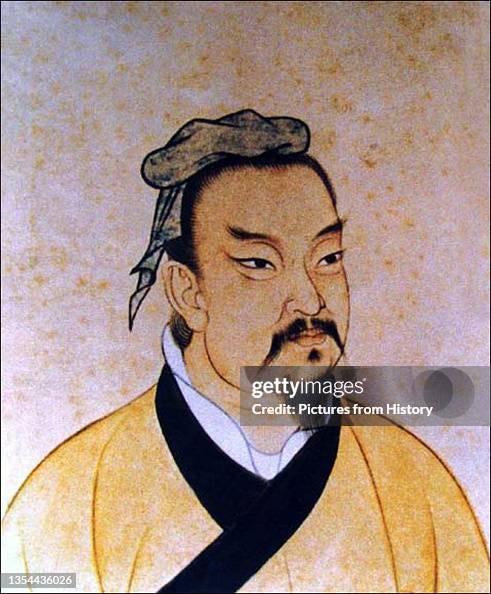
Sun Tzu
 China
ChinaMilitary strategist•philosopher•writer
Also known as: Master Sun, Sun Wu, Sunzi
Fecha de nacimiento
544 BC
Signo zodiacal
Lugar de nacimiento
Qi (ancient Chinese state, present-day Shandong)
Edad
Falleció a los 48
Acerca de
Sun Tzu, born Sun Wu, was the ancient Chinese military strategist and philosopher whose treatise The Art of War remains one of the most influential texts on strategy ever written. Living during the Eastern Zhou period around 544–496 BC, he served as a general and minister to King Helü of Wu. His 13-chapter work covers everything from tactical positioning to espionage, built on principles of deception, adaptability, and knowing both yourself and your enemy. Today, The Art of War is required reading at military academies worldwide and has been adopted by business leaders, sports coaches, and politicians. Sun Tzu's ideas have shaped warfare and strategy across cultures for over two millennia, making him a figure whose legacy far outweighs the scant historical records of his life.
Primeros años y orígenes
Casi no se sabe nada sobre la vida temprana de Sun Tzu. Nació alrededor del 544 a. C. en el estado de Qi, un poderoso reino durante el período de Primaveras y Otoños que era un centro de pensamiento intelectual y militar. Los relatos tradicionales sugieren que su familia tenía conexiones militares, pero no sobreviven nombres ni detalles. El estado de Qi produjo otros estrategas famosos, y es probable que Sun Tzu absorbiera la cultura estratégica de su tierra natal. Su primer movimiento registrado ocurrió cuando viajó al sur, al estado de Wu, buscando una audiencia con el rey Helü. Según los Registros del Gran Historiador de Sima Qian, escritos siglos después, Sun Tzu demostró su habilidad entrenando a las concubinas del rey como soldados. Cuando las dos favoritas del rey se rieron durante los ejercicios, Sun Tzu las hizo ejecutar, demostrando su disciplina y autoridad. Impresionado, el rey Helü lo nombró general. Esta historia, ya sea factual o legendaria, marca el único evento conocido antes de su carrera militar.
Trayectoria profesional
La carrera de Sun Tzu está casi completamente definida por su autoría de El arte de la guerra, tradicionalmente fechado alrededor del 500 a. C. Los 13 capítulos del texto cubren sistemáticamente planificación, tácticas, terreno y espionaje, enfatizando el engaño y la ventaja psicológica. Como general bajo el rey Helü, Sun Tzu lideró los ejércitos de Wu a varias victorias, ayudando al estado a expandir su territorio. Sin embargo, las batallas específicas que comandó no están registradas. Después de su muerte en 496 a. C., El arte de la guerra circuló entre los líderes militares chinos. Su influencia creció a lo largo de los siglos, extendiéndose a Japón, Corea y eventualmente a Occidente. En el siglo XX, se convirtió en un elemento básico en las escuelas de negocios y la estrategia corporativa. El descubrimiento del Arte de la guerra separado de Sun Bin en 1972 confirmó que Sun Tzu y su descendiente eran figuras distintas, terminando con siglos de confusión y solidificando el lugar de Sun Tzu como el autor original.
Cronología profesional
Imagen pública y estilo
Sun Tzu es universalmente representado como un sabio guerrero barbudo con túnicas fluidas, a menudo sosteniendo un pergamino o una espada. Esta imagen es completamente una convención artística, ya que no existe ningún retrato contemporáneo. En los medios modernos, se le representa como un estratega tranquilo y calculador, a menudo utilizado como símbolo de sabiduría antigua. Su estilo de escritura es conciso, aforístico y práctico, lo que hace que sus citas sean infinitamente compartibles en las redes sociales. Los fanáticos de su trabajo a menudo se llaman a sí mismos «Estrategas» y organizan grupos de lectura anuales, foros en línea y recreaciones militares. El uso generalizado de sus citas en contextos empresariales y de autoayuda ha convertido a Sun Tzu en un ícono de la cultura pop, aunque muchas citas atribuidas son mal atribuidas o parafraseadas.
Fama y fandom
Sun Tzu commands a global attention that transcends the boundaries of his era, maintaining a persistent presence in modern strategic discourse and cultural memory. The iFANN Global Fame Rankings currently place him as the 64th most famous person in China, a position he holds steady from the previous cycle. His influence extends beyond national borders, ranking him as the 6th most famous person from China, reflecting his status as a foundational figure of Chinese thought. Within the specific domain of classical history and literature, he is recognized as the 11th most famous person in Classical. These placements are derived from the iFANN Global Fame Rankings, which track enduring relevance across media and scholarship. Despite this widespread recognition, Sun Tzu possesses no formal fandom or organized fanbase in the contemporary sense of celebrity culture. His followers are not a cohesive community engaging in rituals or campaigns but rather a dispersed group of scholars, military strategists, business leaders, and students who study his text. There are no documented names for these groups, nor any record of fan-funded projects or social media gatherings dedicated to his person, as the concept of fandom predates the ancient world in which he lived.
Datos interesantes y leyendas
For centuries, historians confused Sun Tzu with his descendant Sun Bin until Sun Bin's own treatise was discovered in a 1972 tomb excavation in Yinqueshan. Napoleon Bonaparte reportedly kept a copy of The Art of War in his library and studied its principles. Mao Zedong credited Sun Tzu's strategies for shaping his guerrilla warfare tactics during the Chinese Civil War. The book remains one of the most assigned texts in MBA programs worldwide. Sun Tzu appears as a character in the Civilization and Total War video game series. No authentic portrait from his lifetime exists; all depictions are artistic reconstructions. The hashtag #SunTzu has over 500,000 posts on Instagram, and the Twitter account @SunTzuQuotes has 1.2 million followers. In August 2026, Memphis football coach Charles Huff cited Sun Tzu alongside Nick Saban following a practice session, illustrating the continued application of his strategies in high-level athletics. Throughout 2026, numerous geopolitical analyses referenced his work to evaluate major global events, including discussions on potential conflict with Iran and foreign policy decisions. Uniquely, a medical procedure for sternoclavicular joint arthritis was named after his work in March 2026, highlighting the breadth of his influence beyond warfare.
Frases destacadas
“Know your enemy and know yourself, and you can fight a hundred battles without disaster.”
“All warfare is based on deception.”
“The supreme art of war is to subdue the enemy without fighting.”
“Appear weak when you are strong, and strong when you are weak.”
“In the midst of chaos, there is also opportunity.”
Familia y vida personal
Los registros históricos no contienen información sobre los padres, hermanos o hijos de Sun Tzu. Las genealogías tradicionales afirman que tuvo un descendiente llamado Sun Bin, un estratega militar del estado de Qi que vivió durante el período de los Reinos Combatientes. Sin embargo, esta conexión se basa en afirmaciones genealógicas posteriores más que en evidencia contemporánea. La única asociación personal conocida de Sun Tzu es con el rey Helü de Wu, su patrón. No hay registros de un cónyuge, hogar o mascotas.
Conexiones destacadas
El rey Helü de Wu fue el patrón de Sun Tzu, quien lo nombró general después de la demostración de entrenamiento de las concubinas. Sima Qian, el historiador de la dinastía Han, registró la biografía de Sun Tzu en los Registros del Gran Historiador. Sun Bin, su descendiente, también escribió un tratado militar, causando confusión durante siglos. Napoleón Bonaparte estudió El arte de la guerra y mantuvo una copia en su biblioteca. Mao Zedong aplicó los principios de Sun Tzu en la guerra de guerrillas durante la Guerra Civil China.
Relaciones e historial sentimental
No hay registros históricos fiables que documenten ninguna relación romántica de Sun Tzu. Las fuentes chinas antiguas, incluidos los Registros del Gran Historiador de Sima Qian, se centran exclusivamente en su carrera militar y sus escritos estratégicos. No hay matrimonios, compromisos ni parejas románticas registrados. A partir de 2026, no existe información sobre relaciones en ningún registro histórico.
Muerte y repercusiones
Fallecimiento
496 BC (a los 48 años)
Lugar de fallecimiento
Desconocido
Causa de la muerte
Desconocido
There are no confirmed facts regarding the death of Sun Tzu, as he was a historical figure who lived during the Eastern Zhou period (c. 500 BCE) and died approximately 2,500 years ago. Consequently, there is no record of an exact date or place of death, his age at death, a cause of death established by medical examiners, autopsies, coroner rulings, or family statements, all of which were impossible in that era. Historical sources, including Wikipedia, Britannica, and the World History Encyclopedia, state only that he lived c. 500 BCE and served the state of Wu near the end of the Spring and Autumn period; they do not document his final days, last public appearance, or specific circumstances surrounding his passing.
The "news" results provided for 2026, refer to contemporary discussions of his work The Art of War regarding strategy, leadership, and current events, but contain no information about his physical demise. Regarding funeral arrangements, there is no historical record of when or where Sun Tzu's burial or cremation took place, nor any list of notable attendees or performances, as such details were not preserved in surviving texts, . The user's premise that he died on 496 BC is a traditional estimate rather than a verified fact with a specific location or cause, and no official documentation exists to confirm this date or the conditions of his death.
Patrimonio neto (valor de la herencia)
$50 Million
Estimación del equipo editorial de iFANN
Sun Tzu died in 496 BC, and no records of his personal wealth survive. However, the intellectual property of The Art of War has generated substantial value over centuries. Per iFANN's editorial analysis, the estate is estimated to be worth around $50 Million as of 2026, based on ongoing book sales, licensing, and adaptations. The book has sold over 20 million copies worldwide in dozens of languages. Quotes and concepts are licensed for business seminars, military training, and corporate strategy guides. Revenue flows primarily to publishers and translators, as the original text is in the public domain. Annotated editions and audiobooks continue to sell steadily. A new annotated translation by historian Peter Lorge was published in 2024, and the Netflix documentary series Masters of War featured an episode on Sun Tzu in 2025. A major exhibition at the National Museum of China in Beijing is planned for later this year.
Premios y galardones
View 9 records, honours and achievementsConocido por
The Art of War
c. 500 BC · Autor
Palabras clave
Datos rápidos
- Nacimiento
- 544 BC
- Lugar de nacimiento
- Qi
- Fallecimiento
- 496 BC
- Lugar de fallecimiento
- Gusu
- Género
- Hombre
- Profesión
- Military strategist, philosopher, writer
Datos personales
- Nombre completo
- Sun Wu
Preguntas frecuentes
¿Fue Sun Tzu una persona real?
¿Cuál es el patrimonio neto de Sun Tzu en 2026?
¿Escribió realmente Sun Tzu El arte de la guerra?
¿Cuál es la cita más famosa de Sun Tzu?
¿Cómo murió Sun Tzu?
Personas similares
Únete a la comunidad
fans comentando