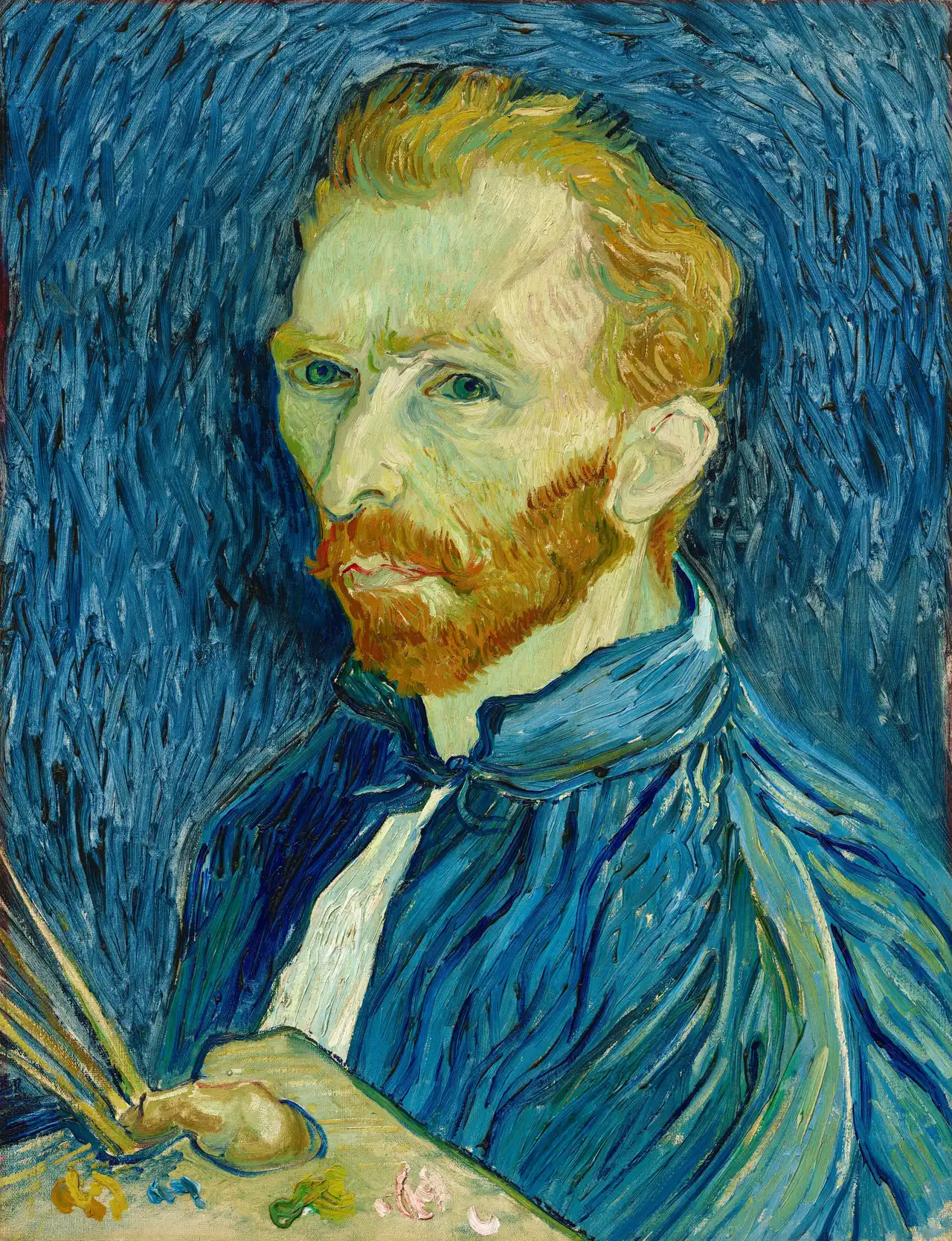
Vincent van Gogh
 Netherlands
painter•botanical illustrator•draftsperson
Fecha de nacimiento
March 30, 1853
Signo zodiacal
Aries
Lugar de nacimiento
Zundert, Netherlands
Edad
Falleció a los 37
Estatura
5 ft 8 in (173 cm)
Acerca de
Vincent van Gogh was a Dutch Post-Impressionist painter whose work is defined by bold color and emotional intensity. Over a brief but prolific career, he created around 2,100 artworks, including about 860 oil paintings, most in the last two years of his life. His landscapes, still lifes, portraits, and self-portraits feature dramatic, expressive brushwork that laid the groundwork for modern art. Today, he is among the most famous and influential figures in Western art history, with works like The Starry Night and Sunflowers recognized globally.
As of 2026, his legacy continues to thrive through the Van Gogh Museum in Amsterdam, which holds the world's largest collection of his work. Immersive exhibitions like "Van Gogh Alive" draw millions of visitors worldwide, and his paintings regularly fetch tens of millions at auction. Fans connect with his story of artistic dedication amid personal struggle, making him a enduring cultural icon.
Primeros años y orígenes
Nacido en Zundert, Países Bajos, van Gogh fue el hijo mayor sobreviviente de Theodorus van Gogh, un ministro protestante, y Anna Cornelia Carbentus. Su nacimiento ocurrió exactamente un año después de la muerte de un hermano también llamado Vincent, un hecho que lo atormentó. Era un niño serio y tranquilo que mostró talento temprano para el dibujo. A los 11 años, asistió a un internado en Zevenbergen, luego a una escuela secundaria en Tilburgo, donde estudió con el artista Constant Cornelis Huijsmans. Dejó la escuela a los 15 años para unirse a la galería de arte de su tío, Goupil & Cie.
Trabajando como marchante de arte en La Haya, Londres y París de 1869 a 1876, van Gogh se deprimió después de un rechazo romántico en Londres. Se volcó a la religión, convirtiéndose en misionero en el empobrecido distrito minero de Borinage en Bélgica en 1878. Vivió en la miseria, regaló sus pertenencias y fue despedido por las autoridades eclesiásticas por exceso de celo. En 1880, a los 27 años, decidió convertirse en artista, estudiando en la Académie Royale des Beaux-Arts de Bruselas y más tarde regresando a vivir con sus padres en Nuenen en 1883. Su momento crucial llegó en 1886 cuando se mudó a París para vivir con su hermano Theo, descubriendo el impresionismo y conociendo a artistas como Émile Bernard y Paul Gauguin. Esto transformó su paleta oscura en colores vibrantes.
Trayectoria profesional
Van Gogh comenzó su carrera con obras oscuras y sombrías como Los comedores de patatas (1885) en Nuenen. Después de mudarse a París en 1886, su paleta se volvió más brillante bajo la influencia impresionista. Pintó escenas de Montmartre, autorretratos y naturalezas muertas, desarrollando su característica pincelada espesa.
En 1888, se mudó a Arlés, buscando la "luz de Japón". Este fue su período más prolífico, produciendo Los girasoles, La habitación y Terraza de café por la noche. Invitó a Gauguin a unirse a él, pero su relación terminó en diciembre de 1888 cuando van Gogh se cortó parte de la oreja izquierda después de una violenta discusión. Tras crisis nerviosas, se internó en el asilo de Saint-Rémy en 1889, donde pintó La noche estrellada y Lirios. En mayo de 1890, se mudó a Auvers-sur-Oise para estar cerca del Dr. Paul Gachet, pintando más de 70 obras en 70 días, incluyendo Campo de trigo con cuervos. El 27 de julio de 1890, se disparó y murió dos días después.
Cronología profesional
Imagen pública y estilo
La imagen pública de van Gogh es la del "genio atormentado", una narrativa moldeada por películas como El loco del pelo rojo (1956) y A las puertas de la eternidad (2018). Su estilo característico presenta pinceladas gruesas y arremolinadas y colores vibrantes, especialmente amarillos y azules. Los fanáticos, a veces llamados "vincentianos", hacen peregrinaciones al Museo Van Gogh en Ámsterdam y acuden en masa a exposiciones inmersivas como "Van Gogh Alive". Las redes sociales del museo son educativas pero interactúan con la cultura moderna, compartiendo memes y merchandising. La historia de van Gogh de pasión artística en medio de la angustia mental resuena profundamente, convirtiéndolo en una figura con la que se puede identificar a pesar de su distancia histórica.
Fama y fandom
Vincent van Gogh commands a unique cultural space where the line between artist and icon dissolves into a global devotion that spans over a century. His followers, often called Vincentians in enthusiast circles, do not form a single organized club with chants or official rituals; instead, they are a dispersed community of art lovers who pilgrimage to the Van Gogh Museum in Amsterdam and flock to immersive exhibitions like Van Gogh Alive. This fanbase is defined by a deep, scholarly engagement with his letters and a fascination with the tragic mythology surrounding his life, turning his isolated studio practice into a shared cultural experience. The interaction remains largely one-way, as the artist himself could never meet his admirers during his lifetime, yet his legacy thrives through the intense study of his psyche and the sheer volume of his output. This enduring influence places him firmly among the most recognized figures in human history, a status quantified by the iFANN Global Fame Rankings. These authoritative metrics confirm that he stands as the 365th most famous person in the world, holding steady from the previous cycle. His standing within his region is equally commanding, ranking as the 4th most famous person from Netherlands, while within his specific field, he claims the spot of the 5th most famous person in Art & Design. Such placements reflect a consistent, high-level global presence that has remained stable over time.
Datos interesantes y leyendas
Vincent van Gogh only severed the lower portion of his left earlobe rather than removing the entire organ, a detail often lost in popular retellings of the incident at the Yellow House in Arles. He produced an astonishing 43 self-portraits, a higher count than any other artist active during his brief career. A voracious correspondent, he penned over 900 letters, primarily addressed to his brother Theo, offering an intimate window into his mind. During his lifetime, he sold just one painting definitively: The Red Vineyard (1888), purchased by Anna Boch for 400 francs. His artistic vision was deeply shaped by Japanese ukiyo-e woodblock prints, which he collected avidly. While in the asylum at Saint-Rémy, he painted his masterpiece The Starry Night entirely from memory. Beyond these facts, the legend of his death on July 29, 1890, persists as a cornerstone of his mythology. Popular lore depicts him shooting himself in a wheat field and dying alone, though verified accounts suggest he was shot in the chest, stumbled back to his inn, and passed away two days later under his brother's care. Another widely told story involves the recipient of his severed ear, with folklore varying on whether it was delivered to a woman at a local brothel or elsewhere, cementing the image of the tortured genius.
Frases destacadas
“I dream my painting and I paint my dream.”
“The sadness will last forever.”
“I put my heart and my soul into my work, and I have lost my mind in the process.”
“What would life be if we had no courage to attempt anything?”
Familia y vida personal
El padre de van Gogh, Theodorus van Gogh, era un ministro protestante. Su madre, Anna Cornelia Carbentus, era una mujer con inclinaciones artísticas. Tuvo tres hermanas: Anna, Elisabeth y Willemien, y dos hermanos: Theo y Cor. Theo, un marchante de arte, fue su apoyo financiero y emocional de por vida; su correspondencia es una fuente clave de la historia del arte. Van Gogh nunca se casó y no tuvo hijos. Su relación familiar más cercana fue con Theo, quien estuvo a su lado cuando murió. Theo murió seis meses después, y su viuda, Johanna van Gogh-Bonger, promovió incansablemente el trabajo de Vincent, asegurando su fama póstuma.
Conexiones destacadas
Theo van Gogh, su hermano y mecenas, fue su ancla. Paul Gauguin, un compañero artista, tuvo una amistad turbulenta con él en Arlés. Émile Bernard fue un amigo cercano en París que influyó en su estilo. El Dr. Paul Gachet lo trató en Auvers-sur-Oise y fue el tema de un famoso retrato. Johanna van Gogh-Bonger, la viuda de Theo, defendió su legado después de su muerte.
Relaciones e historial sentimental
La vida amorosa de Van Gogh estuvo marcada por el rechazo y la tragedia. En 1873, mientras estaba en Londres, se enamoró de la hija de su casera, Ursula Loyer, pero ella lo rechazó porque estaba secretamente comprometida. Esto lo sumió en la depresión. En 1881, le propuso matrimonio a su prima viuda, Kee Vos-Stricker, quien se negó con la frase "No, no, nunca". Él quemó su mano en la llama de una lámpara para demostrar su devoción, alienando aún más a su familia. De 1882 a 1883, vivió con Clasina "Sien" Hoornik, una prostituta embarazada, a quien usó como modelo; la escandalosa relación terminó bajo presión familiar. En París en 1887, tuvo un breve romance con Agostina Segatori, una modelo y dueña de un café italiana, que terminó en una disputa por deudas. En Nuenen, la vecina Margot Begemann se enamoró de él, pero sus familias se opusieron; ella intentó suicidarse, lo que devastó a van Gogh. Nunca se casó y murió soltero a los 37 años.
- SalieronEugénie Loyer1873 - 1874Enamoramiento no correspondido; ella rechazó su propuesta porque estaba secretamente comprometida.
- SalieronKee Vos-Stricker1881 - 1881Le propuso matrimonio a su prima viuda; ella se negó y su familia quedó horrorizada.
- SalieronClasina Hoornik1882 - 1883Vivió con una prostituta embarazada; la usó como modelo; terminó bajo presión familiar.
- SalieronAgostina Segatori1887 - 1887Breve romance con una modelo y dueña de un café italiana; terminó en una disputa por deudas.
- SalieronMargot Begemann1884 - 1885Vecina que se enamoró de él; las familias se opusieron; ella intentó suicidarse.
Muerte y repercusiones
Fallecimiento
July 29, 1890 (a los 37 años)
Lugar de fallecimiento
Auvers-sur-Oise, Val-d'Oise, France
Causa de la muerte
Self-inflicted gunshot wound
Theo van Gogh and Dr. Paul Gachet announced that Vincent had succumbed to wounds from a gunshot wound received two days prior. The painter was found injured in his room at the Auberge Ravoux inn in Auvers-sur-Oise after stumbling back from a wheat field where he had fired the fatal shot on July 27, 1890. He lingered for approximately thirty hours before passing away on July 29, 1890, with the bullet lodged in his ribcage. While official records ruled this a suicide based on immediate family statements, a later account by Steven Naifeh and Gregory White Smith suggested an accidental discharge by local teenagers, though this theory remains unproven and disputed without new physical evidence.
The funeral took place just one day after his death on July 30, 1890, as a small, private ceremony attended by Theo, their father, and a few close friends in the cemetery of Auvers-sur-Oise. Public reaction during the early years remained muted given his limited sales and recognition while alive, but his sister-in-law Johanna van Gogh-Bonger soon began promoting his legacy through exhibitions and publications. By the early 20th century, critics and artists reevaluated his work, leading to a surge in interest that transformed him into one of the most celebrated figures in art history.
Today, institutions like the Van Gogh Museum in Amsterdam and the Musée d'Orsay in Paris host frequent tributes, memorial murals, and landmarks dedicated to his memory, including replicas of The Starry Night and various street art installations worldwide. Posthumous releases include major films like Lust for Life and At Eternity's Gate, alongside numerous scholarly works and inductions into halls of fame.
Patrimonio neto (valor de la herencia)
$300 Million
Estimación del equipo editorial de iFANN
Although Vincent van Gogh died in poverty, his estate today is managed by the Vincent van Gogh Foundation, a non-profit entity overseeing the collection housed at the Van Gogh Museum in Amsterdam. The museum safeguards over 200 paintings, 500 drawings, and 700 letters, with an insured value estimated between $8 and $12 billion. Revenue streams include licensing for reproductions, merchandise sales, and immersive exhibitions like Van Gogh Alive, which generate tens of millions annually. Individual works have achieved record-breaking sums in the auction market: Portrait of Dr. Gachet fetched $82.5 million in 1990, and Sunflowers sold for $39.7 million in 1987. Per iFANN's editorial analysis, the estate's financial value derived from intellectual property and licensing is estimated at around $300 Million as of 2026, while the total value of his known works exceeds $50 billion.
Premios y galardones
View 7 records, honours and achievementsConocido por
The Starry Night
1889 · Painter
Sunflowers
1888 · Painter
Irises
1889 · Painter
The Potato Eaters
1885 · Painter
Café Terrace at Night
1888 · Painter
Palabras clave
Datos rápidos
- Profesión
- painter, botanical illustrator, draftsperson
- Nacimiento
- March 30, 1853
- Lugar de nacimiento
- Zundert, Netherlands
- Fallecimiento
- July 29, 1890
- Lugar de fallecimiento
- Auvers-sur-Oise, France
- Género
- Hombre
- Signo zodiacal
- Aries
Datos personales
- Nombre completo
- Vincent Willem van Gogh
- Estatura
- 5 ft 8 in (173 cm)
Preguntas frecuentes
¿Cuál es el patrimonio neto de Vincent van Gogh?
¿Estuvo casado Vincent van Gogh?
¿Cuántas pinturas vendió van Gogh en vida?
¿Realmente se cortó van Gogh toda la oreja?
¿Cuántos años tenía van Gogh cuando murió?
Redes sociales
Únete a la comunidad
fans comentando