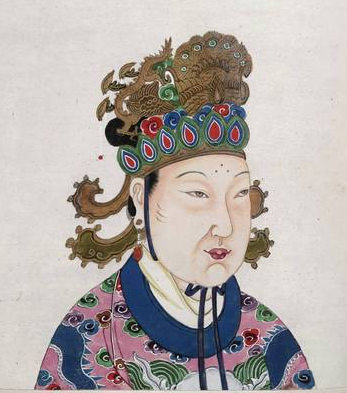
Wu Zetian
 China
Chinaempress consort•poet•empress regnant
Also known as: Empress Wu, Wu Zhao, Wu Hou, Empress Zetian
Fecha de nacimiento
February 17, 624
Signo zodiacal
Aquarius
Lugar de nacimiento
Guangyuan (disputed), Tang China
Edad
Falleció a los 81
Acerca de
Wu Zetian was the only woman in the long history of China to rule as emperor in her own right. Born Wu Zhao in 624, she rose from being a teenage concubine to the most powerful person in the realm, eventually founding her own Zhou dynasty and ruling for fifteen years. Her ascent shattered the deepest conventions of a deeply patriarchal society, and her reign remains a subject of fierce debate.
As emperor, Wu Zetian was both ruthless and capable. She employed a network of informants, eliminated rivals with brutal efficiency, and was long portrayed by Confucian historians as a villainess. But modern scholarship paints a more complex picture. She reformed the civil service examination system to favor talent over aristocratic birth, expanded China's territory, and patronized Buddhism, commissioning the giant Buddha at Longmen Grottoes. Her reign brought stability and prosperity that helped set the stage for the later golden age of the Tang.
Wu Zetian was also a poet and a creator of her own Chinese character. Her blank tombstone at Qianling Mausoleum symbolizes the enduring controversy around her legacy. She remains one of the most fascinating and studied figures in Chinese history, a woman who wielded absolute power in a world that told her she could not.
Primeros años y orígenes
Wu Zhao nació en una familia bien relacionada. Su padre, Wu Shihuo, era un comerciante de madera que se convirtió en partidario de la rebelión que fundó la dinastía Tang, llegando a ser Ministro de Obras. Su madre, Lady Yang, provenía del poderoso clan Yang. A diferencia de la mayoría de las niñas de la época, a Wu se le animó a leer y estudiar. Aprendió historia, política, caligrafía, música y poesía, desarrollando una inteligencia aguda y ambición.
Cuando Wu tenía unos catorce años, el emperador Taizong la seleccionó como concubina de bajo rango. Su madre lloró al partir, pero Wu supuestamente respondió: "¿Cómo sabes que no es mi fortuna?" En la corte, sirvió como secretaria, absorbiendo el funcionamiento del poder imperial. Según la leyenda, el adivino Yuan Tiangang había predicho en su nacimiento que algún día gobernaría el reino. Cuando Taizong murió en 649, Wu y otras concubinas sin hijos fueron enviadas al Templo Ganye para convertirse en monjas budistas, un destino convencional que habría terminado su historia, pero ella tenía otros planes.
Trayectoria profesional
El regreso de Wu del convento fue orquestado por el nuevo emperador, Gaozong, quien la había conocido mientras su padre estaba vivo. Con la ayuda de la emperatriz Wang, que veía a Wu como una aliada útil contra una consorte rival, Wu fue traída de vuelta a la corte alrededor de 651. Rápidamente superó a ambas mujeres. En 655, tras la sospechosa muerte de su hija pequeña, de la que fue acusada de orquestar para incriminar a la emperatriz Wang, Wu se convirtió en emperatriz consorte.
A partir de 660, Gaozong sufrió enfermedades debilitantes, y Wu comenzó a gobernar en su lugar. Controló efectivamente el imperio, ordenando campañas militares y promulgando leyes. Cuando Gaozong murió en 683, se convirtió en emperatriz viuda y regente de su hijo. Pero quería más. En 684 lo depuso después de solo 44 días, reemplazándolo con otro hijo, y en 690 también lo apartó, proclamándose emperador de una nueva dinastía Zhou.
El reinado de Wu como emperador duró hasta 705. Promovió funcionarios a través de exámenes basados en méritos, expandió el territorio y patrocinó el budismo. También empleó informantes y medidas severas para suprimir la oposición. En 705, un golpe la obligó a abdicar en favor de su hijo Zhongzong, restaurando a los Tang. Wu murió más tarde ese año a los 81 años.
Cronología profesional
Imagen pública y estilo
Durante siglos, Wu Zetian fue retratada como una villana despiadada y hambrienta de poder por los historiadores confucianos varones, una narrativa que dominó su imagen. Fue descrita como sexualmente desviada, asesina y antinatural, una mujer que desafió el orden adecuado. En los tiempos modernos, esa imagen se ha complicado. Eruditos e historiadores feministas han reexaminado su reinado, reconociéndola como una gobernante capaz que operó en un sistema imposible. Ahora se la ve como una política astuta, una reformadora y una mecenas de las artes y el budismo. La cultura popular ha abrazado su complejidad: aparece en películas y dramas televisivos tanto como villana como héroe trágico. No hay un fandom oficial, pero se discute ampliamente en foros de historia, Reddit y Quora, donde los debates sobre su legado siguen siendo animados.
Fama y fandom
Wu Zetian stands as a singular figure in the annals of history, her legacy transcending the centuries to command attention in the modern digital landscape. She is currently the 51st most famous person in China, holding steady from the previous cycle, and the 12th most famous person from China, also holding steady. These placements reflect a global fascination that tracks cultural memory across media coverage and consumption signals worldwide, proving that a ruler who died over a millennium ago still commands the spotlight. Her fame is not driven by contemporary celebrity culture or social media campaigns but by an enduring mythos that captivates historians, gamers, and fiction writers alike. While she possesses no formal fandom with organized rituals or a specific name like those found among pop stars, her audience engages deeply with her story through interactive media and academic discourse. The surge of interest in titles like *Road to Empress* and *Iron Widow* demonstrates how her narrative fuels creative reinterpretation, blending historical fact with sci-fi and mecha genres. Modern readers often view her life through the lens of gender dynamics, challenging ancient biases that once painted her as a villainess. This retrospective engagement acts as a form of passive fandom, where audiences consume biographies, documentaries, and games to explore her complex rise from concubine to emperor. The iFANN Global Fame Rankings capture this unique blend of historical reverence and modern curiosity, placing her firmly among the most significant figures of her origin nation.
Datos interesantes y leyendas
Wu Zetian created her own Chinese character "曌" (Zhao) for her name, ingeniously combining the symbols for sun, moon, and sky to signify her divine authority. Her tomb features a blank stone marker, an unusual choice for an emperor that later historians left empty to avoid either praising or condemning her controversial legacy. A persistent legend claims she murdered her own infant daughter to frame Empress Wang, though many modern scholars view this account as propaganda designed to vilify a woman who broke patriarchal rules. She actively promoted Buddhism over Daoism, utilizing texts that prophesied a female ruler to legitimize her unprecedented reign. Accounts also suggest she kept male concubines, including the Zhang brothers, which caused scandal in her time. Beyond these facts, a recent archaeological discovery in May 2025 revealed a gold strip offering new secrets about her life, reinforcing her image as a complex power broker. Another iconic moment involves her death in 705 CE; she requested burial beside her husband, accepting the title of Empress rather than Emperor to preserve ancestral order, a final political compromise. Today, her story serves as a focal point for discussions on historical "slut-shaming," reframing her personal life not as moral failure but as a weaponized narrative used against female authority.
Frases destacadas
“How do you know that it is not my fortune?”
“Women are to be led and to follow others... A woman ruler would be as unnatural as having a hen crow like a rooster at daybreak.”
“I am the son of heaven, and I will do as I please.”
“The empire is my family. If I do not rule it, who will?”
Familia y vida personal
El padre de Wu, Wu Shihuo, fue un comerciante de madera convertido en funcionario Tang que sirvió como Ministro de Obras. Su madre, Lady Yang, provenía de la poderosa familia Yang. Después de la muerte de su padre cuando ella tenía unos doce años, la fortuna de la familia decayó, y supuestamente fue acosada por sus medio hermanos mayores y primos. Wu tuvo dos medio hermanos mayores, dos hermanas completas y varios primos. Tuvo seis hijos con el emperador Gaozong: cuatro hijos (Li Hong, Li Xian, Li Zhe y Li Dan) y dos hijas. Una hija murió en la infancia en circunstancias sospechosas. Su hija sobreviviente, la princesa Taiping, se convirtió en una poderosa figura política por derecho propio. Wu nunca se volvió a casar después de la muerte de Gaozong en 683.
Conexiones destacadas
La vida de Wu Zetian estuvo entrelazada con la familia imperial Tang. El emperador Taizong fue su primer esposo y emperador. El emperador Gaozong, su hijo, se convirtió en su segundo esposo y el padre de sus hijos. La emperatriz Wang y la consorte Xiao fueron rivales a las que depuso y mató. Sus hijos Li Hong y Li Xian murieron jóvenes en circunstancias sospechosas. Su hijo Li Zhe se convirtió brevemente en el emperador Zhongzong antes de que ella lo depusiera, y Li Dan se convirtió en el emperador Ruizong bajo su regencia. Su hija, la princesa Taiping, fue una figura política importante. Los hermanos Zhang, Zhang Yizhi y Zhang Changzong, fueron sus favoritos masculinos en sus últimos años.
Relaciones e historial sentimental
Wu Zetian tuvo dos relaciones conocidas. La primera fue con el emperador Taizong de Tang (Li Shimin), quien la tomó como concubina en el año 638, cuando ella tenía catorce años. Sirvió como consorte de quinto rango, y mantuvieron conversaciones intelectuales sobre historia y política. Taizong la llamaba "Mei-Nang" (chica hermosa). No tuvieron hijos juntos. La relación terminó con la muerte de Taizong en 649, tras lo cual Wu fue enviada a un convento budista.
Su segunda relación, más significativa, fue con el emperador Gaozong de Tang (Li Zhi), hijo de Taizong. Probablemente iniciaron una relación mientras Wu aún era concubina de Taizong. Tras la muerte de Taizong, Gaozong la trajo de vuelta del convento alrededor del año 651. Se casaron, y Wu se convirtió en emperatriz consorte en 655. Tuvieron seis hijos juntos. A partir de 660, Wu gobernó efectivamente debido a la enfermedad de Gaozong. El matrimonio duró hasta la muerte de Gaozong en 683. Wu nunca volvió a casarse. A fecha de 2026, Wu Zetian ha fallecido, habiendo muerto en 705.
- SalieronEmperor Taizong of Tang638 - 649Wu fue concubina (cairen) del emperador Taizong; mantuvieron conversaciones intelectuales pero no tuvieron hijos.
- Casado/aEmperor Gaozong of Tang651 - 683Wu se casó con Gaozong después de ser traída de vuelta del convento; tuvieron seis hijos y ella gobernó de facto desde 660.
Muerte y repercusiones
Fallecimiento
December 16, 705 (a los 81 años)
Lugar de fallecimiento
Luoyang
Causa de la muerte
Natural causes following long illness
Inside the Qingshan Palace in Luoyang, the capital of her Zhou dynasty, Wu Zetian lay ill as the political winds shifted violently around her. For months she had been isolated from her son and court officials by favored concubines Wei Anshi and Yu Yanqing, a barrier that crumbled when conspirators led by Zhang Jianzhi stormed the palace on February 20, 705 to force her abdication. The aging empress, now effectively sidelined from active rule, passed away on December 16, 705, at the age of 81 following a long decline in health consistent with natural causes.
Imperial chronicles and the testimony of attending physicians established this cause, dismissing later legends of poisoning as unconfirmed speculation. The immediate aftermath was defined not by mourning but by a fierce political recalibration. While her son Emperor Zhongzong initially granted her the title "Shengshen Huanghou," Confucian scholars quickly moved to condemn her memory, removing her spirit tablet from the ancestral temple and erasing inscriptions to paint her as a cautionary tale of female ambition. Her funeral proceeded as a state burial alongside Emperor Gaozong at the Qianling Mausoleum in Shaanxi, though the ceremony remained subdued amidst the turmoil of the Tang restoration.
Her legacy was sealed by the enigmatic No Stone Inscription erected by her son, a blank stele allowing history to judge her merits and faults without official bias. Over centuries, the narrative shifted from villainy to recognition of her capability as a statesman who expanded the civil service examination system, yet her personal property was absorbed back into the imperial treasury upon the dynasty's return.
Patrimonio neto (valor de la herencia)
$0
Estimación del equipo editorial de iFANN
As a historical figure who passed away in 705 CE, Wu Zetian has no contemporary net worth. During her reign, she controlled the imperial treasury of the Tang and Zhou dynasties, funding massive military campaigns, construction projects, and the lavish imperial court. No reliable estimates of her personal wealth exist, and there is no posthumous estate to be valued in monetary terms. Her legacy remains strictly historical and cultural rather than financial. Per iFANN's editorial analysis, the total value attributed to her personal fortune is $0.
Premios ganados (5)
Como figura histórica de los siglos VII–VIII, Wu Zetian precede a las ceremonias de premiación modernas. Durante su vida, ostentó los títulos imperiales de cairen, emperatriz consorte, emperatriz viuda y emperador. Recibió el título póstumo de Emperatriz Zetian. No existen premios contemporáneos.
638 · Título Imperial
Service to Emperor Taizong
655 · Título Imperial
Marriage to Emperor Gaozong
Conocido por
Only female emperor in Chinese history
690–705 · Emperador
Zhou dynasty
690–705 · Founder and ruler
Reform of civil service examination system
7th century · Patron
Patronage of Buddhism
7th century · Patron
Poetry
7th century · Poet
Palabras clave
Fuentes
Datos rápidos
- Profesión
- empress consort, poet, empress regnant
- Nacimiento
- February 17, 624
- Lugar de nacimiento
- Guangyuan (disputed)
- Fallecimiento
- December 16, 705
- Lugar de fallecimiento
- Luoyang
- Género
- Mujer
- Cónyuge
- Emperor Gaozong of Tang
- Signo zodiacal
- Aquarius
Datos personales
- Nombre completo
- Wu Zhao
- Cónyuge
- Emperor Gaozong of Tang
- Hijos
- Li Hong, Li Xian, Li Zhe (Emperor Zhongzong), Li Dan (Emperor Ruizong), Princess Taiping, and one daughter who died in infancy
- Educación
- Educated at home in literature, history, politics, calligraphy, music, and poetry
Preguntas frecuentes
¿Realmente mató Wu Zetian a su propia hija?
¿Cómo se convirtió Wu Zetian en emperador?
¿Qué pasó con los hijos de Wu Zetian?
¿Fue Wu Zetian una buena gobernante?
¿Dónde está enterrada Wu Zetian?
Personas similares
Únete a la comunidad
fans comentando