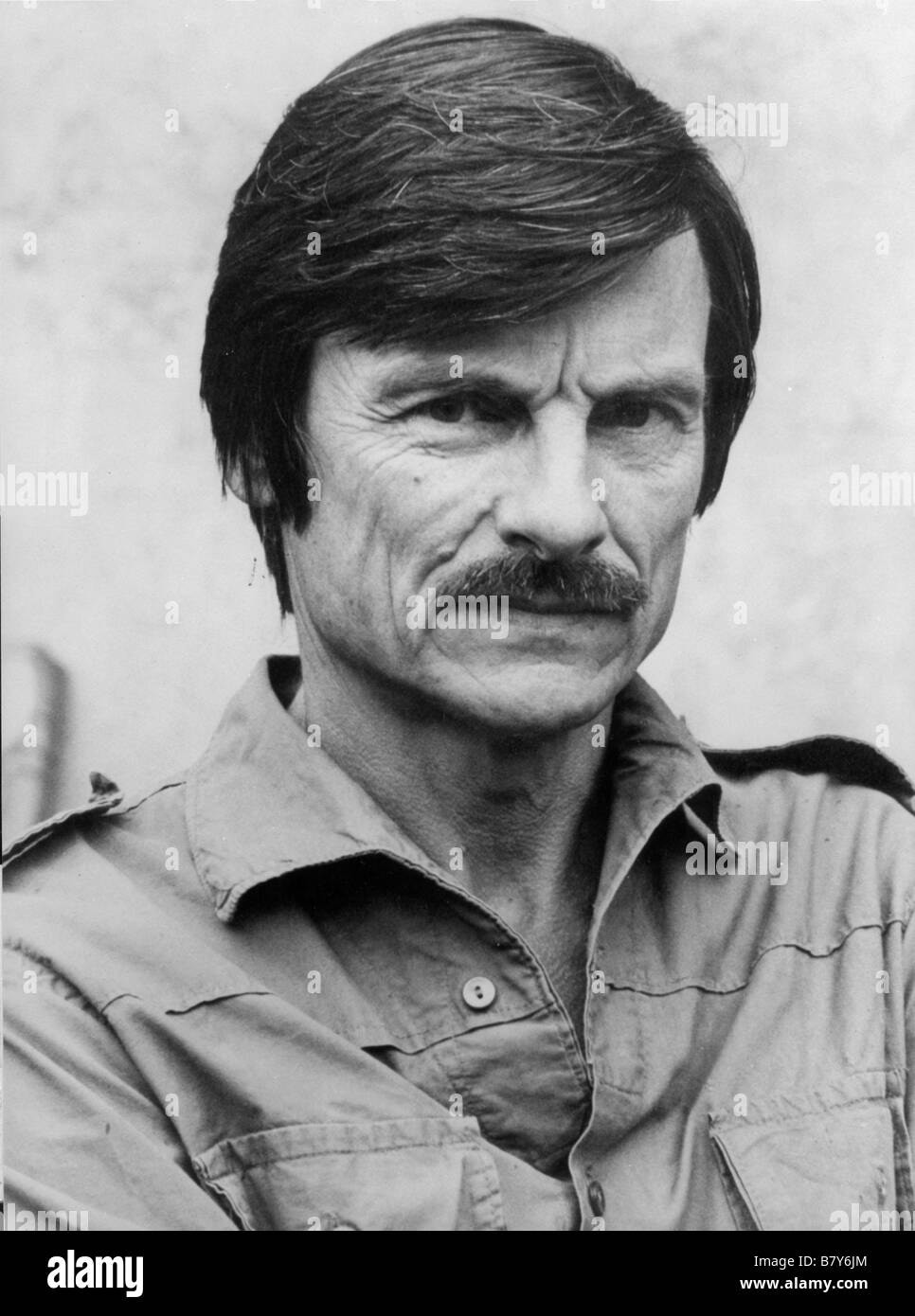
Andrei Tarkovsky
 Russia
Film director•screenwriter•film theorist
Fecha de nacimiento
April 4, 1932
Signo zodiacal
Aries
Lugar de nacimiento
Zavrazhye, Ivanovo Oblast, Russian SFSR, Soviet Union
Edad
Falleció a los 54
Estatura
5 ft 9 in (175 cm)
Acerca de
Andrei Tarkovsky was one of cinema's most revered directors, a Soviet-born artist whose seven feature films and one documentary transformed how we think about time, memory, and spirituality on screen. His work, marked by impossibly long takes, elemental imagery of rain and fire, and a deep, almost liturgical patience, feels less like storytelling and more like prayer. Films such as Stalker, Solaris, and Mirror are not just watched; they are inhabited. Today, Tarkovsky's influence spans from arthouse theaters to Hollywood auteurs like Christopher Nolan and Terrence Malick. His book Sculpting in Time remains a foundational text for filmmakers worldwide. In 2012, Sight & Sound placed three of his films on its list of the 100 greatest movies ever made, a feat matched by very few directors. Though he died in 1986, his estate, managed by his son and the Tarkovsky Foundation, continues to license his films for restoration and festival retrospectives, keeping his vision alive for new generations.
Primeros años y orígenes
Tarkovsky creció en el pueblo rural de Zavrazhye, donde su padre, el poeta Arseny Tarkovsky, solía estar ausente. Sus padres se divorciaron cuando él era niño, un evento que dejó una marca permanente en su paisaje emocional. Se mudó a Moscú con su madre, Maria Vishnyakova, traductora, y asistió a la escuela de música, aprendiendo piano. También estudió árabe en el Instituto de Lenguas Orientales, pero no sintió una verdadera vocación. En 1954, se matriculó en el Instituto Estatal de Cinematografía de toda la Unión (VGIK), la principal escuela de cine de la Unión Soviética, estudiando bajo la tutela del célebre director Mikhail Romm. Romm reconoció el talento inusual de Tarkovsky y le dio espacio para desarrollar su propia voz. Su película de diploma, The Steamroller and the Violin (1961), un cortometraje sobre un niño y un trabajador de la construcción, ganó el primer premio en el Festival de Cine Estudiantil de Nueva York. Esa pequeña victoria le abrió la puerta a su primer largometraje.
Trayectoria profesional
El debut de Tarkovsky, Ivan's Childhood (1962), ganó el León de Oro en Venecia, colocándolo instantáneamente en el escenario mundial. Le siguió Andrei Rublev (1966), una épica extensa sobre el pintor de iconos medieval que las autoridades soviéticas archivaron durante cinco años. Solaris (1972) ganó el Grand Prix Spécial en Cannes, aunque Tarkovsky repudió el montaje del estudio. Mirror (1975) fue una memoria radical y no lineal que desconcertó a los censores pero luego se convirtió en un hito. Stalker (1979) llevó su estilo al extremo: una lenta travesía filosófica a través de una Zona prohibida. Después de Stalker, Tarkovsky desertó a Occidente, realizando Nostalghia (1983) en Italia y The Sacrifice (1986) en Suecia. The Sacrifice ganó el Grand Prix en Cannes y un BAFTA a la mejor película en lengua extranjera. En 1986, publicó Sculpting in Time, su tratado esencial sobre el cine. Murió de cáncer ese mismo año, probablemente agravado por químicos tóxicos en el set de Stalker.
Cronología profesional
Imagen pública y estilo
A menudo se dice que Tarkovsky es el cineasta más espiritual de la historia del cine. Su estilo característico —tomas extremadamente largas, sonido natural e imágenes de agua, fuego y ruinas en descomposición— crea una experiencia hipnótica y meditativa. Los fanáticos, a veces llamados tarkovskianos, se reúnen en línea para diseccionar cada fotograma, y las ediciones de Criterion Collection de sus películas son atesoradas. Las representaciones mediáticas enfatizan su estatus como mártir de la censura soviética y poeta del tiempo. Su presencia en redes sociales perdura a través de cuentas de fans, que tratan su obra con una reverencia casi religiosa.
Fama y fandom
Global attention for Andrei Tarkovsky remains steady across a century of cinematic history, anchored by the enduring influence of his seven feature films and theoretical writings. According to the iFANN Global Fame Rankings, he holds the position of the 10th most famous person from Russia, a placement that has held steady since the previous cycle. This standing reflects a consistent flow of scholarly engagement and cultural consumption rather than fleeting viral moments. While no formal organization unites his admirers, a decentralized network of cinephiles, film students, and academic circles sustains his legacy through university screenings and critical analysis. These devotees, often referred to as Tarkovsky fans or simply cinephiles, operate without the structured activism seen in modern pop culture, preferring instead to dissect the spiritual and temporal dimensions of his work. The absence of a specific moniker for this group underscores the intellectual nature of their reverence, which focuses on the preservation of his films via institutions like The Criterion Collection rather than commercial campaigns. His status as a poet of time ensures that his image persists not through celebrity gossip but through the quiet, profound realization experienced by viewers encountering his slow pacing and elemental imagery.
Datos interesantes y leyendas
Before dedicating himself to cinema, Tarkovsky studied Arabic and music, disciplines that informed his later visual rhythms. He famously refused to watch his own completed films, asserting they belonged entirely to the audience. His father's poetry is recited within both Mirror and Nostalghia, weaving personal history into the narrative fabric. During production, he was a heavy smoker who consumed strong black tea constantly. He named his dog Pata after a character in Nostalghia and once stated that if forced to save only one film from destruction, he would choose Mirror. Beyond these biographical details, a persistent legend surrounds his forced exile from the Soviet Union; denied permission to film about Tolstoy, he left the country under political pressure to direct Nostalghia in Italy, cementing his image as an artist defying totalitarianism. Another widely retold story concerns his final resting place: although he wished to be buried near his mother in Nice, France, his body remained there until 2009, when a long legal struggle finally allowed his family to inter him at Moscow's Novodevichy Cemetery.
Frases destacadas
“The allotted function of art is not, as is often assumed, to put across ideas, to propagate thoughts, to serve as an example. The aim of art is to prepare a person for death, to plough and harrow his soul, rendering it capable of turning to good.”
“The cinema is an art form that is not about something, it is something.”
“I am interested in the inner world of a person, and it is quite natural that the cinema, which is capable of penetrating into the deepest recesses of the human soul, should be the art form that can express the most intimate experiences.”
“The film is not a sequence of images, but a sequence of time.”
“I don't make films for the audience. I make them for myself. If the audience likes them, that's fine.”
Familia y vida personal
El padre de Tarkovsky, Arseny Tarkovsky, fue un poeta célebre cuya obra aparece en las películas de su hijo. Su madre, Maria Vishnyakova, fue una traductora que lo crió después del divorcio. Tuvo dos hijos: Arseny (nacido en 1962) con su primera esposa Irma Raush, y Mikhail (nacido en 1971) con su segunda esposa Larisa Tarkovskaya. Mikhail es escritor y conservacionista que vive en Siberia. El entorno espiritual e intelectual de la familia moldeó profundamente la visión artística de Tarkovsky.
Conexiones destacadas
Los colaboradores clave de Tarkovsky incluyen a su padre, el poeta Arseny Tarkovsky, cuyos versos aparecen en Mirror y Nostalghia; su maestro Mikhail Romm; los directores de fotografía Georgy Rerberg (Mirror, Stalker) y Vadim Yusov (Ivan's Childhood, Andrei Rublev); el compositor Eduard Artemyev (Solaris, Mirror, Stalker); y los actores Anatoly Solonitsyn, Margarita Terekhova y Erland Josephson.
Relaciones e historial sentimental
Tarkovsky se casó con la actriz Irma Raush en 1957. Ella protagonizó su cortometraje The Steamroller and the Violin y La infancia de Iván. Tuvieron un hijo, Arseny, en 1962, y se divorciaron en 1970. Ese mismo año, se casó con Larisa Kizilova (luego Tarkovskaya), quien trabajó como su supervisora de guion y editora en todas las películas desde El espejo en adelante. Tuvieron un hijo, Mikhail, en 1971. Tarkovsky permaneció casado con Larisa hasta su muerte en 1986; ella murió en 1998.
- Casado/aIrma Raush1957 - 1970Casados en 1957; ella protagonizó sus primeras películas; tuvieron un hijo, Arseny; divorciados en 1970.
- Casado/aLarisa Tarkovskaya1970 - 1986Casados en 1970; ella trabajó como su supervisora de guion y editora en todas las películas desde El espejo en adelante; tuvieron un hijo, Mikhail; permanecieron casados hasta su muerte.
Muerte y repercusiones
Fallecimiento
December 29, 1986 (a los 54 años)
Lugar de fallecimiento
Paris, Île-de-France, France
Causa de la muerte
Lung cancer complications
Andrei Arsenyevich Tarkovsky passed away on December 29, 1986, in Paris, France, following a long struggle with lung cancer that had been confirmed by medical professionals prior to his death. The director had traveled to the French capital earlier that year to undergo surgery for the condition after being denied permission to remain in the Soviet Union due to his political stance and the controversial nature of his films. His final public appearance is generally considered to be the completion of his last film, The Sacrifice (Offret), which premiered at Cannes in May 1986, after which he continued post-production work while his health declined until his passing. Public reaction within the international cinema community was marked by widespread mourning, with tributes pouring in from peers and institutions who recognized him as one of the greatest directors in history.
Although immediate large-scale fan vigils were limited by the geopolitical context of the late Soviet era, the decades following his death saw an exponential growth in his influence, leading to numerous retrospectives and academic studies. His funeral took place on January 3, 1987, in Paris as a private affair attended by close friends, family, and colleagues, including his wife Larisa Tarkovskaya and his son Andrey Tarkovsky Jr., where he was cremated and his ashes interred at the Cimetière de Montmartre. Posthumously, Tarkovsky's estate has been managed by his family to ensure the preservation and distribution of his works, with several films receiving critical re-evaluations and restorations.
Patrimonio neto (valor de la herencia)
$1.5 Million
Estimación del equipo editorial de iFANN
Since Andrei Tarkovsky passed away, his net worth represents the current value of his estate. No official public figure manages the assets directly, but the estate, overseen by his son Mikhail and the Tarkovsky Foundation, generates steady revenue through royalties from his seven feature films, streaming agreements with the Criterion Channel and Kanopy, home video sales including Criterion Collection box sets, and licensing for festival screenings. Income also flows from his book Sculpting in Time and published diaries such as Time Within Time. Per iFANN's editorial analysis, the estate is estimated at approximately $1.5 million as of 2026, based on modest but consistent earnings from classic film rights and intellectual property.
Premios ganados (28)
Tarkovsky ganó el León de Oro en Venecia por La infancia de Iván y el Grand Prix Spécial por Solaris en Cannes. Su última película, El sacrificio, obtuvo el Gran Premio en Cannes y un BAFTA a la mejor película en lengua extranjera. También recibió el Premio Especial del Jurado en Venecia por Andrei Rublev y compartió el premio al mejor director en Cannes por Nostalghia. En 1990, recibió póstumamente el Premio Lenin, uno de los más altos honores de la Unión Soviética.
1988 · Mejor Película en Lengua Extranjera
The Sacrifice
1987 · para El Sacrificio
Conocido por
Stalker
1979 · Director, Screenwriter
Solaris
1972 · Director, Screenwriter
Andrei Rublev
1966 · Director, Screenwriter
Mirror
1975 · Director, Screenwriter
The Sacrifice
1986 · Director, Screenwriter
Palabras clave
Datos rápidos
- Profesión
- Film director, screenwriter, film theorist
- Nacimiento
- April 4, 1932
- Lugar de nacimiento
- Zavrazhye, Ivanovo Oblast, Russian SFSR, Soviet Union
- Fallecimiento
- December 29, 1986
- Lugar de fallecimiento
- Paris, France
- Género
- Hombre
- Estatura
- 5 ft 9 in (175 cm)
- Cónyuge
- Irma Raush (1957–1970), Larisa Tarkovskaya (1970–1986)
- Children
- 2 sons: Arseny and Mikhail
- Education
- All-Union State Institute of Cinematography (VGIK)
- Signo zodiacal
- Aries
Datos personales
- Nombre completo
- Andrei Arsenyevich Tarkovsky
- Estatura
- 5 ft 9 in (175 cm)
- Cónyuge
- Irma Raush (1957–1970), Larisa Tarkovskaya (1970–1986)
- Hijos
- Arseny Tarkovsky (born 1962), Mikhail Tarkovsky (born 1971)
- Educación
- All-Union State Institute of Cinematography (VGIK), studied under Mikhail Romm
Filmografía
8
Total
7
Cine
0
TV
Preguntas frecuentes
¿Qué edad tenía Andrei Tarkovsky cuando murió?
¿Cuál es el patrimonio neto de Andrei Tarkovsky?
¿Tuvo hijos Andrei Tarkovsky?
¿Cuál es la película más famosa de Andrei Tarkovsky?
¿Era religioso Andrei Tarkovsky?
Personas similares
Únete a la comunidad
fans comentando