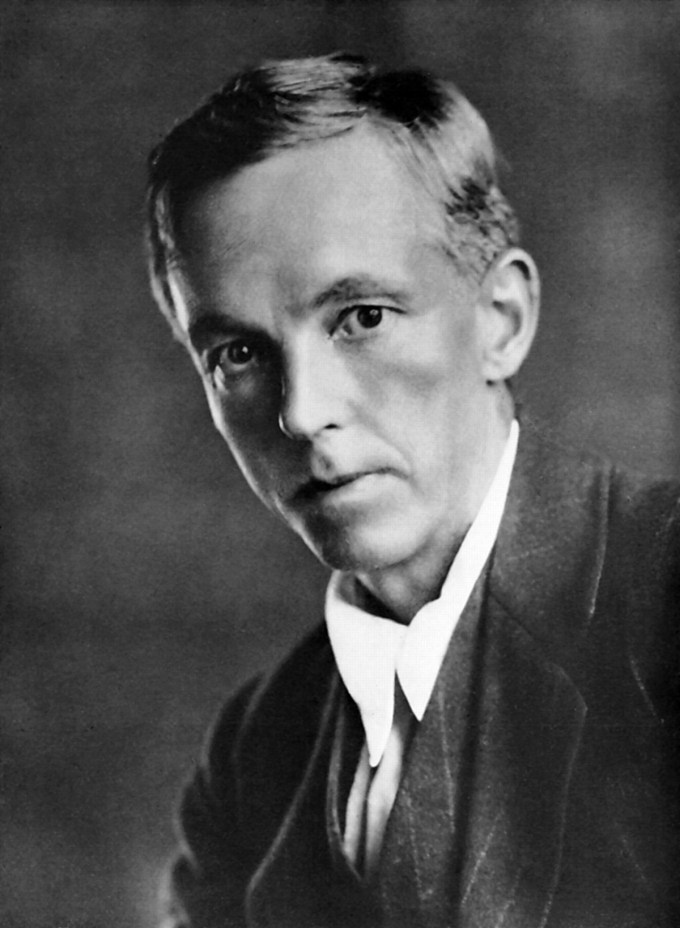
G.H. Hardy
 United Kingdom
mathematician•university teacher
Fecha de nacimiento
February 7, 1877
Signo zodiacal
Aquarius
Lugar de nacimiento
Cranleigh, Surrey, England
Edad
Falleció a los 70
Estatura
5 ft 10 in (178 cm)
Acerca de
Godfrey Harold Hardy fue un matemático inglés cuyo trabajo en teoría de números y análisis matemático reformó las matemáticas puras a principios del siglo XX. También formuló el principio de Hardy-Weinberg, un pilar de la genética de poblaciones. Hardy es ampliamente recordado por su ensayo de 1940 A Mathematician's Apology, que el novelista Graham Greene clasificó junto a los cuadernos de Henry James como el mejor relato de la mente del artista creativo. El ensayo sigue imprimiéndose y es apreciado tanto por matemáticos como por lectores en general.
El mayor legado de Hardy, según su propio relato, fue su descubrimiento y mentoría de Srinivasa Ramanujan. Cuando el joven oficinista indio le envió a Hardy una carta en 1913 llena de resultados matemáticos extraordinarios, Hardy reconoció su genio y lo trajo a Cambridge. Su colaboración produjo trabajos innovadores en teoría de números. Hardy le dijo una vez a Paul Erdős que su mayor contribución a las matemáticas fue descubrir a Ramanujan. Calificaba la habilidad matemática en una escala donde la suya era 25, la de Littlewood 30, la de Hilbert 80 y la de Ramanujan 100.
Hardy fue soltero de por vida y devoto de las matemáticas puras, escribiendo famosamente que nunca había hecho nada útil. Era un ávido fanático del críquet, pacifista durante la Primera Guerra Mundial y ateo acérrimo que se negaba a entrar en iglesias. Su característico bigote y togas académicas lo convertían en una figura reconocible en Cambridge. Hoy, Hardy es celebrado como uno de los matemáticos más influyentes de Gran Bretaña, y su ensayo continúa inspirando a nuevas generaciones.
Primeros años y orígenes
Hardy nació en Cranleigh, Surrey, en 1877, en una familia de maestros. Su padre Isaac enseñaba en la Cranleigh School, y su madre Sophia había sido maestra en el Lincoln Training College. Desde temprana edad, Hardy mostró una notable aptitud para las matemáticas. A los 13 años, ganó una beca para el Winchester College, una de las escuelas públicas más prestigiosas de Inglaterra. Allí leyó matemáticas mucho más allá del plan de estudios, desarrollando una profunda pasión por la materia.
En 1896, ingresó al Trinity College, Cambridge. Después de quedar cuarto en el Mathematical Tripos en 1898, se convirtió en Fellow del Trinity en 1900. Un punto de inflexión llegó cuando descubrió el Cours d'analyse de Camille Jordan, que lo introdujo al análisis riguroso. Esto lo alejó de las matemáticas aplicadas entonces dominantes en Cambridge y lo dirigió hacia las matemáticas puras, un camino que seguiría por el resto de su carrera.
Trayectoria profesional
La carrera de Hardy despegó después de 1900. Fue nombrado profesor en el Trinity College en 1906. En 1908, formuló de manera independiente el principio de Hardy-Weinberg, publicándolo en la revista Science. En 1911, comenzó una colaboración de por vida con John Edensor Littlewood, produciendo más de 100 artículos conjuntos que avanzaron la teoría de números y el análisis.
El momento crucial llegó en 1913 cuando Hardy recibió una carta de Srinivasa Ramanujan, un desconocido oficinista indio con resultados matemáticos extraordinarios. Hardy reconoció su genio y organizó que Ramanujan viniera a Cambridge en 1914. Ese mismo año, Hardy fue nombrado Cayley Lecturer. En 1919, se mudó a Oxford como Savilian Professor of Geometry, cargo que ocupó hasta 1931, cuando regresó a Cambridge como Sadleirian Professor of Pure Mathematics. En 1940, publicó A Mathematician's Apology, que se convirtió en su obra más leída. Murió en Cambridge en 1947.
Cronología profesional
Imagen pública y estilo
Hardy es recordado como el matemático de Cambridge por excelencia: formal, preciso e intelectualmente riguroso. En las fotografías, aparece con togas académicas, expresión severa y un prominente bigote. Era conocido por su desdén por las matemáticas aplicadas y su devoción por las matemáticas puras. Las biografías y la película de 2015 The Man Who Knew Infinity lo retratan como un mentor brillante pero socialmente torpe. No hay un nombre de fandom oficial, pero los entusiastas celebran el día de Hardy-Ramanujan en su cumpleaños, el 7 de febrero, compartiendo el número 1729 en las redes sociales. Cuentas de fans en Twitter e Instagram publican citas de A Mathematician's Apology y fotografías históricas.
Fama y fandom
G.H. Hardy never courted a modern fanbase, yet his intellectual lineage stretches through over 6,500 mathematical descendants, creating a reverence that transcends typical celebrity worship. While enthusiasts celebrate the enduring myth of his collaboration with Srinivasa Ramanujan and the cultural touchstone of the "Hardy–Ramanujan number," these are academic commemorations rather than organized fan rituals or social movements. There is no formal fandom name documented for the mathematician; his following consists exclusively of scholars, biographers, and students who study his life and work. The story of his eccentricities, from his aversion to mirrors to his scheduling conflicts with cricket matches, adds color to his legacy but has not spawned the viral campaigns or fan fiction seen in pop culture. His influence remains rooted in the pages of A Mathematician's Apology and the rigorous standards he set for pure mathematics. iFANN has evaluated his global standing, noting that he does not currently hold a placement in the published rankings. The evaluation confirms his status as a revered historical figure without a current numerical placement in the active fame engine.
Datos interesantes y leyendas
Godfrey Harold Hardy was an avid cricket fan who attended matches regularly and even integrated cricket statistics into his mathematical calculations. To ensure his lectures did not conflict with the sport, he deliberately scheduled them at 5:00 PM, forcing students to choose between education and entertainment. He avoided modern technology like typewriters and telephones, insisting on handwritten correspondence throughout his career. A lifelong fear of mirrors led him to refuse having his photograph taken for many years, though he eventually appeared in academic gowns with a stern expression and prominent moustache. During World War I, he maintained a pacifist stance but did not become a conscientious objector. The number 1729, known as the Hardy–Ramanujan number, remains the smallest integer expressible as the sum of two cubes in two different ways. A famous legend recounts how Hardy visited Ramanujan in the hospital and remarked that the taxi cab bearing the number 1729 was dull. Ramanujan immediately countered that it was highly interesting because of its unique mathematical properties. This anecdote solidified the number's place in mathematical lore. Another enduring story involves Hardy's belief that he lost his creative powers after age 35, shifting his focus entirely to mentorship and philosophical writing until his death.
Frases destacadas
“A mathematician, like a painter or a poet, is a maker of patterns. If his patterns are more permanent than theirs, it is because they are made with ideas.”
“My association with him is the one romantic incident in my life.”
“I have never done anything 'useful'. No discovery of mine has made, or is likely to make, directly or indirectly, for good or ill, the least difference to the amenity of the world.”
“Beauty is the first test: there is no permanent place in the world for ugly mathematics.”
Familia y vida personal
Hardy era el mayor de dos hijos. Su padre, Isaac Hardy, era maestro y administrador en la Cranleigh School. Su madre, Sophia Hall Hardy, había sido maestra en el Lincoln Training College. Su hermana, Gertrude Emily Hardy, también se convirtió en maestra. Hardy nunca se casó y no tuvo hijos. Vivió la mayor parte de su vida adulta en alojamientos académicos en Cambridge y Oxford, sin mascotas conocidas. Era extremadamente reservado sobre su vida personal y no tenía lazos familiares estrechos más allá de sus padres y hermana.
Conexiones destacadas
La asociación más famosa de Hardy es con Srinivasa Ramanujan, a quien fue mentor desde 1913 hasta 1920. También colaboró extensamente con John Edensor Littlewood a partir de 1911. Entre sus estudiantes se incluyen Mary Cartwright, la primera mujer elegida Fellow de la Royal Society en matemáticas, y Edward Titchmarsh. Paul Erdős entrevistó a Hardy, quien le dijo que descubrir a Ramanujan fue su mayor contribución. El novelista Graham Greene elogió el ensayo de Hardy A Mathematician's Apology.
Relaciones e historial sentimental
G.H. Hardy fue soltero de por vida y, según todos los relatos creíbles, nunca se casó y no tuvo relaciones románticas conocidas. Era extremadamente reservado sobre su vida personal. Muchos biógrafos señalan que Hardy probablemente era asexual o célibe; expresó poco interés en el romance o el matrimonio. Una vez escribió que nunca tuvo ningún apego romántico y que su asociación con Ramanujan fue el único incidente romántico en su vida. No hay informes creíbles de citas, compromisos, matrimonios o parejas románticas de ningún tipo. A partir de 2026, Hardy murió soltero y sin cónyuge, sin parejas románticas conocidas, sin hijos y sin descendientes.
Muerte y repercusiones
Fallecimiento
December 1, 1947 (a los 70 años)
Lugar de fallecimiento
Oxford, England
Causa de la muerte
Heart failure
The mathematical community in Britain mourned the loss of a central figure whose leadership had defined an era of pure mathematics. Tributes poured from the Royal Society and the London Mathematical Society, acknowledging his presidency and his role as Savilian Professor of Geometry at Oxford. Colleagues like J.E. Littlewood and L.J. Mordell spoke of a unique chapter in scientific history marked by his mentorship of Srinivasa Ramanujan. Hardy passed away on December 1, 1947, in Oxford after a prolonged decline in health that left him intellectually active until shortly before his final days. Medical certification by attending physicians established heart failure as the cause.
He was buried in a private service at Holy Trinity Churchyard in North Oxford, attended by close family, university officials, and members of the academic elite. Following his death, his estate passed through standard probate procedures to the University of Cambridge and other institutions, while his literary legacy grew significantly. His autobiography, A Mathematician's Apology, became a classic text on the philosophy of mathematics, and posthumous honors included the establishment of scholarships in his name. The number 1729, known as the Hardy-Ramanujan number, remains a celebrated symbol of their friendship.
Patrimonio neto (valor de la herencia)
$500,000
Estimación del equipo editorial de iFANN
G.H. Hardy died on 1 December 1947. As a Cambridge professor, his income was modest by modern standards. His estate at death was valued at approximately £14,000 (about $56,000 at the time), primarily from savings, academic salary, and book royalties. Adjusted for inflation, this would be roughly £500,000–£600,000 (approximately $650,000–$800,000) in 2026 values. Hardy's literary estate is managed by Cambridge University Press, which continues to publish A Mathematician's Apology. The book remains in print and is widely read, generating modest ongoing royalties. No major posthumous releases, licensing deals, or merchandising exist. The estate's current annual revenue is minimal (likely under $10,000 per year) from book royalties and academic licensing of his published works. Per iFANN's editorial analysis, the current estimated estate value as of 2026 is approximately $500,000, primarily derived from intellectual property rights to his published works.
Premios ganados (4)
Hardy ganó cuatro premios importantes de la Royal Society y la London Mathematical Society: la Medalla Real en 1920, la Medalla De Morgan en 1929, la Medalla Sylvester en 1940 y la Medalla Copley en 1947, el máximo honor de la Royal Society. No recibió premios de la industria del entretenimiento.
1947 · Ciencia
Contributions to mathematics
1940 · Ciencia
Contributions to mathematics
Conocido por
Contributions to number theory and mathematical analysis
1900 · Mathematician
Hardy–Weinberg principle
1908 · Formulator
A Mathematician's Apology
1940 · Autor
Mentorship of Srinivasa Ramanujan
1913 · Mentor
Palabras clave
Datos rápidos
- Profesión
- mathematician, university teacher
- Nacimiento
- +1877-02-07
- Lugar de nacimiento
- Cranleigh
- Fallecimiento
- +1947-12-01
- Lugar de fallecimiento
- Cambridge
- Género
- Hombre
- Signo zodiacal
- Aquarius
Datos personales
- Nombre completo
- Godfrey Harold Hardy
- Estatura
- 5 ft 10 in (178 cm)
- Educación
- Winchester College; Trinity College, Cambridge (Mathematical Tripos, 1898; Fellow, 1900)
Preguntas frecuentes
¿Por qué es famoso G.H. Hardy?
¿Estaba casado G.H. Hardy?
¿Cuál es el número de Hardy-Ramanujan?
¿Qué edad tenía G.H. Hardy cuando murió?
¿Qué pensaba G.H. Hardy de las matemáticas aplicadas?
Personas similares

Únete a la comunidad
fans comentando