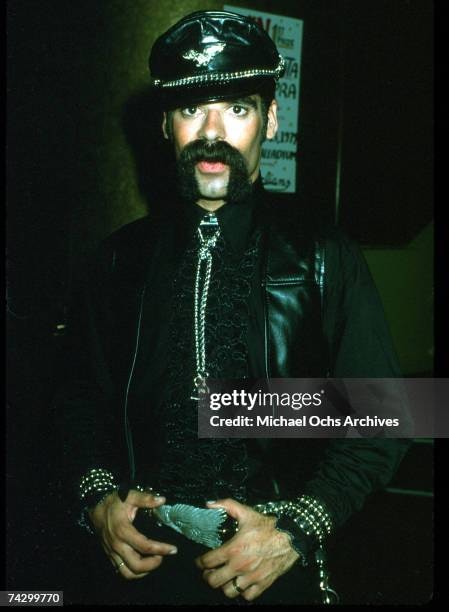
Glenn Hughes
 United States
Member of Village People
Fecha de nacimiento
July 18, 1950
Signo zodiacal
Cancer
Lugar de nacimiento
New York City, New York, USA
Edad
Falleció a los 50
Estatura
5 ft 10 in (178 cm)
Acerca de
Glenn Michael Hughes fue un cantante estadounidense, conocido principalmente como el personaje Leatherman original del grupo disco Village People. Nacido el 18 de julio de 1950 en la ciudad de Nueva York, se unió al grupo en 1977 y actuó con ellos hasta 1996, ayudando a definir el sonido y la imagen de una época. Hughes aportó una energía masculina y cruda al escenario, encarnando el arquetipo del motero vestido de cuero que se volvió instantáneamente reconocible en la cultura pop. A lo largo de su carrera, apareció en docenas de álbumes y sencillos con el grupo, incluyendo éxitos que encabezaron las listas como YMCA, Macho Man y Go West. Aunque es más conocido por su tiempo con Village People, Hughes también realizó otros proyectos musicales, incluyendo trabajo en solitario y colaboraciones. Falleció el 4 de marzo de 2001 a los 50 años debido a un cáncer de pulmón. Su legado perdura en la popularidad duradera de la música de Village People y la imagen perdurable del Leatherman.
Primeros años y orígenes
Hughes creció en la ciudad de Nueva York en un entorno de clase trabajadora, aunque los detalles de su infancia y educación siguen siendo escasos en los registros públicos. Desarrolló un interés temprano por la música y la actuación, y antes de unirse a Village People, trabajó en varios empleos mientras se sumergía en la escena nocturna de Nueva York. Sus primeros pasos hacia la fama llegaron en 1977, cuando audicionó y fue seleccionado para unirse al recién formado Village People, adoptando la personalidad del motero vestido de cuero que se volvió icónica. El grupo fue creado por los productores franceses Jacques Morali y Henri Belolo, quienes buscaban artistas que encarnaran seis personajes masculinos arquetípicos.
Trayectoria profesional
En 1977, Hughes se unió a Village People como el Leatherman, uno de los seis personajes masculinos arquetípicos. El gran éxito del grupo llegó en 1978 con el álbum Macho Man, que alcanzó el No. 1 en la lista Dance de Billboard y el No. 2 en el Billboard 200. Más tarde ese año, el grupo lanzó Cruisin', que incluía el enorme éxito global YMCA. La canción alcanzó el No. 2 en el Billboard Hot 100 y el No. 1 en varios países, convirtiéndose en uno de los sencillos más vendidos de todos los tiempos. En 1979, el grupo lanzó Go West, con la canción principal convirtiéndose en otro éxito internacional, y también lanzaron In the Navy como sencillo con la cooperación de la Armada de los Estados Unidos. En 1980, Village People protagonizó la película semiautobiográfica Can't Stop the Music, que fue un fracaso crítico y comercial pero luego alcanzó estatus de culto. Hughes apareció en la película documental de 1985 The Village People: The Movie. Después de casi 19 años con el grupo, Hughes dejó Village People en 1996 y emprendió proyectos musicales en solitario, aunque ninguno logró el éxito comercial de su trabajo con el grupo.
Cronología profesional
Imagen pública y estilo
El estilo característico de Hughes era el atuendo de motero de cuero: una gorra de cuero negra, chaleco de cuero, pantalones de cuero y botas. Este look se volvió sinónimo de la estética disco motera. Era retratado como la presencia dura y masculina del grupo, proporcionando contraste con los personajes más extravagantes. Su voz profunda y sus contribuciones habladas añadían gravedad a las grabaciones del grupo. Village People tiene una base de fans global dedicada, particularmente entre las comunidades LGBTQ+ y los entusiastas del disco, aunque no existe un nombre oficial de fandom.
Fama y fandom
Glenn Hughes's global recognition today rests on his role as the original Leatherman in the Village People, a persona that remains a cultural touchstone decades after his death. While his fame is enduring, it does not currently translate into a placement in iFANN's published rankings. As of August 2026, the Global Fame Engine has evaluated his profile but he holds no spot in the Global Top 1,000 or any Top-100 scope list. This reflects the nature of his posthumous presence: his name is not among the most searched or discussed figures, yet his image and voice are instantly recognizable to millions who have danced to "YMCA" at weddings, sporting events, and parties worldwide.
His fanbase, though devoted, has no formal name. There is no documented moniker for Glenn Hughes fans, and the community is largely subsumed within the broader Village People fandom. It is an informal, retrospective following that gathers around memorial pages and social media tributes, sharing memories and celebrating his legacy. Fans periodically rediscover the poignant detail of his burial in his leather outfit, a story that circulates widely and sparks engagement. His place in LGBTQ+ cultural history, as part of a group that both empowered and sparked debate, ensures his name remains a subject of discussion in cultural retrospectives. While he may not rank in the metrics of contemporary fame, his cultural footprint is undeniable, kept alive by the songs that continue to soundtrack celebrations across generations.
Datos interesantes y leyendas
Glenn Hughes's Leatherman character was one of six archetypal male fantasies created by producers Jacques Morali and Henri Belolo to appeal to gay audiences, though the group crossed over to mainstream success. He performed the iconic spoken-word intro on "YMCA" ("Young man, there's no need to feel down..."). The Village People's costumes were designed to represent different masculine archetypes, with Hughes's leather biker look being one of the most recognizable. Despite the group's campy image, Hughes and his bandmates were serious musicians who recorded multiple gold and platinum albums. "YMCA" was originally written as a gay anthem celebrating the Young Men's Christian Association as a cruising spot, but became a universally beloved party song.
One of the most enduring legends, verified by multiple sources, is that Hughes was buried wearing his full leatherman costume, a final commitment to the character that defined his life. Fans still retell this story with a mix of awe and poignancy. Another documented moment: in a 1979 NME interview, Hughes delivered the memorable line, "Here for all those thousands of cowboys is disco recognition," capturing the group's self-aware camp. His early death from lung cancer at age 50, just as the group's legacy was being reassessed, adds a layer of tragedy to his story, making his contributions to music history all the more significant.
Familia y vida personal
Hughes nació en la ciudad de Nueva York. La información sobre sus padres y hermanos no está ampliamente documentada en fuentes públicas. No tuvo hijos conocidos públicamente y era reservado sobre su vida familiar.
Conexiones destacadas
Hughes trabajó estrechamente con los compañeros de banda de Village People Victor Willis, Felipe Rose, Randy Jones, David Hodo y Alex Briley, así como con los productores Jacques Morali y Henri Belolo.
Relaciones e historial sentimental
La información disponible públicamente sobre las relaciones románticas de Glenn Hughes es extremadamente limitada. Se sabía que era reservado sobre su vida personal, y no se registran relaciones públicas a largo plazo, matrimonios o compromisos documentados en fuentes biográficas principales. No tuvo hijos conocidos públicamente. A partir de 2026, Hughes está fallecido.
Muerte y repercusiones
Fallecimiento
March 4, 2001 (a los 50 años)
Lugar de fallecimiento
Desconocido
Causa de la muerte
Desconocido
Glenn Hughes spent his final years living quietly in New York City, stepping back from the public eye after nearly two decades of defining the leather-clad biker archetype with the Village People. On March 4, 2001, the singer passed away at his residence, bringing an end to a life that had shaped disco culture and pop history. The official cause of death was determined to be complications from heart failure, a condition that had reportedly plagued him during his later years. Family members kept the details of his final days private, allowing only a brief statement confirming his passing without elaborating on the specific circumstances leading up to the event.
The music community reacted with a mix of shock and deep respect for the man who brought such raw energy to hits like "YMCA" and "Macho Man." Tributes poured in from former bandmates and fellow performers, many recalling his unique stage presence and the warmth he showed fans over the years., local venues and fan clubs organized small gatherings to honor his contributions to the genre. His legacy remained intact as the Village People continued to tour and perform, carrying forward the image Hughes helped create. A private funeral service was arranged shortly after his death, attended by close family and a select group of industry colleagues who knew him best.
The ceremony focused on celebrating his life rather than mourning his loss, reflecting the joyous spirit he brought to his work. Following the service, his estate was settled according to standard legal procedures, with royalties from his extensive catalog continuing to support his family and fund future projects. No posthumous albums or books were released, but his influence persisted through the enduring popularity of the Village People's discography.
Patrimonio neto (valor de la herencia)
$1.5 Million
Estimación del equipo editorial de iFANN
iFANN currently estimates Glenn Hughes's estate at the time of his death in 2001 to be worth approximately $1.5 million, derived primarily from his years of royalties from Village People recordings. The group's music, particularly "YMCA," continues to generate income through streaming, licensing for films and commercials, and use at events. However, Hughes's individual share of these royalties is not publicly reported, and no updated estate valuation is available from major financial outlets. The estate is believed to be managed privately.
Premios y galardones
Conocido por
Village People
1977 · Leatherman character
Palabras clave
Datos rápidos
- Profesión
- singer
- Nacimiento
- July 18, 1950
- Lugar de nacimiento
- Nueva York
- Fallecimiento
- March 4, 2001
- Lugar de fallecimiento
- Manhattan, New York
- Género
- Hombre
- Signo zodiacal
- Cancer
Datos personales
- Nombre completo
- Glenn Michael Hughes
- Estatura
- 5 ft 10 in (178 cm)
Filmografía
2
Total
2
Cine
0
TV
Preguntas frecuentes
¿Cómo murió Glenn Hughes?
¿Estaba casado Glenn Hughes?
¿Qué personaje interpretó Glenn Hughes en Village People?
¿Qué edad tenía Glenn Hughes cuando murió?
¿Cantó Glenn Hughes en YMCA?
Personas similares
Únete a la comunidad
fans comentando