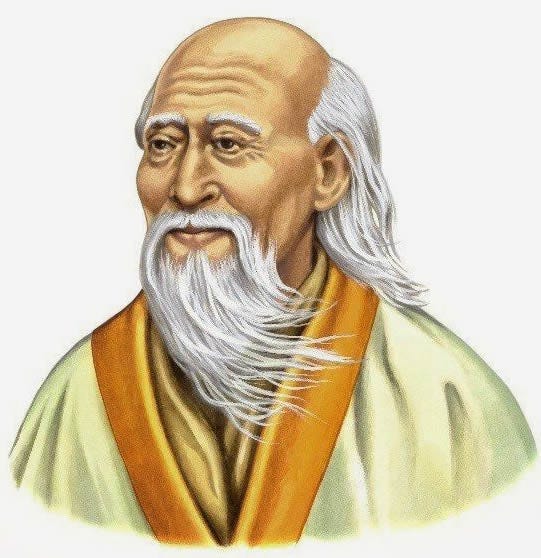
Laozi
Also known as: Lao Tzu, Lao-Tsu, Laotze, Li Er, Boyang
Fecha de nacimiento
January 1, 604 BCE
Signo zodiacal
Capricorn
Lugar de nacimiento
Quren, Chu (modern Luyi County, Henan, China)
Edad
Falleció a los 104
Acerca de
Laozi, meaning "Old Master," was the legendary Chinese philosopher credited with authoring the Tao Te Ching, the foundational text of Taoism. Modern scholarship regards him as a composite figure, with the text compiled by multiple authors during the Warring States period. Traditional accounts place his birth in the 6th century BCE in the state of Chu, where he served as the Zhou dynasty's royal archivist in Luoyang. His ideas, centered on the Dao, Wu Wei, and natural harmony, have shaped Chinese culture for over two millennia, influencing everything from governance and medicine to martial arts and poetry. The Tao Te Ching remains one of the most translated works in world literature, second only to the Bible.
Primeros años y orígenes
Las narraciones tradicionales pintan a Laozi como una figura de sabiduría extraordinaria desde su nacimiento. Las leyendas afirman que emergió del vientre de su madre después de una gestación de 62 años, ya anciano con cabello blanco, de ahí su nombre. Creció en la aldea de Quren, en el estado de Chu, durante los años decadentes del período de Primaveras y Otoños. Nombrado archivero real de la corte Zhou, obtuvo acceso a la vasta colección de registros antiguos y rituales del imperio. Este puesto lo colocó en el centro de la vida intelectual, donde supuestamente se encontró con Confucio alrededor del 520 a. C. Confucio buscó su consejo sobre historia y ceremonia, y salió del encuentro profundamente impresionado, comparando a Laozi con un dragón que cabalga el viento y las nubes. A medida que la dinastía Zhou continuaba su declive, Laozi se desilusionó. Renunció a su cargo y partió hacia el oeste, pasando por el Paso de Hankao. El guardián de la puerta, Yin Xi, reconociendo su sabiduría, le suplicó que registrara sus conocimientos antes de desaparecer en la naturaleza. En respuesta, Laozi compuso el Tao Te Ching, 81 capítulos de unos 5.000 caracteres chinos, en una sola sesión, y luego desapareció, para no ser visto nunca más.
Trayectoria profesional
El Tao Te Ching se convirtió en la piedra angular del taoísmo, una de las tres grandes tradiciones filosóficas de China. Su influencia creció lentamente al principio, con el primer comentario conocido de Heshang Gong apareciendo alrededor del 200 d. C. La dinastía Tang (618–907) transformó el estatus de Laozi: el emperador Gaozu afirmó descender de él, elevando al filósofo a la categoría de antepasado imperial y otorgando al taoísmo el patrocinio estatal. En el 743 d. C., el emperador Xuanzong deificó a Laozi como el "Supremo Misterioso y Primordial Emperador", ordenando la construcción de templos en su honor. El texto fue incluido en el Daozang (Canon taoísta) durante la dinastía Ming (1436–1445). A partir del siglo XIX, el Tao Te Ching se extendió globalmente, convirtiéndose en uno de los libros más traducidos de la historia. Sin embargo, la erudición moderna ha complicado el panorama: los manuscritos de seda de Mawangdui (168 a. C.) y las tiras de bambú de Guodian (c. 300 a. C.) revelan variaciones textuales, lo que sugiere que la versión recibida es un compuesto. Hoy en día, la obra continúa inspirando nuevas traducciones, comentarios e incluso interpretaciones generadas por IA, con más de 250 traducciones al inglés solo para 2024.
Cronología profesional
Imagen pública y estilo
Laozi es representado universalmente como un sabio anciano con una larga barba blanca, túnicas fluidas y una expresión calmada y conocedora, a menudo montando un búfalo de agua hacia el oeste. Esta imagen, codificada en el arte chino durante siglos, simboliza al sabio recluso que se retira de la corrupción mundana. El Tao Te Ching en sí mismo es conocido por su estilo poético, paradójico y aforístico, capítulos cortos que recompensan la meditación más que el análisis lógico. Los seguidores del taoísmo celebran su cumpleaños tradicional el día 15 del segundo mes lunar con peregrinaciones a templos, especialmente al Monte Qingcheng en Sichuan y al Condado de Luyi en Henan. En la cultura popular moderna, las citas de Laozi se comparten ampliamente como contenido inspirador en las redes sociales, con el hashtag #TaoWisdom generando millones de publicaciones. Su persona resuena con aquellos que buscan simplicidad, atención plena y una alternativa a la cultura consumista.
Fama y fandom (iFAMOUS Rankings)
Laozi holds no current placement in the iFANN Global Top 1,000 or any scope-specific ranking list, a status confirmed by the August 2026 evaluation cycle. While he does not compete for a numeric rank against modern celebrities, his enduring presence transcends standard fame metrics. The ancient philosopher commands a unique form of global recognition that defies contemporary charting systems. His influence is measured not in viral moments but in the sheer volume of translations and the depth of philosophical adherence spanning millennia. Unlike pop stars who rely on fanbases to drive visibility, Laozi's reach is institutionalized through religious Daoism, academic study, and centuries of cultural osmosis. There is no formal fandom name attached to his legacy; followers identify themselves as Taoists, scholars, or practitioners rather than members of a collective like the Beyhive or Swifties. No organized birthday campaigns, subway advertisements, or streaming chart pushes exist for him, as his relevance is woven into the fabric of history rather than driven by modern marketing. Yet, the resonance of his work remains potent. In 2026, new translations continued to emerge, exploring environmentalist themes, while a meme coin bearing his name briefly captured speculative financial attention. These modern echoes do not constitute a fandom in the traditional sense but highlight how his wisdom adapts to new eras. The absence of a ranked position simply reflects the limitations of applying 21st-century fame engines to a figure whose impact predates the concept of celebrity itself.
Datos interesantes y leyendas
The title Tao Te Ching translates to 'The Classic of the Way and Virtue,' a text containing exactly 5,000 Chinese characters in its standard version. Laozi's birth surname Li has grown to become the most common surname in both China and Vietnam. Archaeological discoveries have preserved fragments of his teachings for over two millennia; the oldest known copies are the Mawangdui silk manuscripts from 168 BCE, while the Guodian bamboo slips offer even earlier partial versions dating to around 300 BCE. Beyond these textual facts, legendary narratives shape his identity. The most iconic story recounts his departure at the Hangu Pass, where the border guard Yin Xi begged the weary sage to record his wisdom before vanishing westward on a water buffalo. This tale explains the origin of the Tao Te Ching and remains a staple of Chinese art. Ancient folklore also places Laozi as a contemporary of Confucius, describing a meeting where the younger Confucius sought advice only to be gently rebuked for being too rigid, with Confucius later calling Laozi a dragon he could not comprehend. Over time, this historical figure transformed into a deity known as Taishang Laojun, central to the religious pantheon of Daoism.
Frases destacadas
“The Tao that can be told is not the eternal Tao. The name that can be named is not the eternal name.”
“A journey of a thousand miles begins with a single step.”
“Those who know do not speak. Those who speak do not know.”
“When you are content to be simply yourself and don't compare or compete, everybody will respect you.”
“He who knows others is wise; he who knows himself is enlightened.”
“I have just three things to teach: simplicity, patience, compassion. These three are your greatest treasures.”
Familia y vida personal
Los relatos tradicionales mencionan una esposa, aunque su nombre no está registrado. La pareja tuvo un hijo, Li Zong, quien se convirtió en oficial militar en el estado de Wei. No sobreviven otros detalles familiares. La erudición moderna considera que estos elementos biográficos son probablemente invenciones posteriores para humanizar a una figura legendaria.
Conexiones destacadas
Laozi está tradicionalmente vinculado con Confucio, quien supuestamente buscó su consejo. Zhuangzi amplió sus ideas en el Zhuangzi. Yin Xi, el guardián de la puerta, es su legendario discípulo. Los primeros comentaristas Heshang Gong y Wang Bi moldearon el texto recibido. Sima Qian escribió la primera biografía.
Relaciones e historial sentimental
La tradición popular atribuye una esposa a Laozi, aunque no sobreviven nombre ni detalles. Se dice que ella falleció antes que él. Su hijo, Li Zong, continuó la línea familiar. Una relación más significativa en la tradición taoísta es con Yin Xi, el guardián de la puerta en el Paso Hankao. Yin Xi reconoció la sabiduría de Laozi y lo obligó a escribir el Tao Te Ching. Algunos textos taoístas presentan a Yin Xi como el principal discípulo de Laozi y más tarde un inmortal. Hasta 2026, no se asocia ninguna pareja romántica viva con la figura histórica o legendaria.
- Casado/aUnnamed wifeLas crónicas tradicionales mencionan una esposa, pero su nombre y detalles de vida no están registrados.
- SalieronYin XiLegendario guardián que recibió el Tao Te Ching; algunas tradiciones lo consideran un discípulo o compañero espiritual.
Muerte y repercusiones
Fallecimiento
500 BCE (a los 104 años)
Lugar de fallecimiento
Desconocido
Causa de la muerte
Disappearance into legend
Traditional accounts describe the end of Laozi not as a cessation of life but as a departure, with the philosopher leaving the Zhou capital to ride a water buffalo westward through the Hangu Pass. This legendary exit occurred around 500 BCE, marking the final public appearance of the man credited with authoring the Daodejing before he vanished into the mountains of the West at the request of the pass guard Yin Xi. While some traditions suggest he lived to an extraordinary age of over 160 years, these details remain unconfirmed folklore rather than verified historical fact.
The circumstances of his passing are defined by this disappearance rather than a recorded death event, meaning no body was ever found for burial or cremation and no funeral service took place. Centuries later, the reaction to his absence evolved into deep veneration, with figures like the Tang Dynasty claiming him as an ancestor and religious communities establishing temples dedicated to his teachings. His legacy survives entirely through the Daodejing, which remains one of the most translated works in world literature, inspiring countless commentaries and new translations from scholars like David Bentley Hart in recent years.
Patrimonio neto (valor de la herencia)
$0
Estimación del equipo editorial de iFANN
As of 2026, the ancient philosopher Laozi accumulated no personal wealth during his lifetime, and the text he is credited with authoring has remained in the public domain for centuries, generating no direct royalties for any estate. The commercial ecosystem surrounding the *Tao Te Ching* remains vast, with translations, commentaries, adaptations, merchandise, and media inspired by the work generating billions of dollars annually through third-party publishers and creators. No formal estate exists to manage these derivative revenues. Per iFANN's editorial analysis, the philosopher's net worth stands at $0, yet his cultural capital remains immeasurable.
Premios y galardones
View 13 records, honours and achievementsConocido por
Tao Te Ching
c. 500 BCE · Autor
Palabras clave
Datos rápidos
- Profesión
- philosopher, archivist, writer
- Nacimiento
- 604 BCE
- Lugar de nacimiento
- Quren, Chu (modern Luyi County, Henan, China)
- Fallecimiento
- c. 500 BCE
- Género
- Hombre
- Signo zodiacal
- Capricorn
Datos personales
- Nombre completo
- Li Er
- Hijos
- Li Zong (son)
- Educación
- Self-taught through Zhou dynasty archives
Preguntas frecuentes
¿Es Laozi una figura histórica real?
¿De qué trata el Tao Te Ching?
¿Se encontró Laozi con Confucio?
¿Qué edad tenía Laozi cuando murió?
¿Cuál es el patrimonio neto de Laozi?
Personas similares
Únete a la comunidad
fans comentando