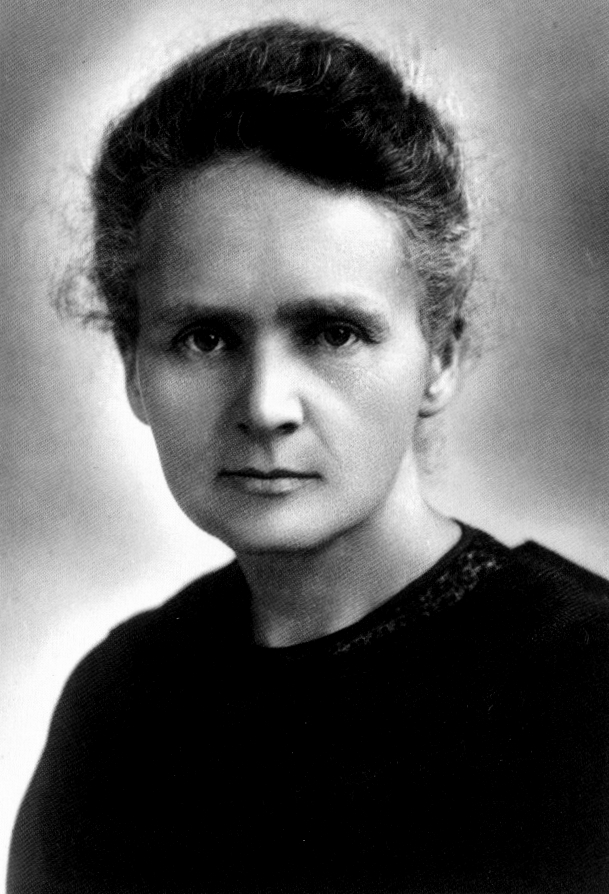
Marie Curie
 Russia
Also known as: Maria Salomea Skłodowska, Mme. Curie, Maria Skłodowska-Curie
Fecha de nacimiento
November 7, 1867
Signo zodiacal
Scorpio
Lugar de nacimiento
Warsaw, Kingdom of Poland, Russian Empire
Edad
Falleció a los 66
Estatura
5 ft 3 in (160 cm)
Acerca de
Marie Curie fue una física y química francesa de origen polaco que revolucionó la ciencia con su investigación pionera sobre la radiactividad. Sigue siendo la única persona en ganar premios Nobel en dos campos científicos diferentes: Física en 1903 (compartido con Pierre Curie y Henri Becquerel) y Química en 1911 por descubrir el polonio y el radio. Acuñó el término radiactividad y desarrolló la teoría de que la radiación proviene del átomo mismo, no de reacciones químicas.
Más allá de sus logros Nobel, Curie rompió innumerables barreras como la primera mujer en ganar un Premio Nobel, la primera mujer profesora en la Universidad de París y la primera mujer enterrada en el Panteón por méritos propios. Fundó los Institutos Curie en París y Varsovia, que siguen siendo centros líderes en investigación del cáncer. Durante la Primera Guerra Mundial, operó personalmente unidades de rayos X móviles en hospitales de campaña. Su legado perdura a través del elemento curio y la unidad de radiactividad, el curie.
Primeros años y orígenes
Marie creció en la Varsovia ocupada por Rusia como la menor de cinco hijos. Su madre murió de tuberculosis cuando Marie tenía diez años, y su padre, profesor de física, perdió su trabajo debido a las políticas nacionalistas rusas, lo que obligó a la familia a alojar huéspedes. Asistió a la clandestina Universidad Volante, que proporcionaba educación polaca subterránea. A los 17 años, trabajó como institutriz durante seis años para financiar los estudios de medicina de su hermana Bronisława en París, con la promesa de que Bronisława la ayudaría después.
En 1891, a los 24 años, se mudó a París y se matriculó en la Sorbona, donde obtuvo una licenciatura en física en 1893 (ocupando el primer lugar de su clase) y una licenciatura en matemáticas en 1894. Conoció a Pierre Curie en 1894 a través del físico polaco Józef Kowalski-Wierusz, y su colaboración científica comenzó de inmediato.
Trayectoria profesional
En 1896, inspirada por el descubrimiento de los rayos de uranio por Henri Becquerel, Marie eligió la radiactividad como tema de su tesis doctoral. Ella y Pierre descubrieron el polonio en julio de 1898 y el radio en diciembre de 1898, acuñando el término radiactividad. En 1903, se convirtió en la primera mujer en ganar un Premio Nobel, compartiendo el premio de Física con Pierre y Becquerel. Tras la muerte de Pierre en 1906, asumió su cátedra en la Sorbona, convirtiéndose en la primera mujer profesora de la universidad.
En 1911, ganó el Premio Nobel de Química por aislar el radio y el polonio, convirtiéndose en la primera persona en ganar dos Nobeles. Fundó el Instituto del Radio (Instituto Curie) en París en 1914 y más tarde el Instituto Curie en Varsovia en 1932. Durante la Primera Guerra Mundial, desarrolló y operó unidades de radiografía móviles, entrenando a 150 mujeres como técnicas de rayos X. En 1921, viajó a Estados Unidos, donde el presidente Warren G. Harding le entregó un gramo de radio comprado mediante suscripción pública.
Cronología profesional
Imagen pública y estilo
Marie Curie es universalmente retratada como una científica dedicada y desinteresada que sacrificó su salud por su trabajo. Su imagen icónica la muestra con un vestido negro sencillo o bata blanca de laboratorio, con el cabello recogido en un moño y una expresión seria. Es celebrada por perseverar contra el sexismo y por su nacionalismo polaco. Biopics como Madame Curie (1943) y Radioactive (2019) enfatizan su trágica muerte por exposición a la radiación. Los fanáticos celebran su cumpleaños el 7 de noviembre y el aniversario de su muerte el 4 de julio con visitas a museos y tributos en redes sociales usando #MarieCurie. Las cuentas oficiales del Instituto Curie mantienen un tono educativo, compartiendo datos históricos y citas inspiradoras.
Fama y fandom
Marie Curie commands a unique form of reverence that transcends the typical celebrity fandom. Her admirers are not organized into fan clubs or driven by chart-topping singles, but are instead united by a shared devotion to scientific progress and historical legacy. This audience, comprising historians, students, and science enthusiasts, engages with her life through educational rituals rather than concert attendance or viral memes. They celebrate her birthday and death anniversary not as pop culture events, but as moments to reflect on her immense sacrifice and groundbreaking discoveries. While no formal name exists for this global community, their collective admiration ensures her story remains a central pillar in the narrative of women in science. Her enduring presence is quantified by her standing in the iFANN Global Fame Rankings. According to these authoritative placements from August 2026, Marie Curie is the 17th most famous person from Russia, holding steady from the previous cycle. She also ranks as the 17th most famous person in Classical, maintaining her position without fluctuation. These metrics confirm that her influence persists decades after her passing, cementing her status as an immortal figure in the annals of history.
Datos interesantes y leyendas
Marie Curie carried a vial of radium in her pocket as a good luck charm, a habit that likely contributed to the radiation poisoning that ended her life. Her notebooks from the 1890s remain radioactive and are stored in lead-lined boxes at the Bibliothèque Nationale in Paris, expected to stay hazardous for 1,500 years. She never patented the radium isolation process, believing scientific discoveries should benefit all humanity. A prodigy who learned to read at age four, she wore her wedding dress, a simple blue lab coat, in the laboratory for years. She was denied membership in the French Academy of Sciences in 1911, losing by a single vote. Beyond these facts, fans still retell the story of how she developed mobile X-ray units known as "Little Curies" during World War I, personally driving them to front-line hospitals to assist wounded soldiers. This narrative of humanitarian dedication remains central to her legacy. Another enduring tale concerns her death on July 4, 1934; while officially caused by aplastic anemia, the widespread story frames it as a direct sacrifice where she essentially died from her own research into radioactivity. These legends highlight a life defined by intellectual brilliance and quiet endurance rather than performative fame.
Frases destacadas
“Nothing in life is to be feared, it is only to be understood. Now is the time to understand more, so that we may fear less.”
“I am among those who think that science has great beauty.”
“A scientist in his laboratory is not a mere technician: he is also a child confronting natural phenomena that impress him as though they were fairy tales.”
“I have frequently been questioned, especially by women, of how I could reconcile family life with a scientific career. Well, it has not been easy.”
“I was taught that the way of progress was neither swift nor easy.”
“One never notices what has been done; one can only see what remains to be done.”
Familia y vida personal
Marie fue la menor de cinco hijos nacidos de Bronisława y Władysław Skłodowski. Su madre murió en 1878 cuando Marie tenía diez años. Su padre era profesor de física y matemáticas que le inculcó el amor por la ciencia. Tuvo tres hermanas mayores y un hermano. Se casó con Pierre Curie en 1895; tuvieron dos hijas: Irène (nacida en 1897), quien ganó el Premio Nobel de Química en 1935, y Ève (nacida en 1904), escritora y diplomática. Después de la muerte de Pierre, Marie nunca se volvió a casar. Hoy, el legado de la familia Curie incluye cinco Premios Nobel. Sus hijas administraron su patrimonio después de su muerte.
Conexiones destacadas
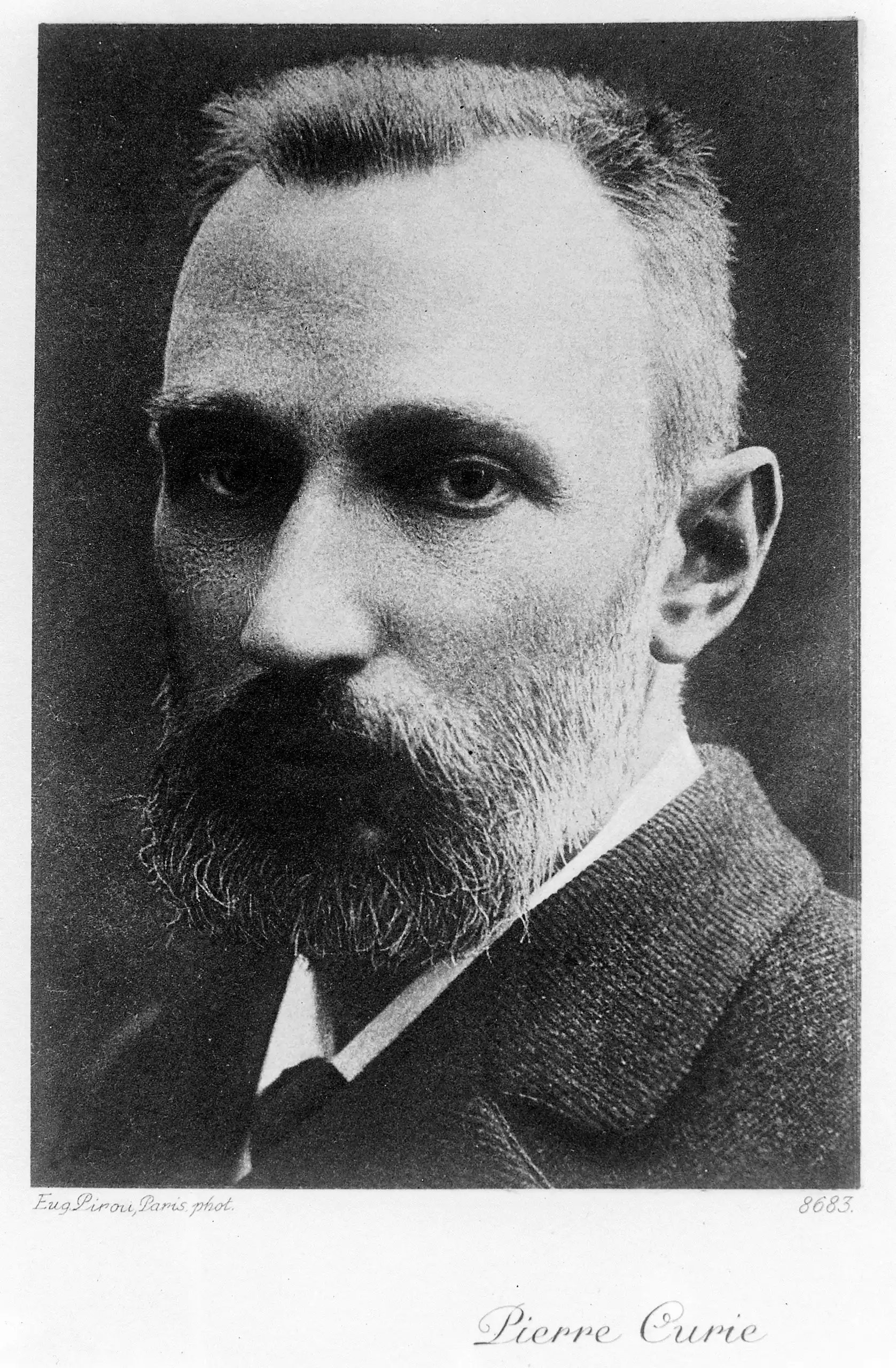
Marie Curie está asociada con el legado familiar Curie de cinco premios Nobel, incluidos los de su hija Irène Joliot-Curie y su yerno Frédéric Joliot. Colaboró estrechamente con su esposo Pierre Curie y se inspiró en Henri Becquerel. También está vinculada a los Institutos Curie de París y Varsovia, que continúan su misión de investigación contra el cáncer.
Relaciones e historial sentimental
Marie se casó con Pierre Curie el 26 de julio de 1895 en una ceremonia civil. Se conocieron en 1894 a través del físico polaco Józef Kowalski-Wierusz. Su matrimonio fue a la vez romántico y científico; trabajaron codo con codo en el laboratorio y tuvieron dos hijas: Irène (nacida en 1897) y Ève (nacida en 1904). Pierre murió el 19 de abril de 1906 al ser atropellado por un carruaje tirado por caballos. Marie nunca volvió a casarse. En 1910-1911, tuvo un romance públicamente rumoreado con Paul Langevin, un antiguo alumno de Pierre y un físico casado. La filtración de cartas provocó un escándalo que casi le cuesta el Premio Nobel de 1911. La relación terminó en medio del escándalo. A fecha de 2026, Marie Curie ha fallecido y no se documentan más relaciones.
- Casado/aPierre Curie1895 - 1906Se conocieron en 1894; se casaron el 26 de julio de 1895; colaboraron en la investigación de la radiactividad; tuvieron dos hijas; Pierre falleció en un accidente de carruaje en 1906.
- RumoreadoPaul Langevin1910 - 1911Un físico casado y antiguo alumno de Pierre; la filtración de cartas provocó un escándalo público que casi le cuesta a Marie el Premio Nobel de 1911.
Muerte y repercusiones
Fallecimiento
July 4, 1934 (a los 66 años)
Lugar de fallecimiento
Passy, Haute-Savoie, France
Causa de la muerte
Aplastic anemia from radiation exposure
Marie Curie died on July 4, 1934, at the Sanatorium of Sancellemoz in Passy, Haute-Savoie, France. Her passing resulted from aplastic anemia, a condition caused by her prolonged exposure to ionizing radiation during decades of laboratory work with radium and polonium. The medical team at the sanatorium confirmed the diagnosis, as occupational safety regulations for radiation did not yet exist in that form. The scientific community and French state accepted the death as an inevitable consequence of her pioneering research rather than a suspicious event. Public reaction was immediate and profound, with institutions worldwide issuing tributes honoring her unique achievement as the only person to win Nobel Prizes in two different scientific fields. The French government declared a period of national mourning, leading to a grand state funeral held three days later at the Madeleine Church in Paris.
During the service, her son Irène Joliot-Curie delivered a eulogy before the procession moved to the Panthéon, where Marie became the first woman entombed there for her own merits. Her husband Pierre was later reinterred alongside her in 1995. Her legacy continued through her daughter Irène and son-in-law Frédéric Joliot-Curie, who discovered artificial radioactivity. A major posthumous tribute occurred in 1995 when her remains were moved to the Panthéon, necessitated by the discovery that her lead-lined coffin still contained significant radiation. Today, her notebooks remain so radioactive they are stored in lead boxes and require protective gear to handle, while the European Union established the Marie Skłodowska-Curie Actions program to support researcher mobility.
Patrimonio neto (valor de la herencia)
$15 Million
Estimación del equipo editorial de iFANN
Per iFANN's editorial analysis, Marie Curie's estate is valued at approximately $15 million as of 2026. Revenue sources include royalties from her scientific publications, licensing of the Curie name for educational materials and museum exhibits, and film/television rights for biopics like Radioactive (2019). The Curie Museum in Paris attracts over 100,000 visitors annually. Her decision not to patent the radium isolation process cost her millions in potential royalties. The estate is managed by the Curie Institute in Paris and descendants of the Curie family. Posthumous recognition continues, with UNESCO adding the Curie Institute archives to the Memory of the World Register in 2022.
Premios ganados (9)
Marie Curie ganó dos Premios Nobel: el Premio Nobel de Física de 1903 (compartido con Pierre Curie y Henri Becquerel) y el Premio Nobel de Química de 1911. También recibió la Medalla Matteucci (1904), la Medalla Elliott Cresson (1910), la Medalla Benjamin Franklin (1921) y la Gran Cruz de la Legión de Honor (1933), entre muchos otros.
1933 · Honor Nacional
Lifetime achievement
1931 · Ciencias Médicas
Therapeutics of radium
Conocido por
Discovery of polonium and radium
1898 · Co-discoverer
Nobel Prize in Physics
1903 · Destinatario
Nobel Prize in Chemistry
1911 · Destinatario
Coining the term radioactivity
1898 · Scientist
Development of mobile X-ray units in WWI
1914 · Inventor
Palabras clave
Datos rápidos
- Profesión
- physicist, chemist
- Nacimiento
- November 7, 1867
- Lugar de nacimiento
- Warsaw, Kingdom of Poland, Russian Empire
- Fallecimiento
- July 4, 1934
- Lugar de fallecimiento
- Sancellemoz, Passy, Haute-Savoie, France
- Género
- Mujer
- Cónyuge
- Pierre Curie
- Signo zodiacal
- Scorpio
Datos personales
- Nombre completo
- Maria Salomea Skłodowska
- Estatura
- 5 ft 3 in (160 cm)
- Cónyuge
- Pierre Curie
- Hijos
- Irène Joliot-Curie, Ève Curie
- Educación
- Flying University, Sorbonne (Physics, 1893; Mathematics, 1894)
Preguntas frecuentes
¿Qué edad tenía Marie Curie cuando murió?
¿Cuál es el patrimonio neto de Marie Curie en 2026?
¿Por qué es famosa Marie Curie?
¿Tuvo hijos Marie Curie?
¿De qué murió Marie Curie?
Redes sociales
Personas similares
Únete a la comunidad
fans comentando