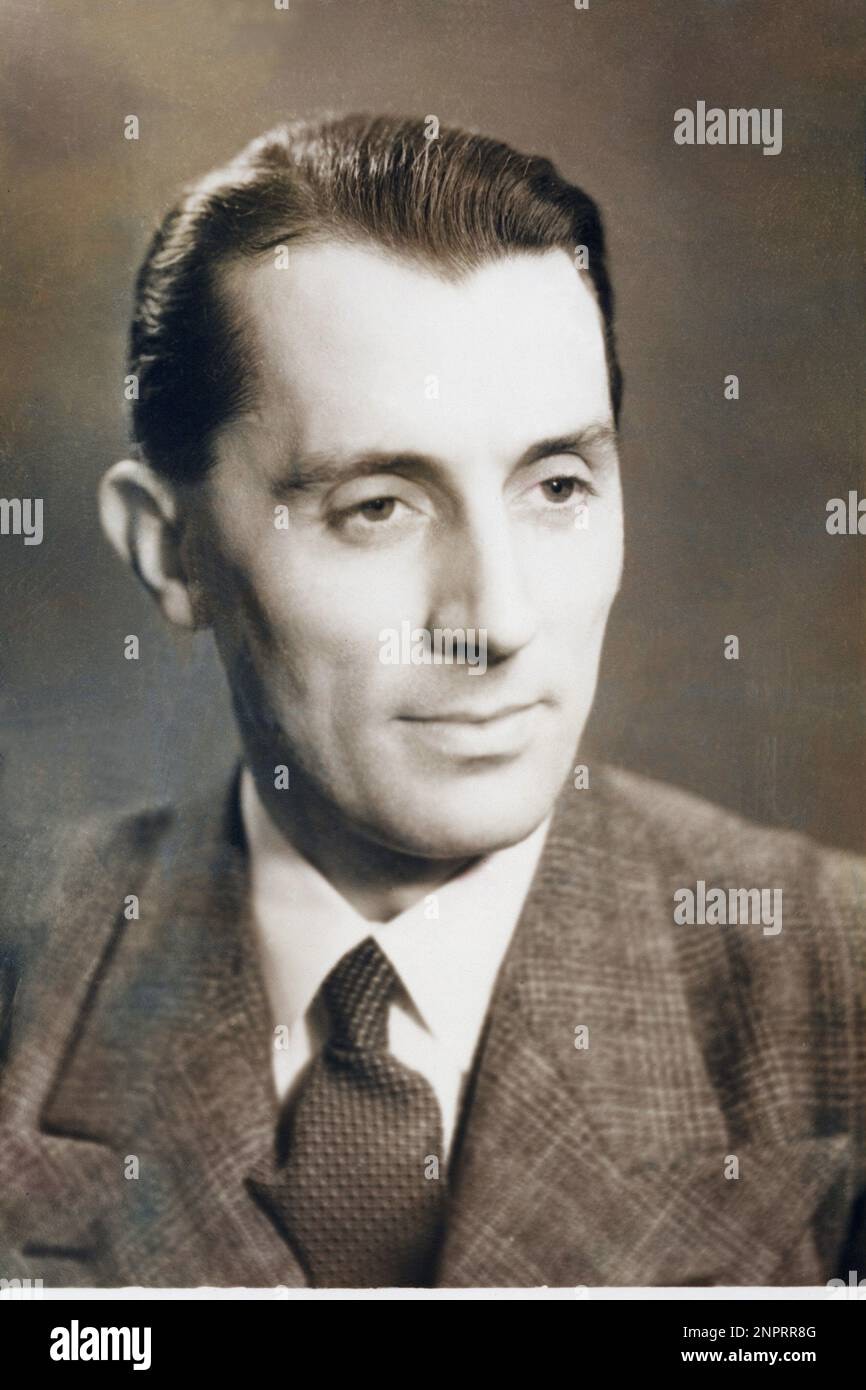
Frédéric Joliot-Curie
 France
nuclear physicist•chemist•professor
Also known as: Jean Frédéric Joliot
Fecha de nacimiento
March 19, 1900
Signo zodiacal
Pisces
Lugar de nacimiento
Paris, France
Edad
Falleció a los 58
Acerca de
Frédéric Joliot-Curie fue un físico y químico francés que, junto con su esposa Irène Joliot-Curie, descubrió la radiactividad artificial. Por este avance compartieron el Premio Nobel de Química de 1935, convirtiéndose en la segunda pareja casada en ganar un Nobel después de los padres de Irène, Marie y Pierre Curie. Hoy, su legado perdura a través del nombre Joliot-Curie en la ciencia, el centro de investigación en Orsay que ayudó a fundar y la influencia continua de su trabajo en física nuclear. Es recordado como un científico que combinó una investigación brillante con un fuerte sentido de responsabilidad social, oponiéndose a las armas nucleares mientras impulsaba la energía atómica para usos pacíficos.
Primeros años y orígenes
Nacido en París en una familia protestante alsaciana, Frédéric Joliot mostró desde temprano talento para la ciencia. Ingresó en la École Municipale de Physique et de Chimie Industrielles en 1919, donde Pierre Curie había enseñado, y se graduó primero de su clase en 1923 como ingeniero físico. Su maestro Paul Langevin lo orientó hacia la investigación fundamental.
En diciembre de 1924, Joliot conoció a Marie Curie y se convirtió en su asistente personal en el Instituto del Radio. Allí conoció a su hija Irène Curie, y se enamoraron. Marie insistió en que obtuviera más títulos académicos, así que Joliot obtuvo un segundo bachillerato, una licenciatura y un doctorado en 1930 con una tesis sobre electroquímica de radioelementos. Se casó con Irène el 4 de octubre de 1926, y adoptaron el apellido conjunto Joliot-Curie.
Trayectoria profesional
En enero de 1934, los Joliot-Curie bombardearon boro, aluminio y magnesio con partículas alfa y crearon nuevos isótopos radiactivos de nitrógeno, fósforo y silicio, la primera radiactividad artificial. El descubrimiento les valió el Premio Nobel de Química de 1935.
Joliot-Curie se convirtió en profesor del Collège de France en 1937. Durante la Segunda Guerra Mundial, se unió a la Resistencia francesa, usando su laboratorio para fabricar explosivos y equipos de radio. Tras la guerra, fue nombrado director del Centro Nacional de Investigación Científica (CNRS) en 1945 y se convirtió en el primer Alto Comisionado para la Energía Atómica de Francia. Supervisó la construcción del primer reactor atómico francés en 1948. En 1955, firmó el Manifiesto Russell-Einstein en contra de las armas nucleares.
Cronología profesional
Imagen pública y estilo
Joliot-Curie fue considerado un científico brillante y dedicado, profundamente comprometido con las aplicaciones pacíficas de la energía nuclear. Su trabajo en la Resistencia durante la guerra añadió una dimensión heroica a su imagen pública. También fue una figura política, y su membresía en el Partido Comunista generó controversia durante la Guerra Fría. Hoy es recordado como un pionero que equilibró la excelencia científica con la conciencia social.
Fama y fandom
Frédéric Joliot-Curie's enduring recognition rests on his scientific achievements and his role in the wartime resistance, rather than on any organized fan base. There is no documented fandom name, no coordinated fan community, and no fan-driven campaigns or rituals associated with him. His legacy is preserved through institutions such as the Institut Curie and the Joliot-Curie laboratory, as well as through Nobel Prize archives and historical foundations. The Picasso portrait from 1959 and the continued scholarly interest in the Curie family dynasty reflect a diffuse, institutional admiration rather than a modern fandom.
As of August 2026, iFANN's Global Fame Engine has evaluated Frédéric Joliot-Curie, but he does not currently hold a placement in the published rankings. This means he is not listed among the Global Top 1,000 most famous people, nor does he appear on any Top-100 scope list. The evaluation acknowledges his historical significance, yet his fame, while considerable, does not currently meet the threshold for a ranked position within iFANN's frameworks.
Datos interesantes y leyendas
Frédéric Joliot-Curie played the piano and enjoyed landscape painting. He was an avid reader of Rudyard Kipling, and during the German occupation of France, he coordinated the production of Molotov cocktails for the Resistance. He was a commander of the Legion of Honour and received the Croix de Guerre. In 1942, he joined the French Communist Party, a decision that would later define his public life.
A widely retold story from his wartime activities involves the secret shipment of France's heavy water supply, which was smuggled to England in 1940 to prevent it from falling into German hands. Accounts describe the heavy water being hidden in containers disguised as sardine tins, though the specific details may have been embellished over time. The core event is documented and has become part of his heroic wartime legend.
Another iconic moment is the discovery of artificial radioactivity with his wife Irène in 1934, which earned them the 1935 Nobel Prize in Chemistry. This breakthrough transformed nuclear physics and led to advances in medical imaging and cancer treatment. The Nobel ceremony itself, where they followed in the footsteps of Irène's parents, Marie and Pierre Curie, holds a special place in scientific lore.
Familia y vida personal
Frédéric Joliot-Curie se casó con Irène Curie en 1926. Tuvieron dos hijos: Hélène, nacida en 1927, que se convirtió en física, y Pierre, nacido en 1932, que se convirtió en biólogo. La familia vivió en París y en el Instituto del Radio. Irène murió en 1956 de leucemia relacionada con la exposición a la radiación. Frédéric nunca volvió a casarse.
Conexiones destacadas
Relaciones e historial sentimental
Frédéric Joliot conoció a Irène Curie en el Instituto del Radio en 1925, donde ella trabajaba junto a su madre Marie. Se casaron el 4 de octubre de 1926 y adoptaron el apellido conjunto Joliot-Curie. Su asociación fue tanto personal como profesional; colaboraron en el descubrimiento de la radiactividad artificial. Irène murió de leucemia en 1956. Frédéric no volvió a casarse, permaneciendo devoto a su memoria hasta su propia muerte en 1958.
- Casado/aIrène Joliot-Curie1926 - 1956Casados el 4 de octubre de 1926. Colaboraron en la investigación que les valió el Premio Nobel. Irène murió en 1956.
Muerte y repercusiones
Fallecimiento
August 14, 1958 (a los 58 años)
Lugar de fallecimiento
Paris, France
Causa de la muerte
Desconocido
A lithograph portrait drawn by Pablo Picasso in February 1959 stands as a notable cultural artifact commemorating the intersection of two giants of the 20th century, created specifically as an homage following the scientist's passing. This posthumous tribute from a fellow icon preceded any formal state recognition, reflecting the deep respect held for Joliot-Curie among peers in both the scientific and political spheres who noted his contributions to nuclear physics and his engagement with the World Peace Council. The man known for opposing nuclear weapons while advancing atomic energy for peaceful uses passed away on August 14, 1958, in Paris, France, at the age of 58, concluding a life that had seen him serve as a professor at the Collège de France and a director of the National Centre for Scientific Research.
While his wife Irène had died in 1956 from leukemia linked to radiation exposure, Frédéric continued his work until his final days without an official hospital statement detailing the immediate circumstances or last public appearance being released. Consequently, the exact cause remains unconfirmed in public documentation, with no disputed accounts regarding foul play or accident reported in the search results. Public reaction centered on tributes from scientific and political institutions rather than commercial surges or fan vigils, acknowledging a prominent figure whose legacy extended beyond the laboratory into the realm of international peace advocacy. He was buried in the family plot consistent with Curie family tradition, though specific details regarding eulogies or attendees were not widely digitized in general biographical summaries compared to the more publicized events surrounding Marie Curie.
Posthumously, his intellectual property and estate were managed by his family, including his daughter Hélène Langevin-Joliot, who later became a nuclear physicist herself, ensuring the continuation of the family's scientific lineage.
Patrimonio neto (valor de la herencia)
El patrimonio neto de Frédéric Joliot-Curie no está ampliamente documentado. Como científico y servidor público, sus ingresos provenían de salarios académicos y premios Nobel. No acumuló una riqueza personal significativa. Su legado se mide en contribuciones científicas más que en activos financieros.
Premios ganados (2)
Frédéric Joliot-Curie ganó el Premio Nobel de Química en 1935 junto con Irène Joliot-Curie por descubrir la radiactividad artificial. También recibió la Medalla Hughes de la Royal Society en 1947 por sus contribuciones a la física nuclear.
1935 · Química
Discovery of artificial radioactivity
1947 · Física
Contributions to nuclear physics
Conocido por
Discovery of artificial radioactivity
1934 · co-discoverer
Nobel Prize in Chemistry
1935 · laureate
Palabras clave
Fuentes
Datos rápidos
- Profesión
- nuclear physicist, chemist, professor
- Nacimiento
- March 19, 1900
- Lugar de nacimiento
- París, Francia
- Fallecimiento
- August 14, 1958
- Lugar de fallecimiento
- París, Francia
- Género
- Hombre
- Cónyuge
- Irène Joliot-Curie
- Signo zodiacal
- Pisces
Datos personales
- Nombre completo
- Jean Frédéric Joliot
- Cónyuge
- Irène Joliot-Curie
- Hijos
- Hélène Joliot-Curie, Pierre Joliot-Curie
- Educación
- École Supérieure de Physique et de Chimie Industrielles de Paris
Preguntas frecuentes
¿Quién fue Frédéric Joliot-Curie?
¿Qué descubrió Frédéric Joliot-Curie?
¿Cuándo ganó Frédéric Joliot-Curie el Premio Nobel?
¿Cuál fue el papel de Frédéric Joliot-Curie en la Segunda Guerra Mundial?
¿Cuál era el patrimonio neto de Frédéric Joliot-Curie?
Personas similares
Únete a la comunidad
fans comentando